


Timeless Octagon-and-Dot Laundry Room Tiles
-
-
-
-
-
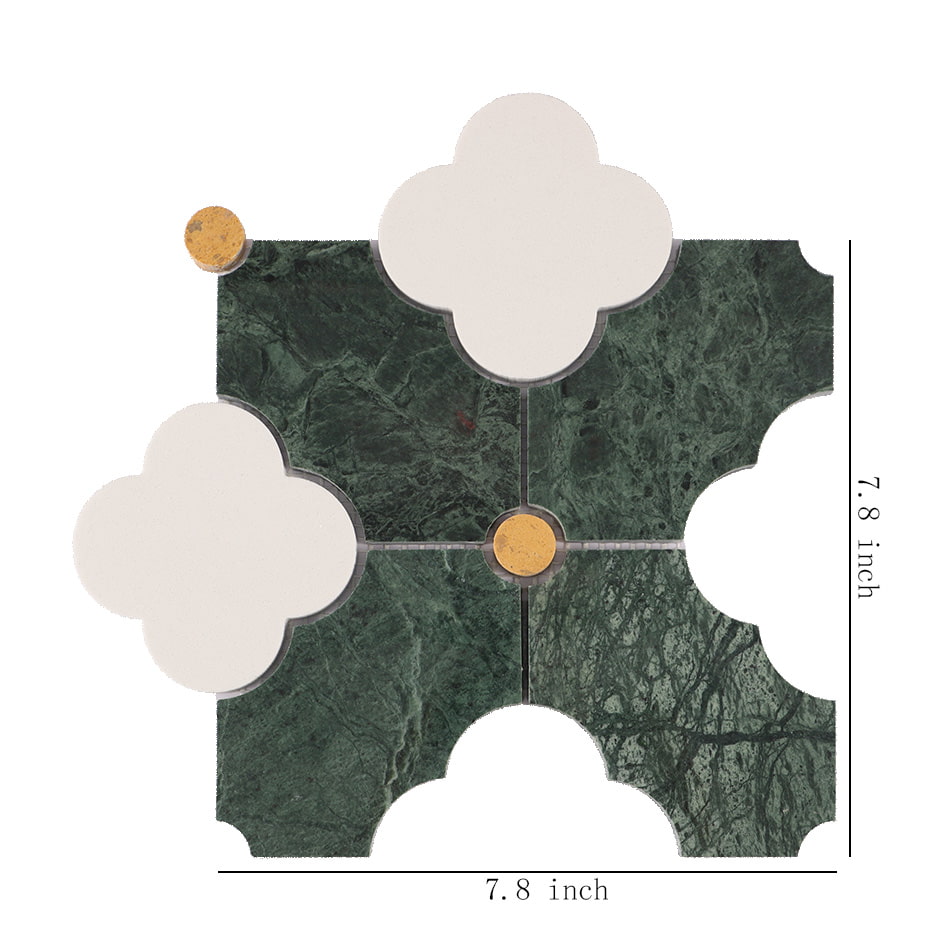
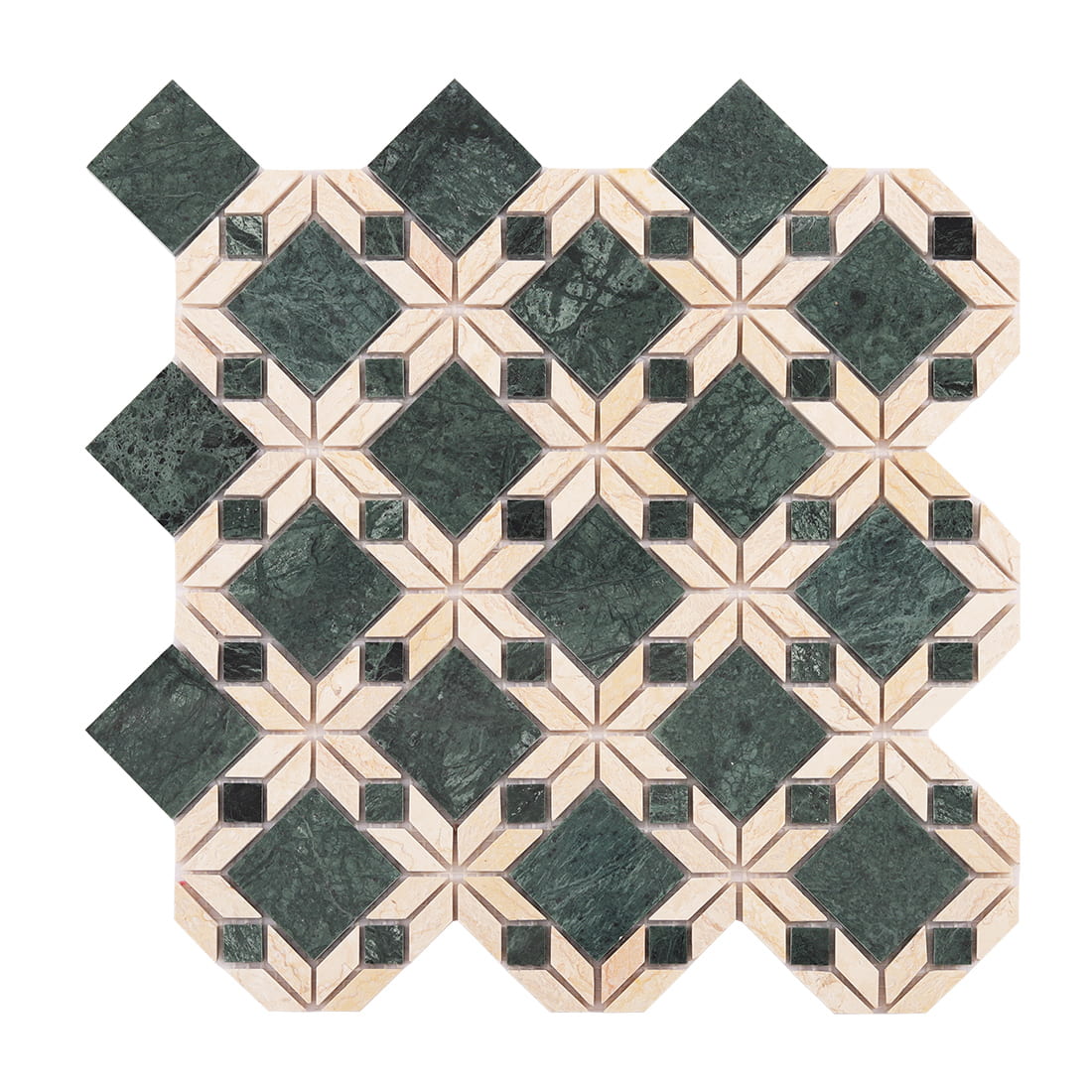
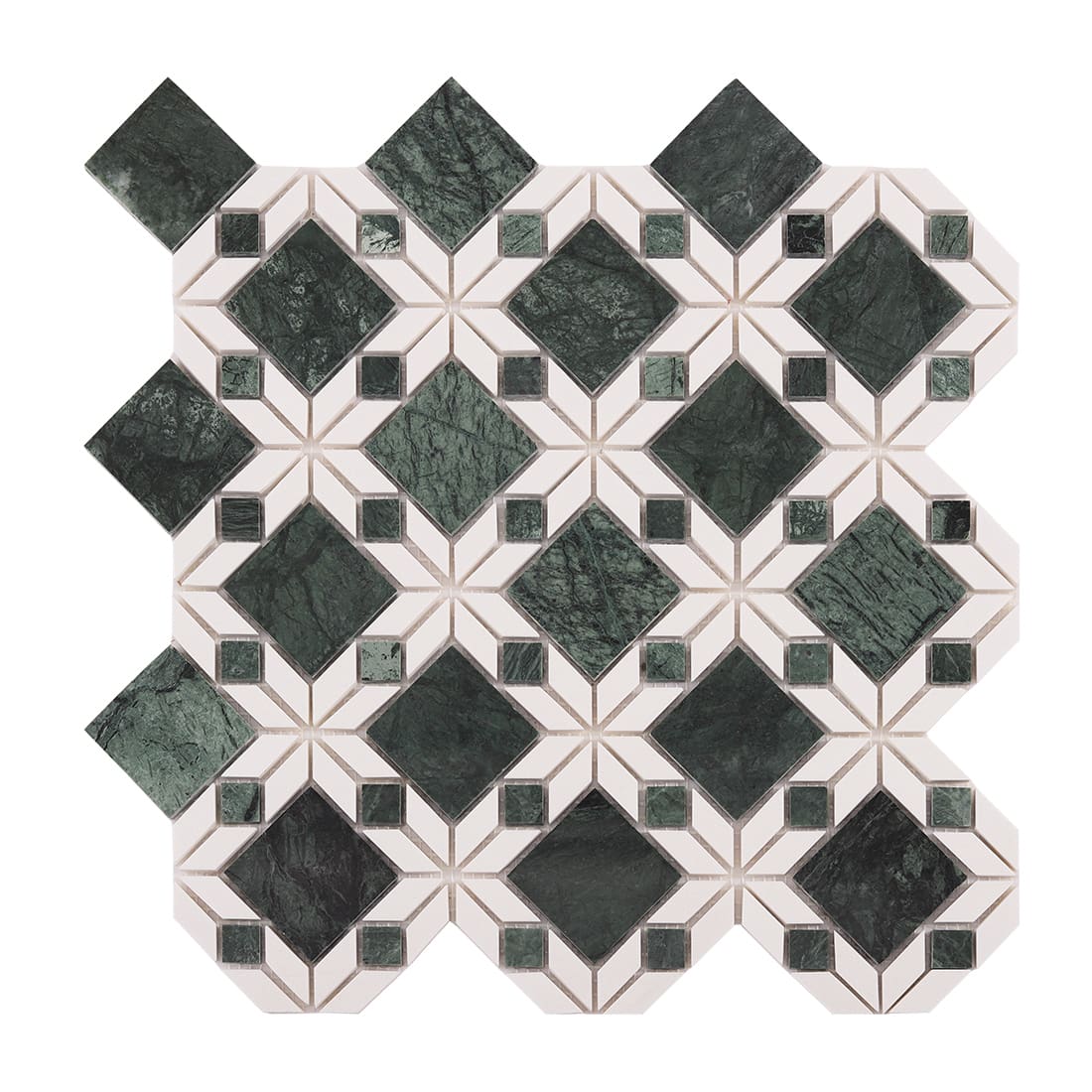
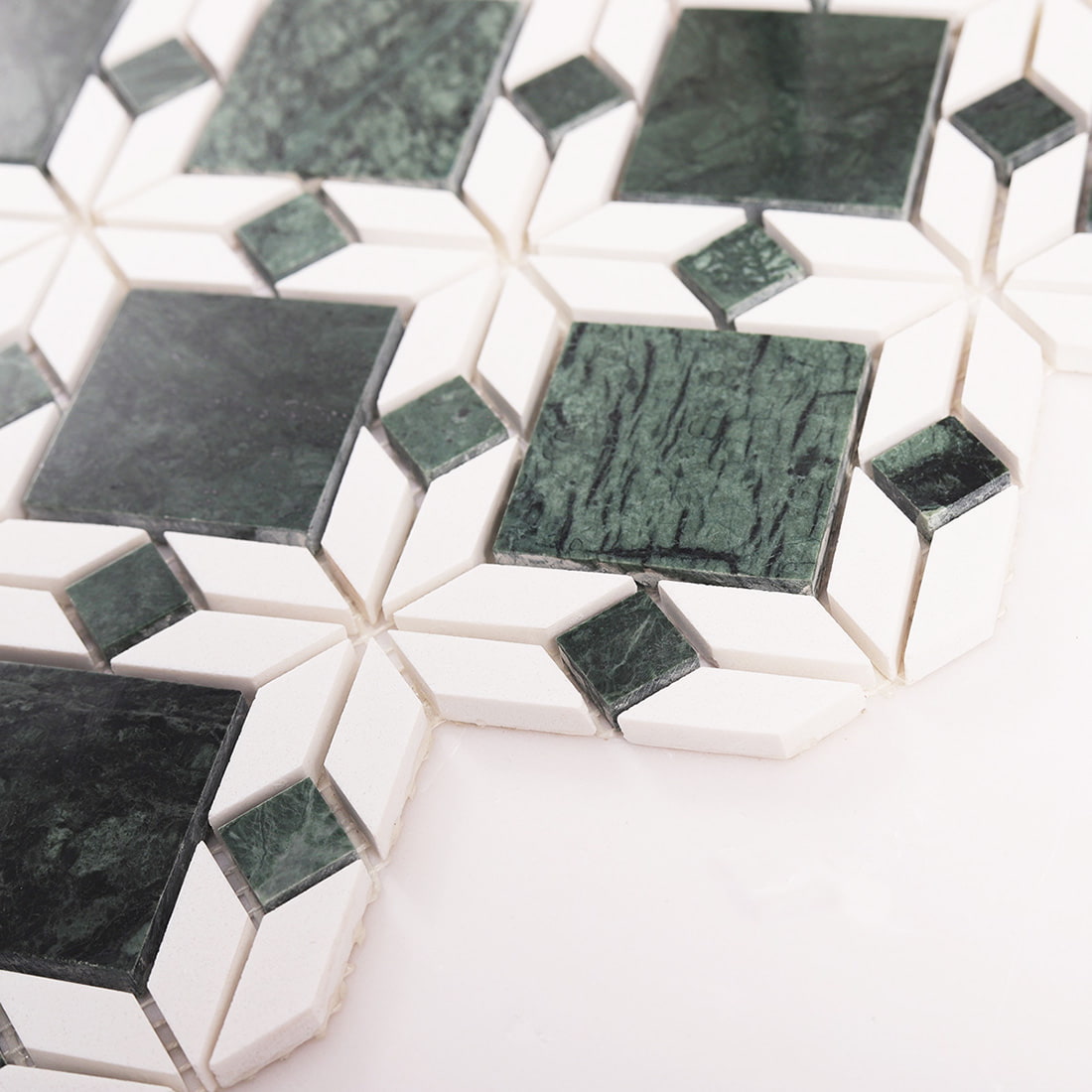
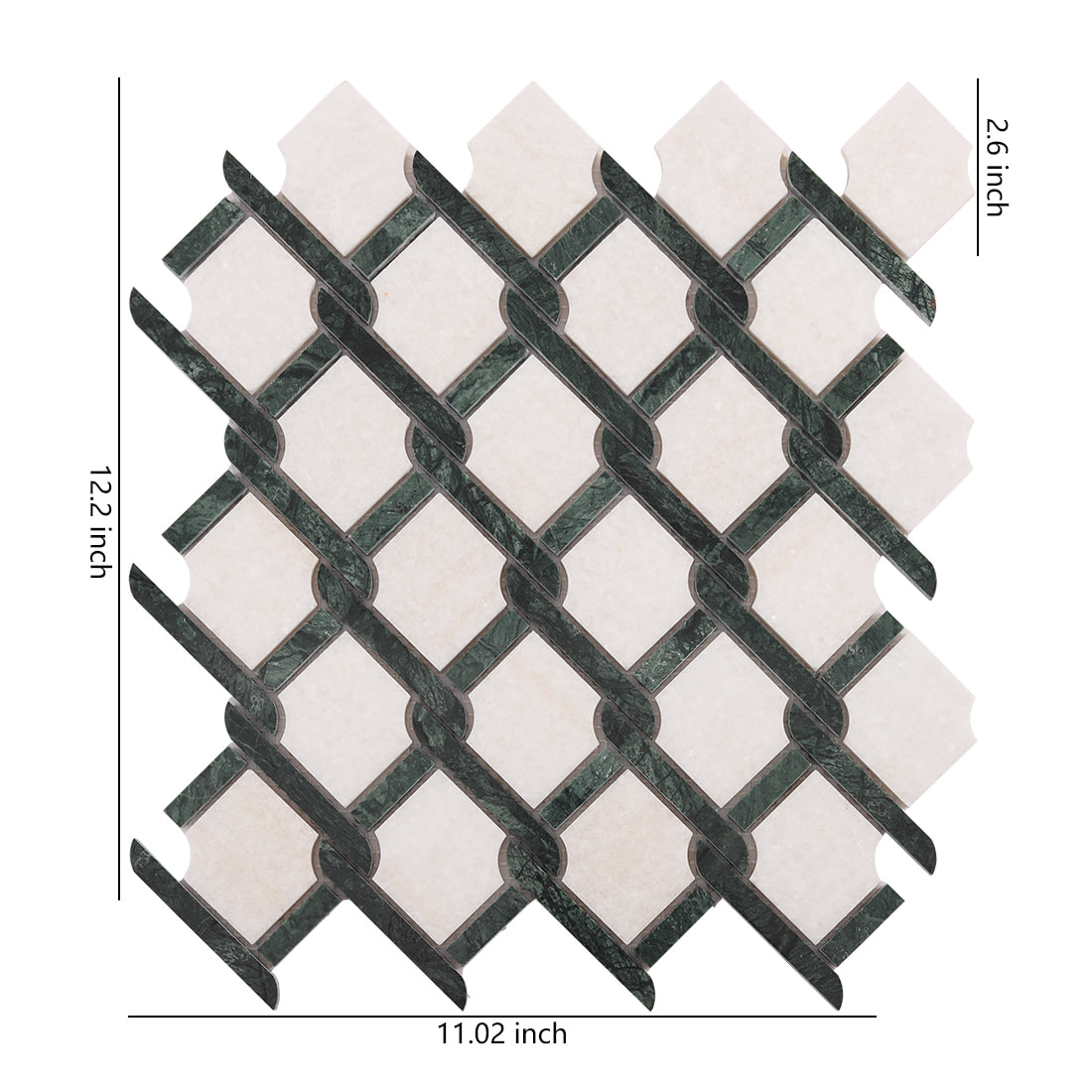
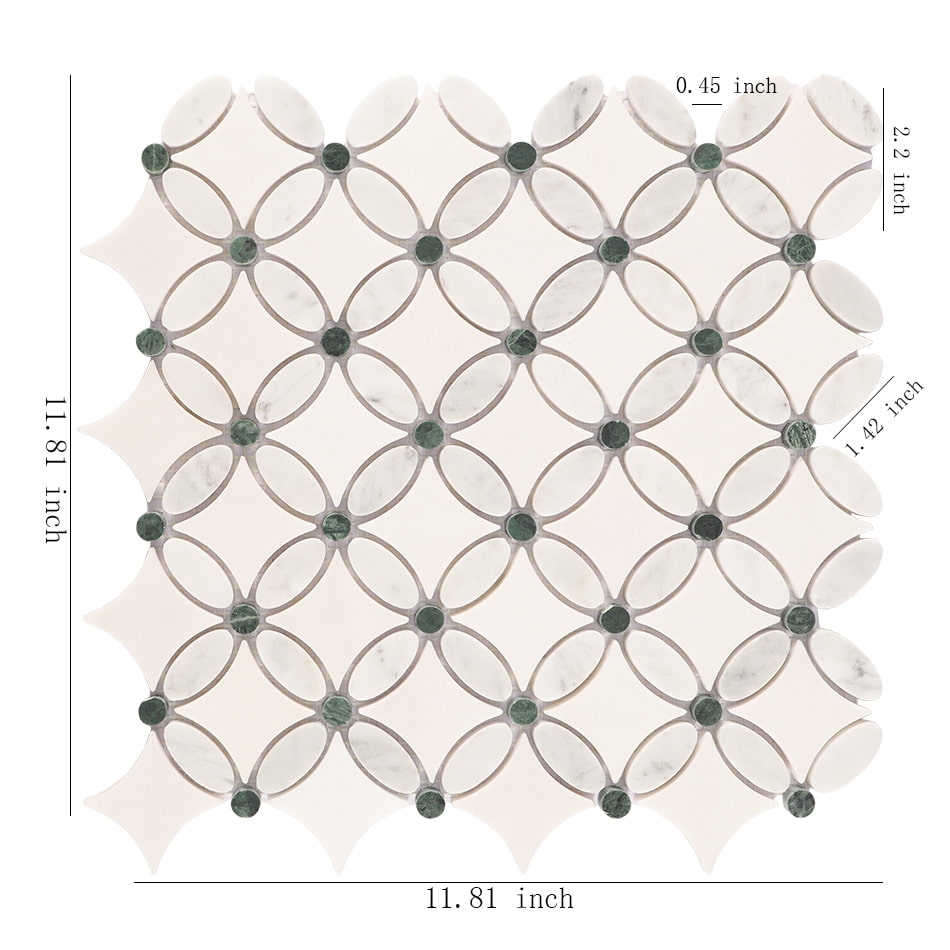
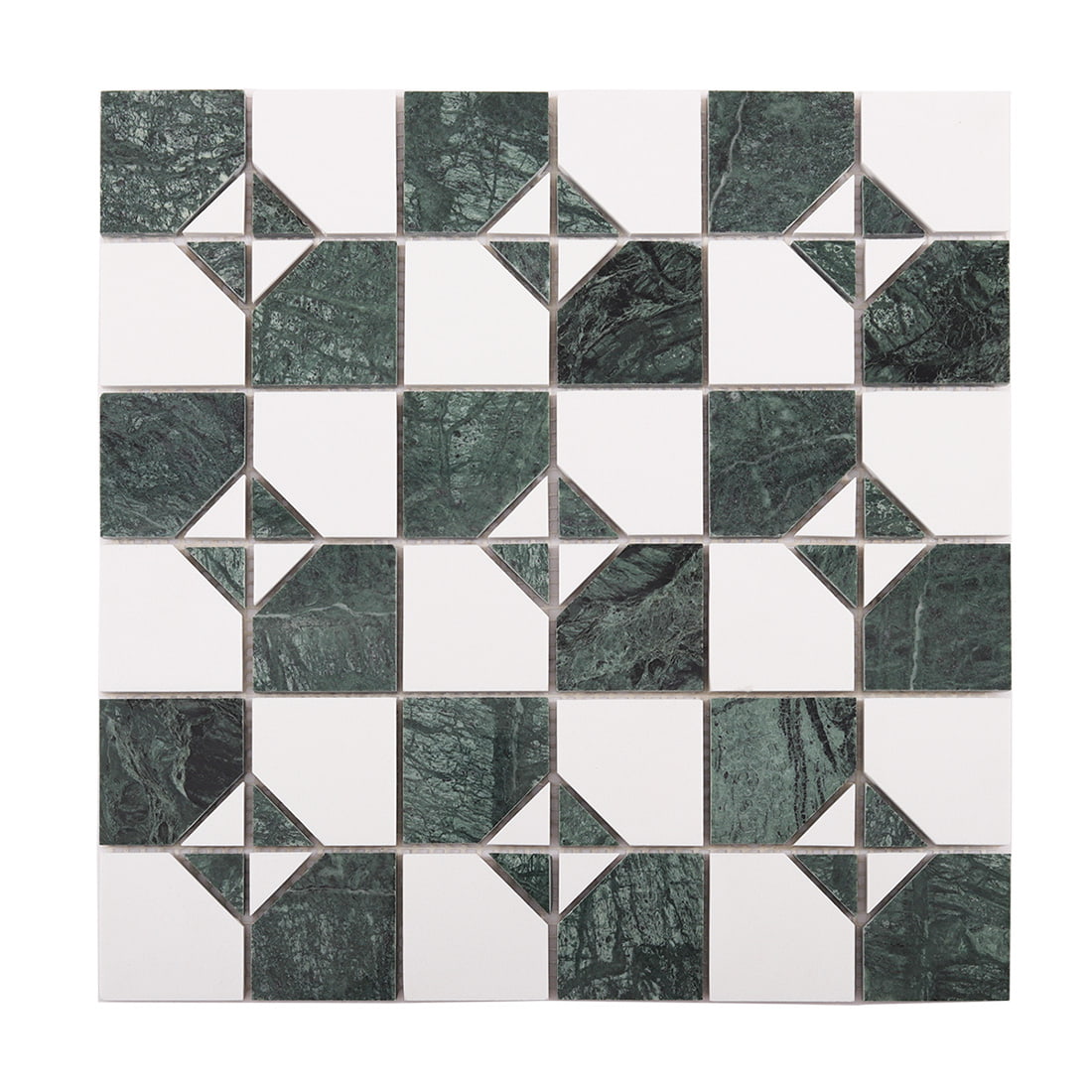
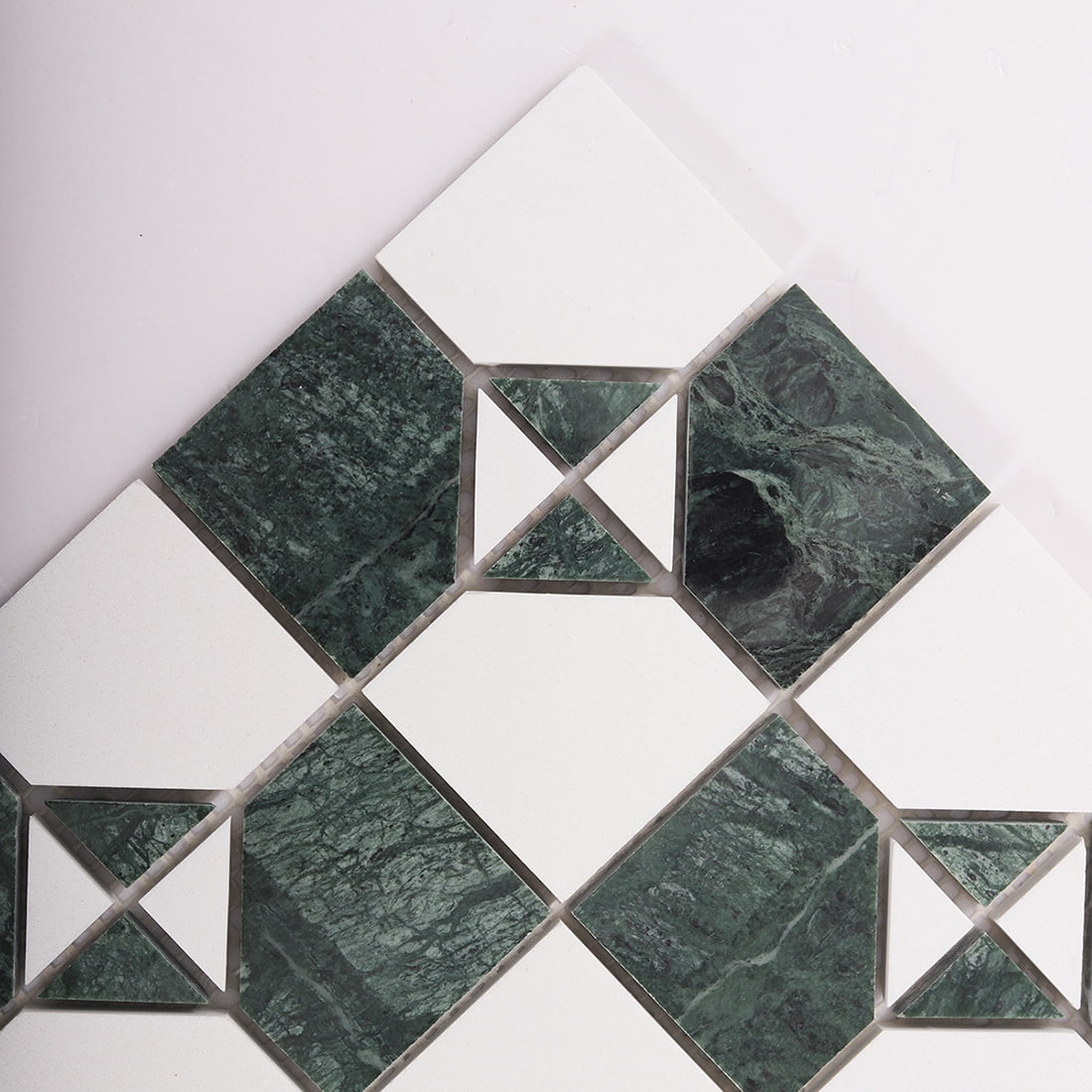
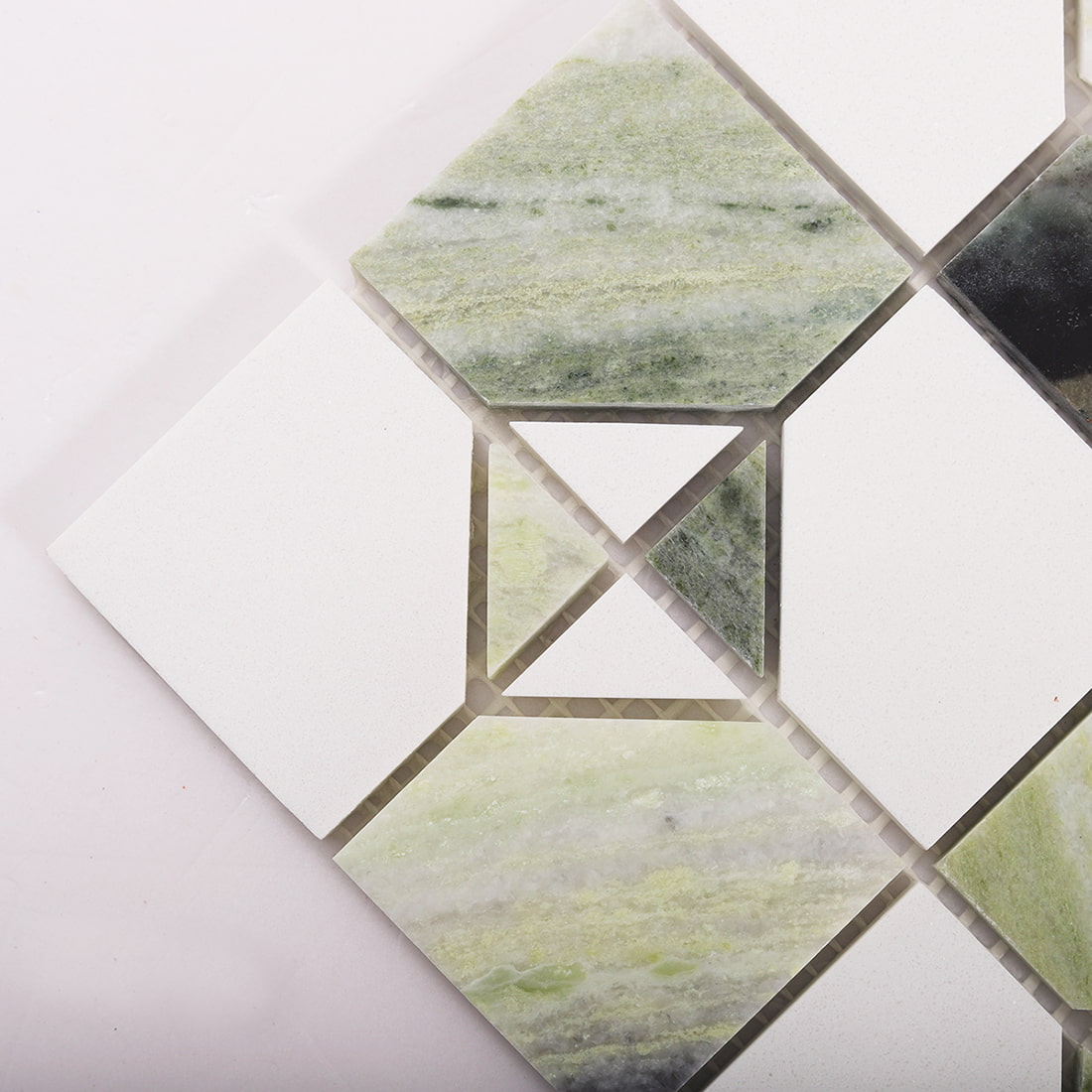
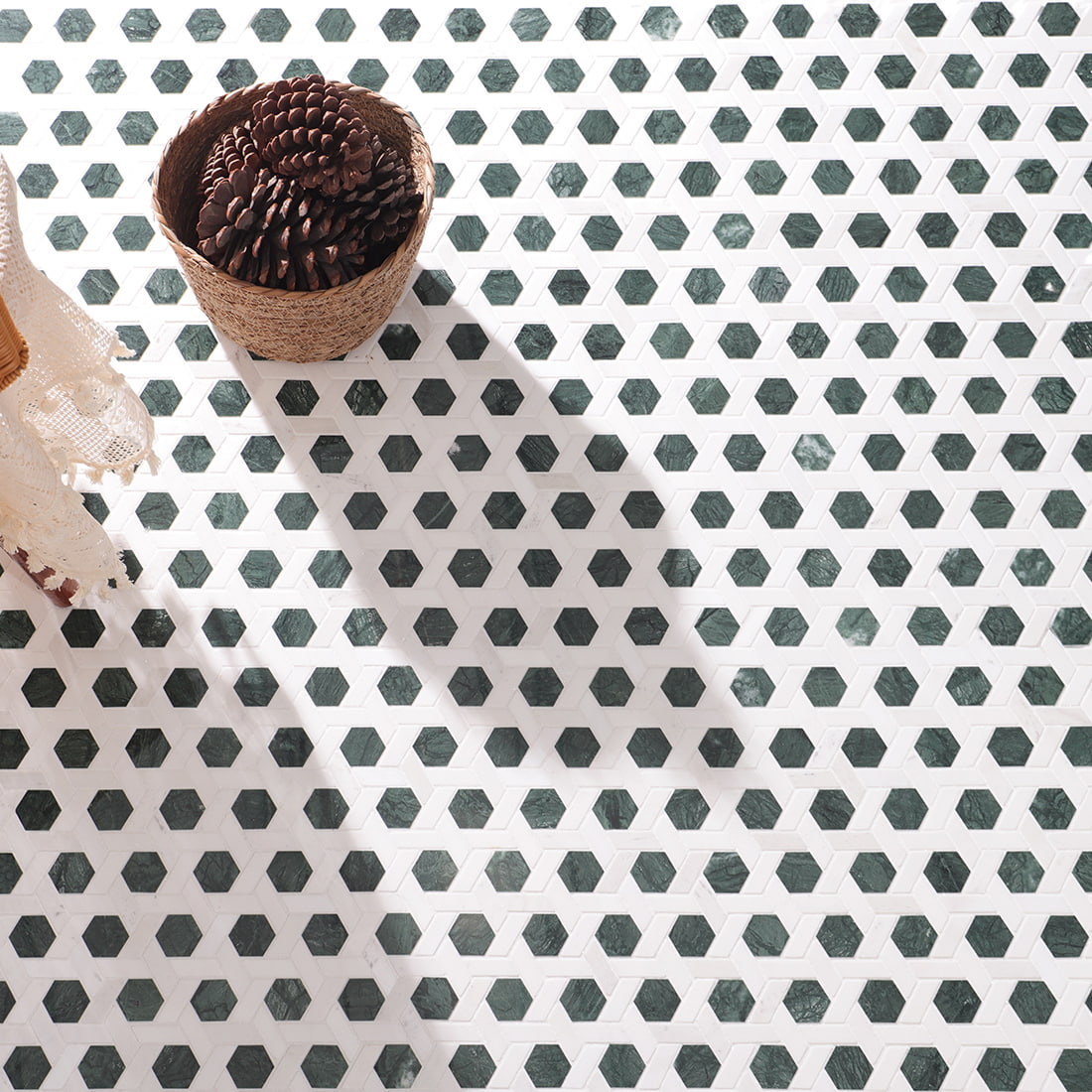
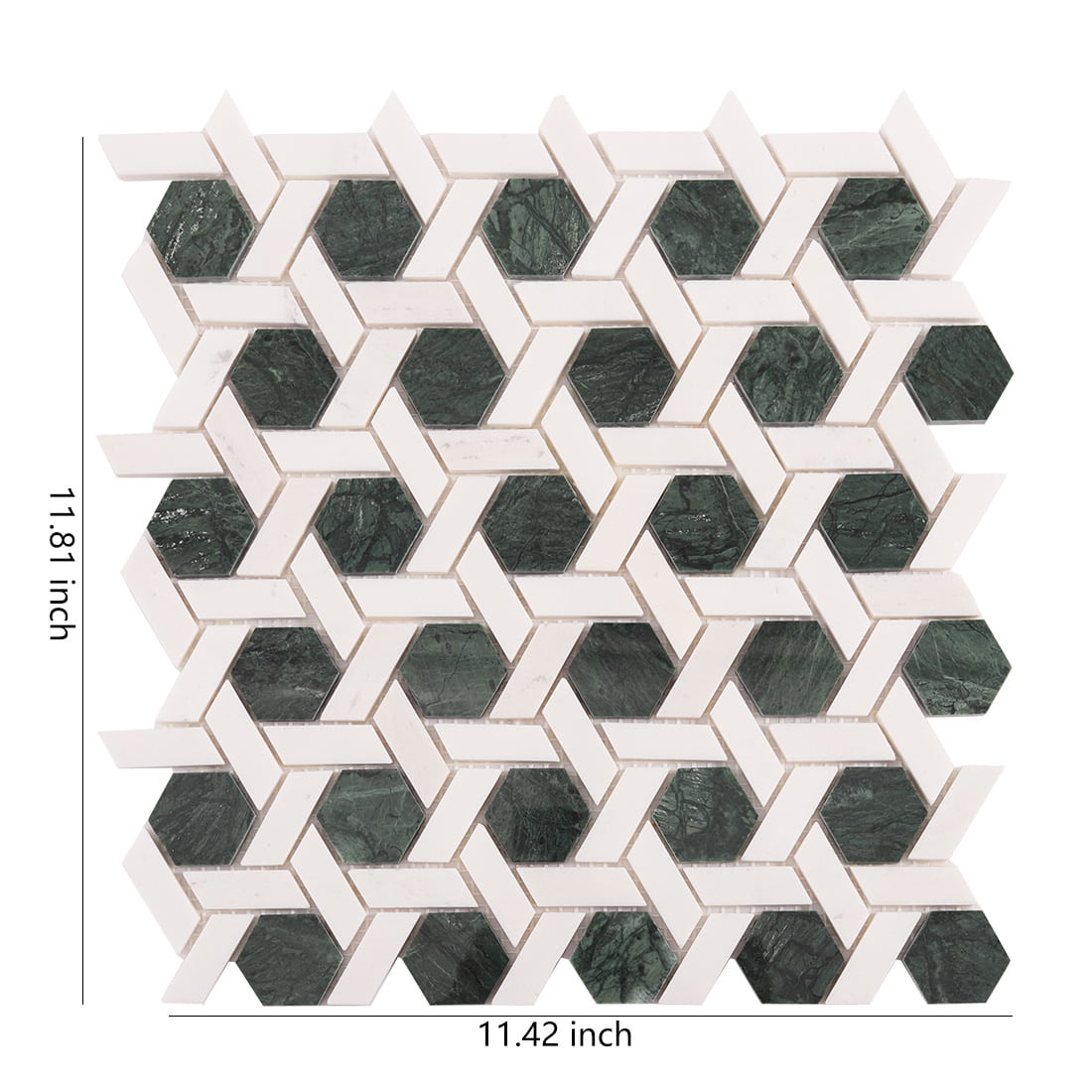
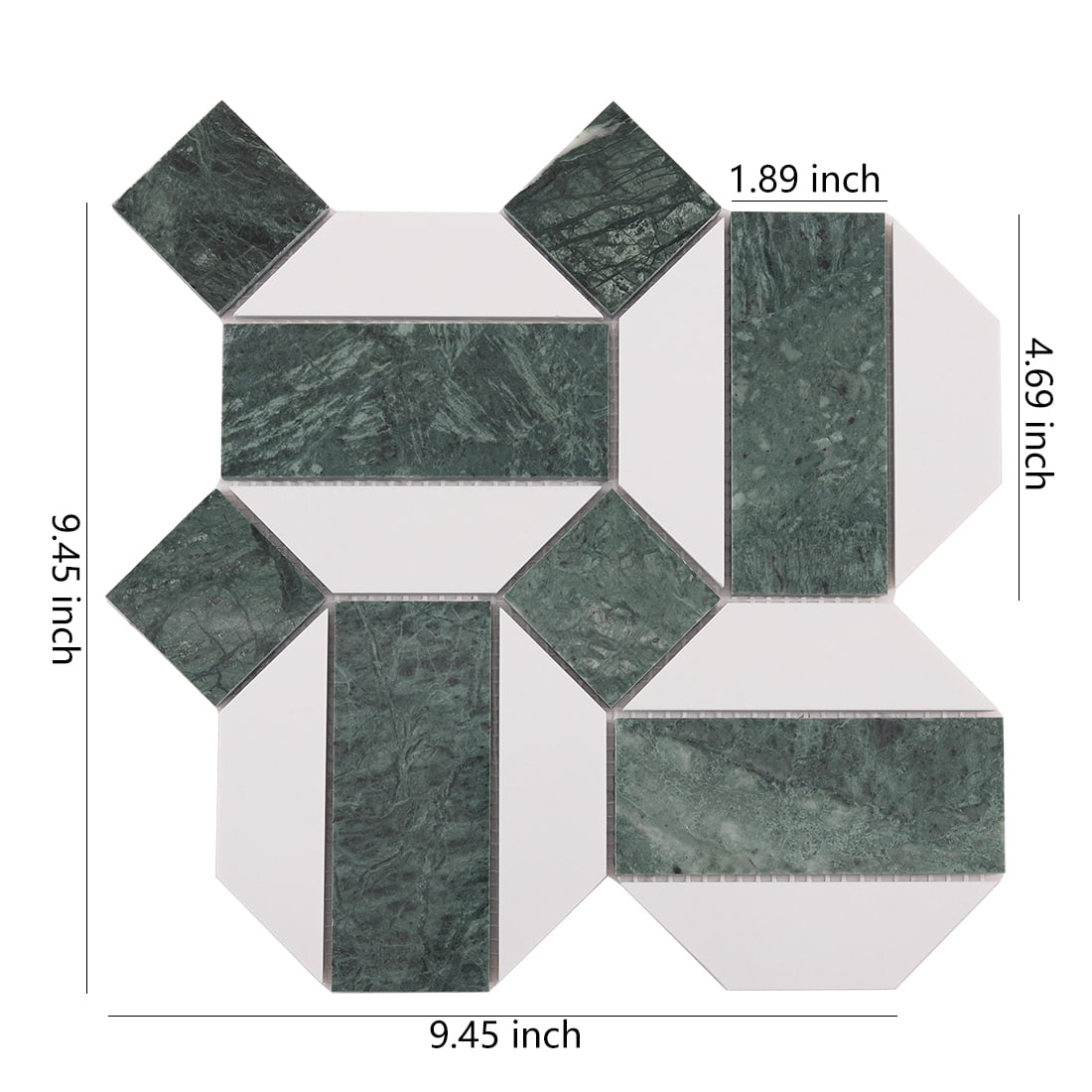
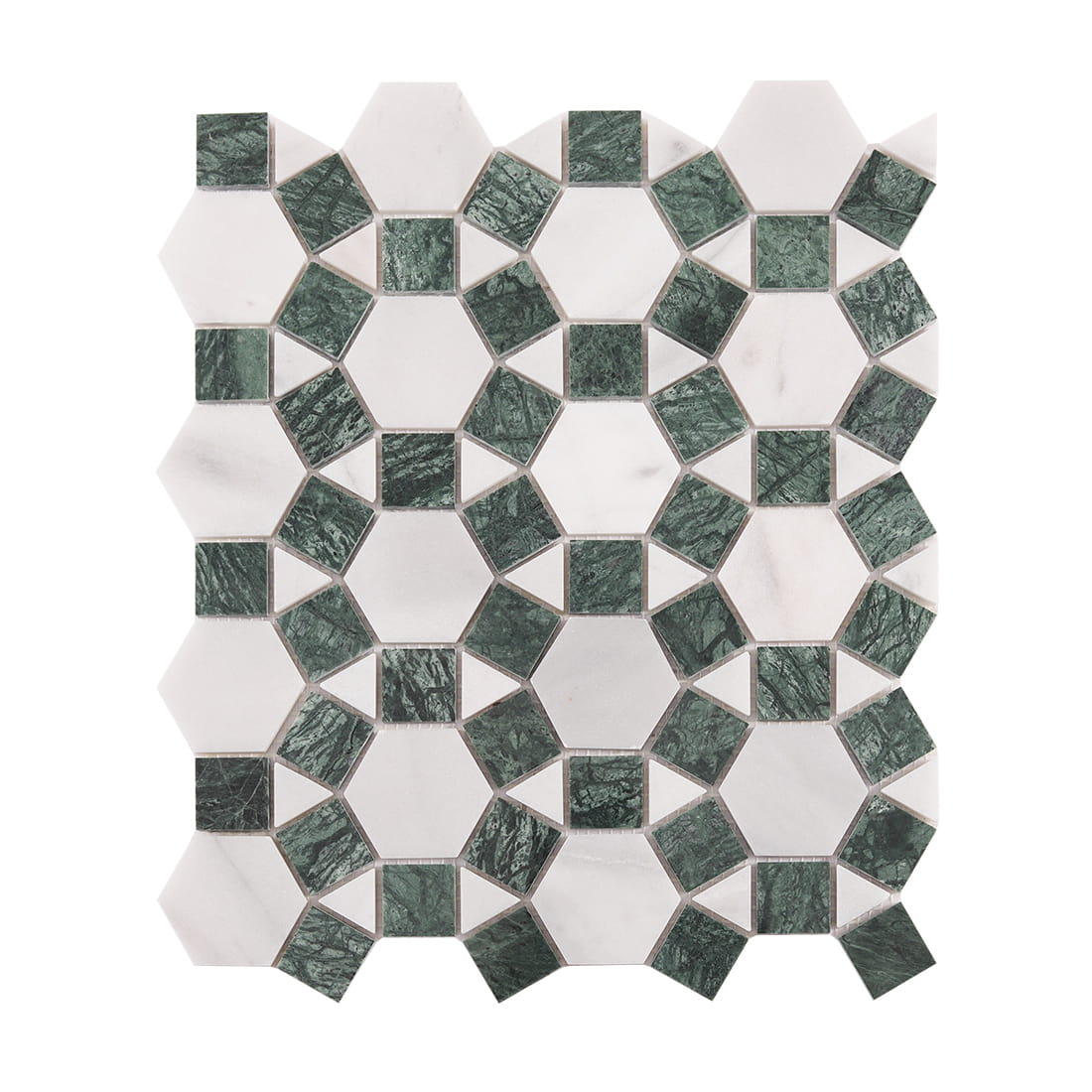
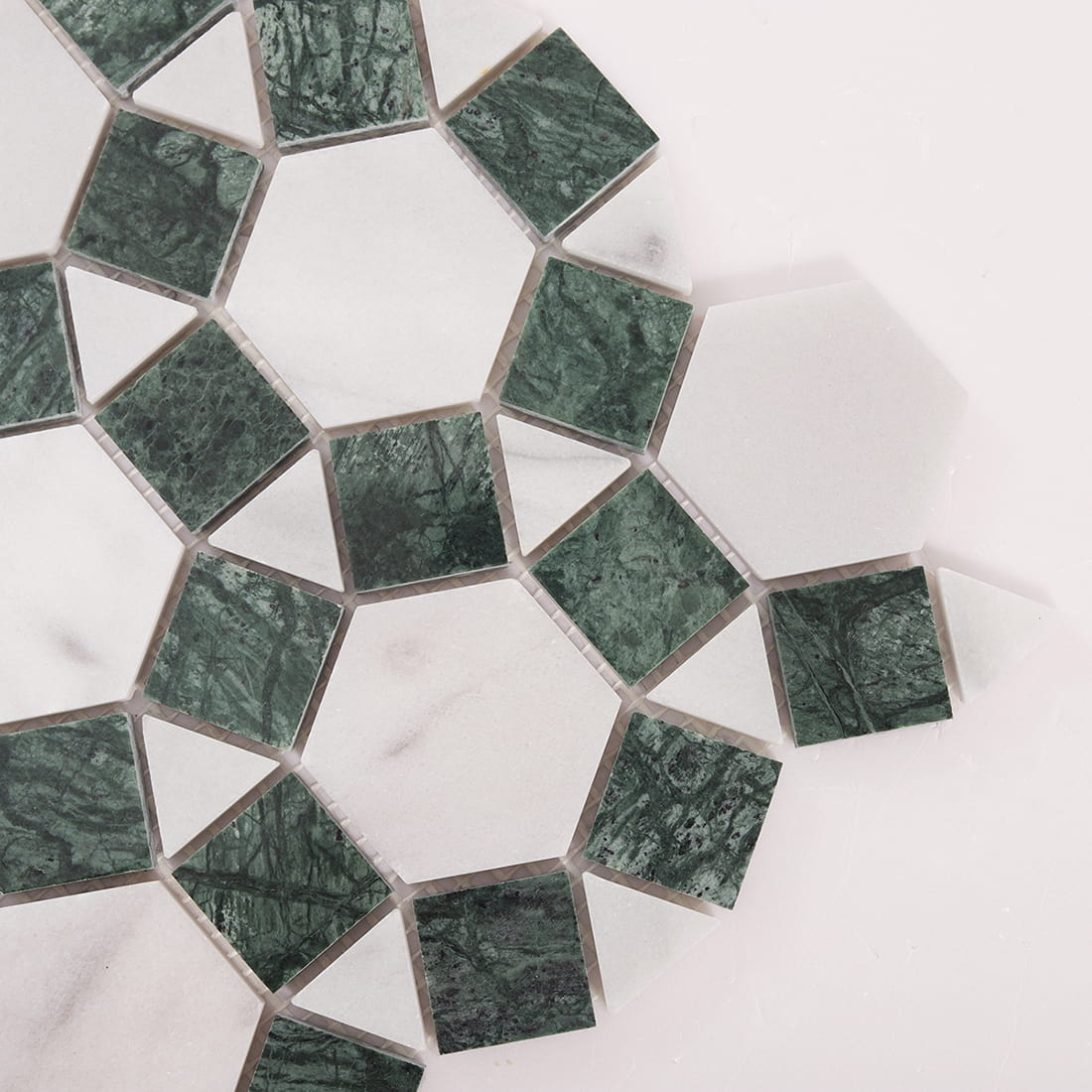
White Green Octagon Marble Mosaic Tile$23.80 USD
-
-
-
-
-
-
-
-
-
-
-
-
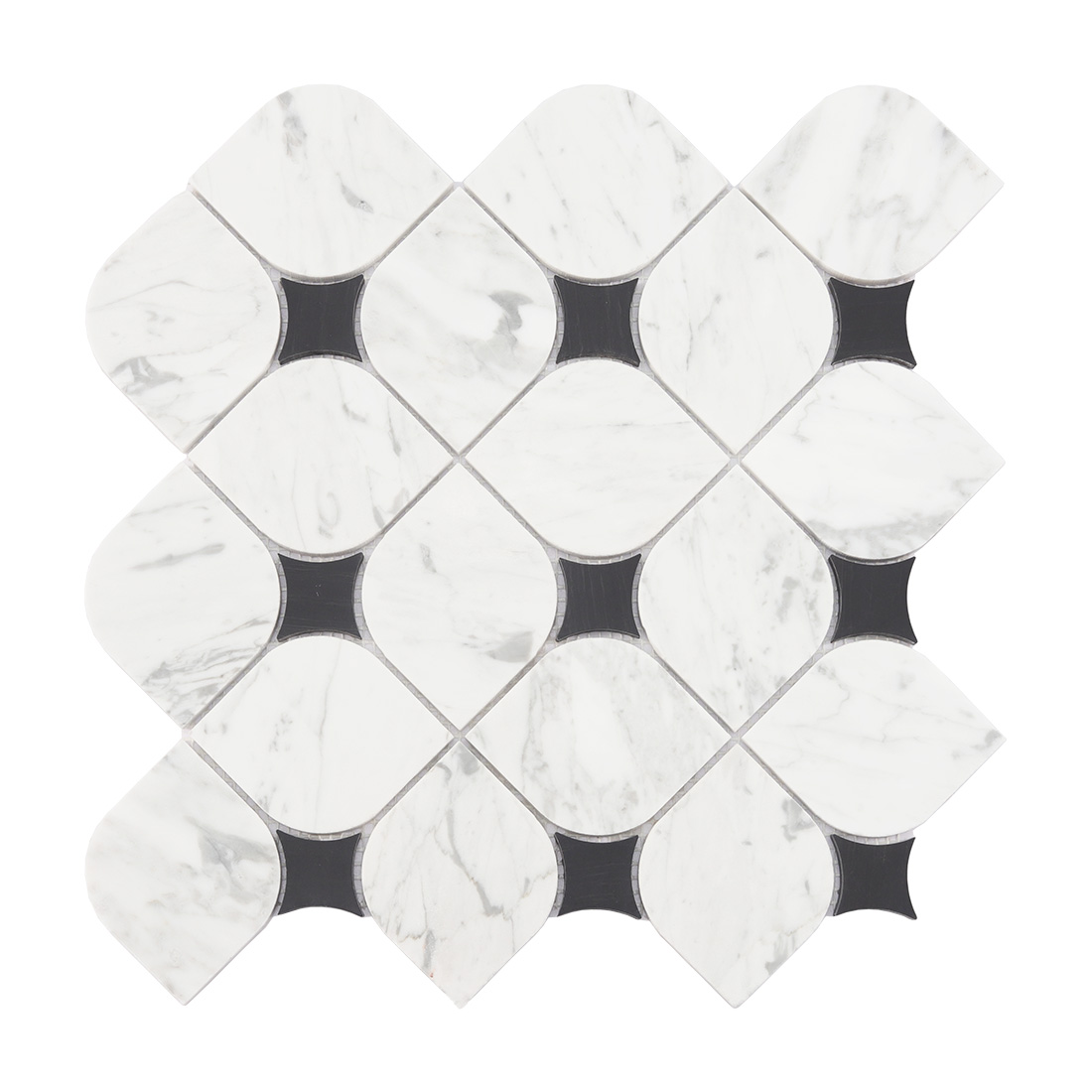
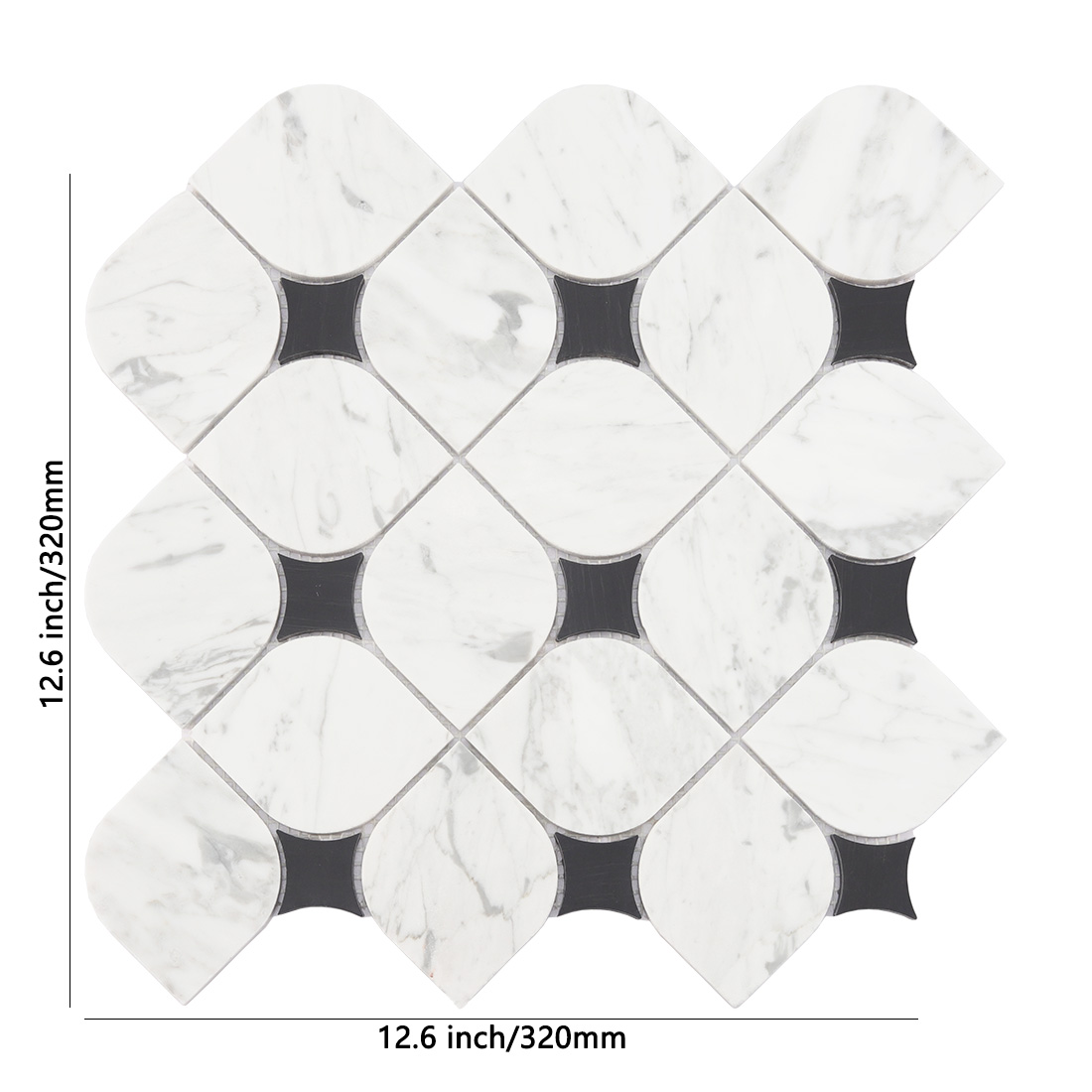
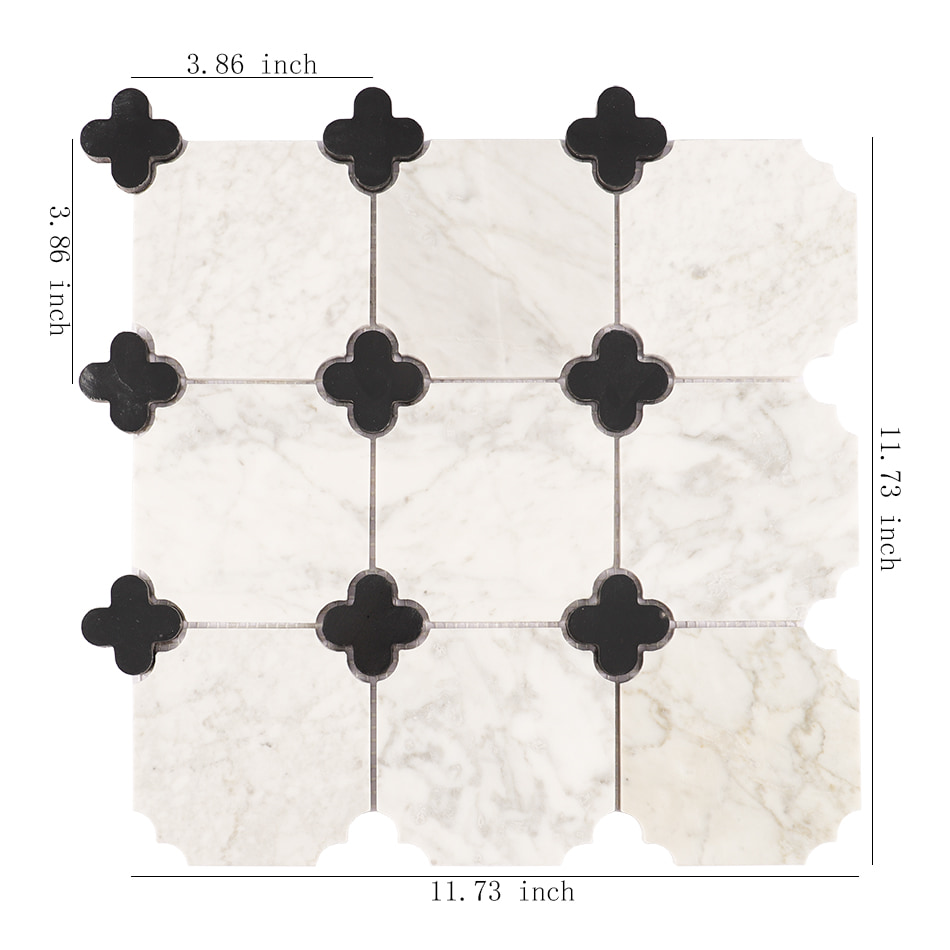
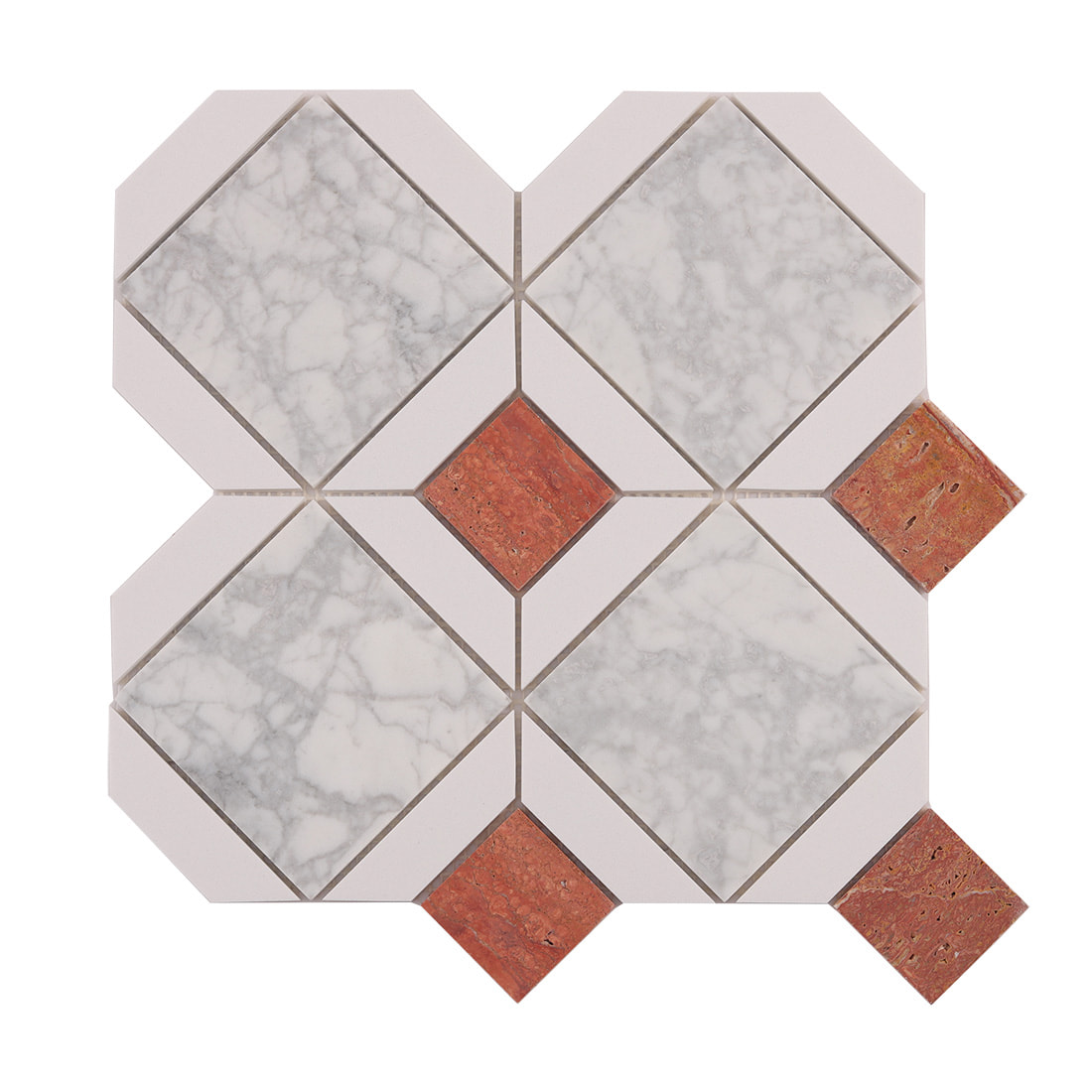
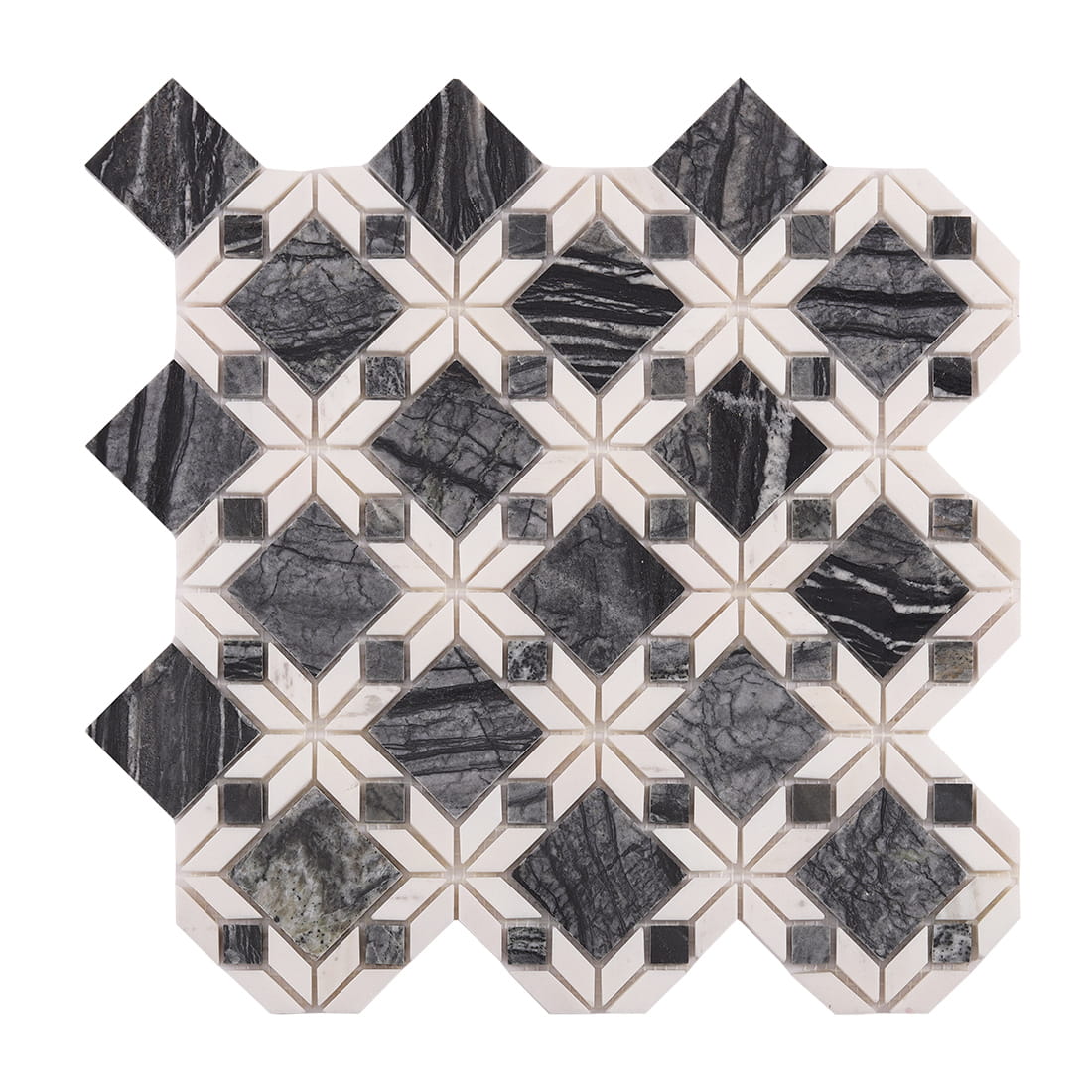
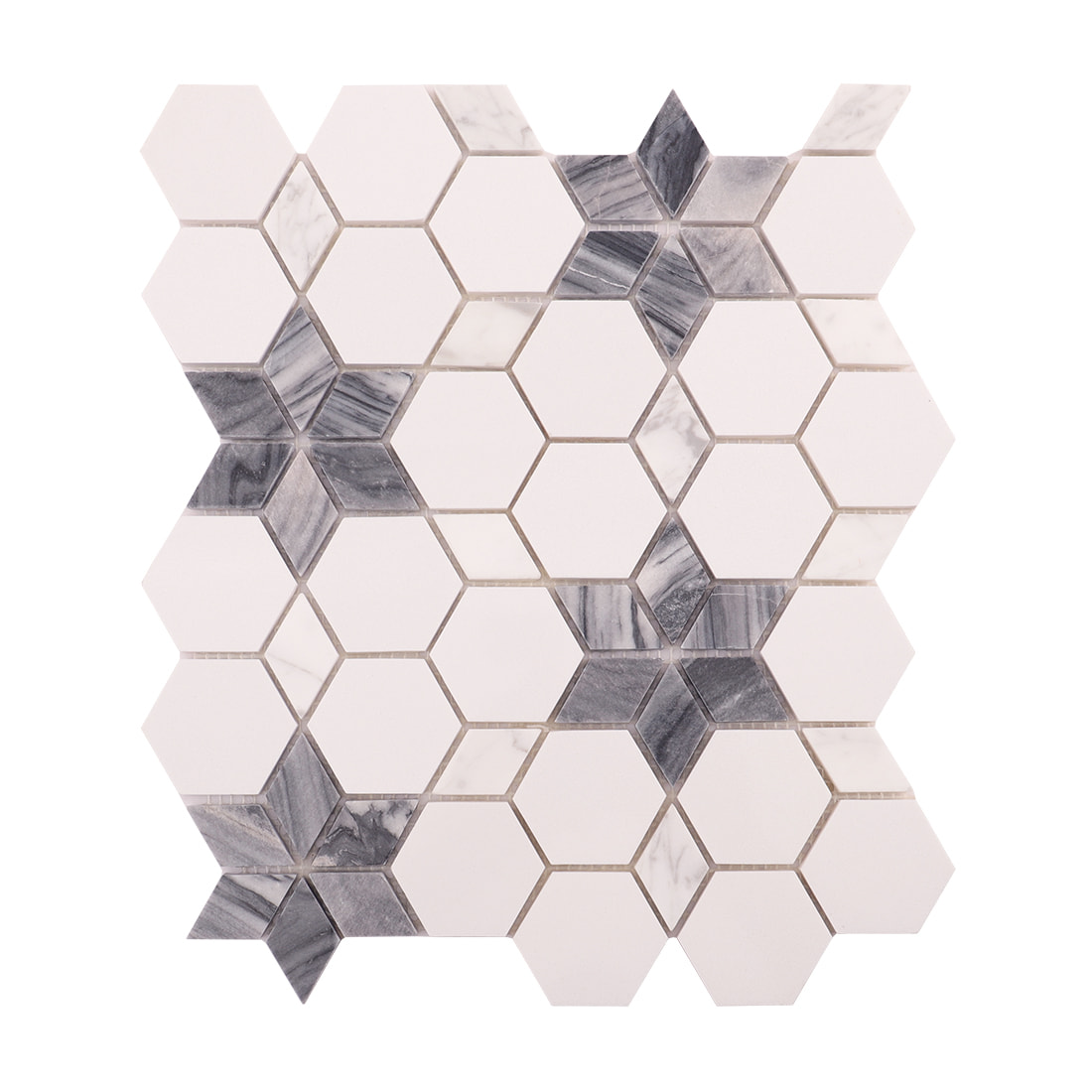
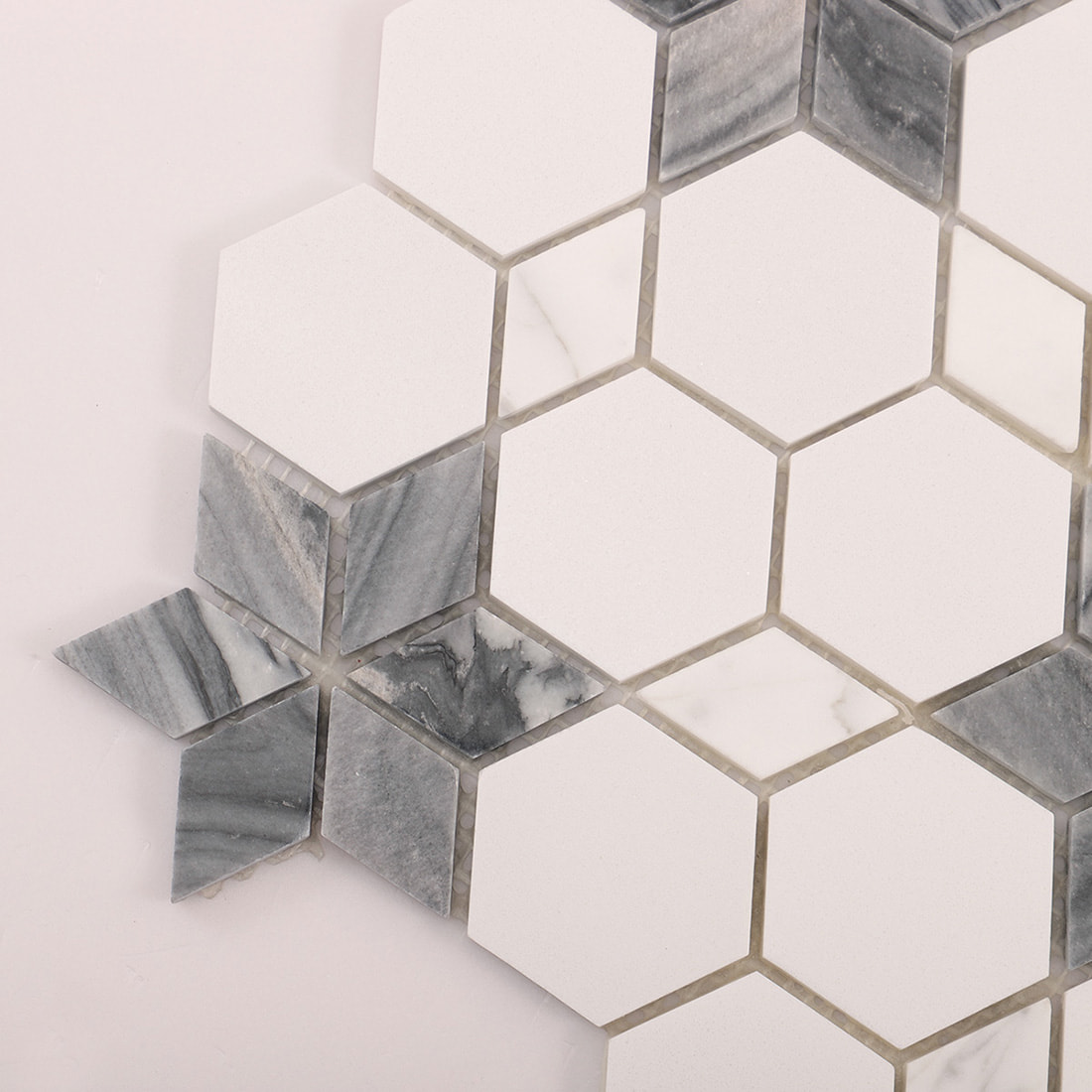
White Black Petal Flower Marble Mosaic Tile$17.30 USD
-
-
-
-
-
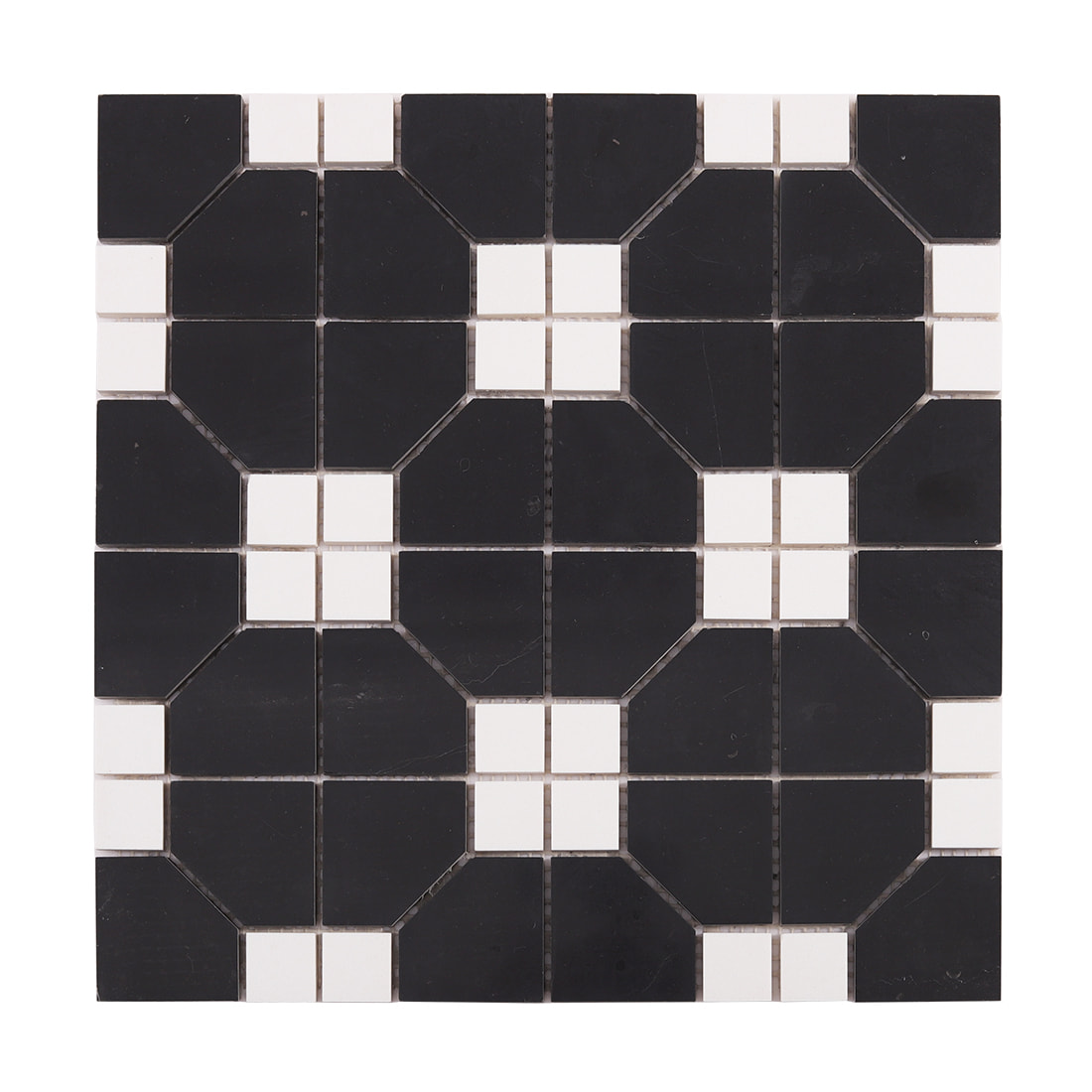
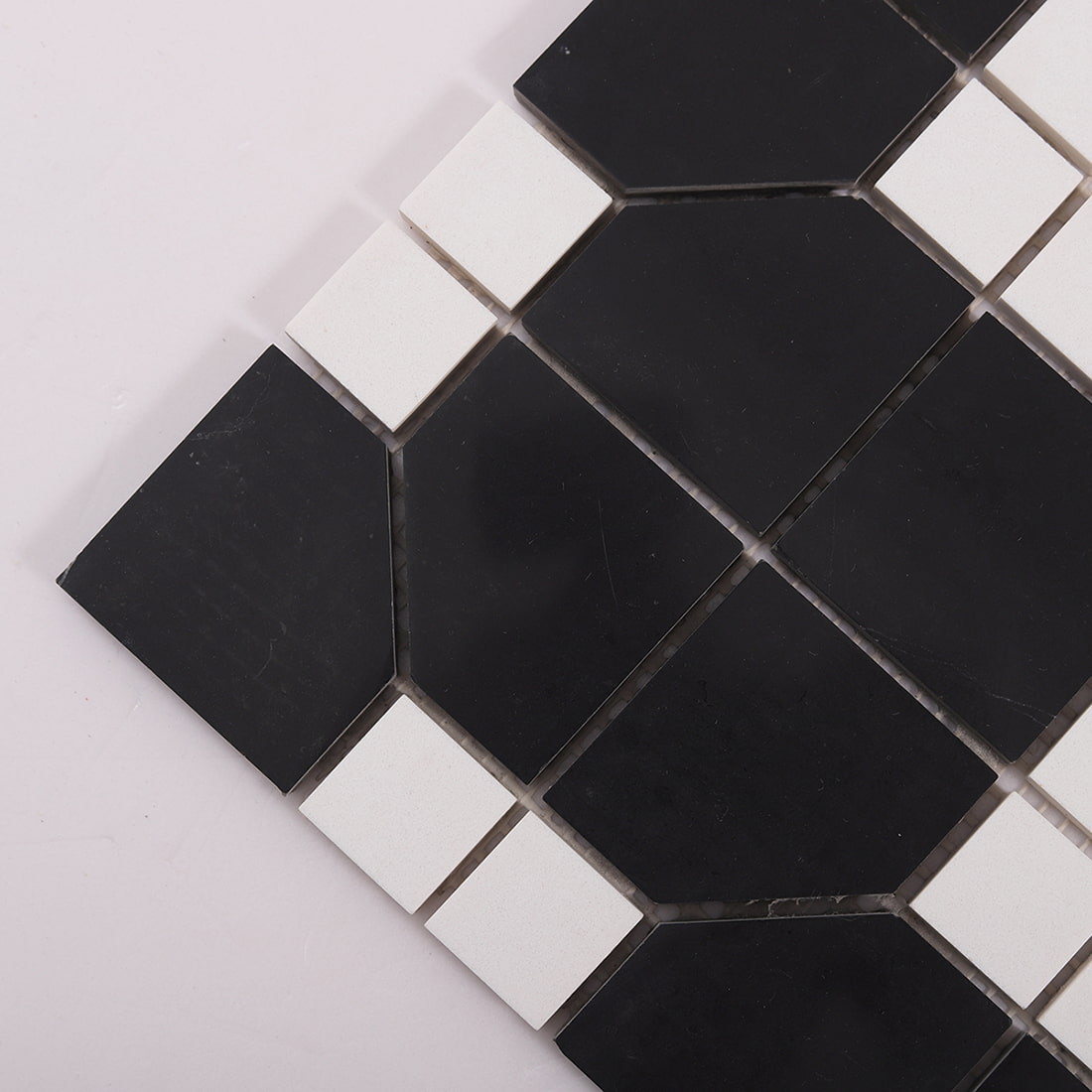
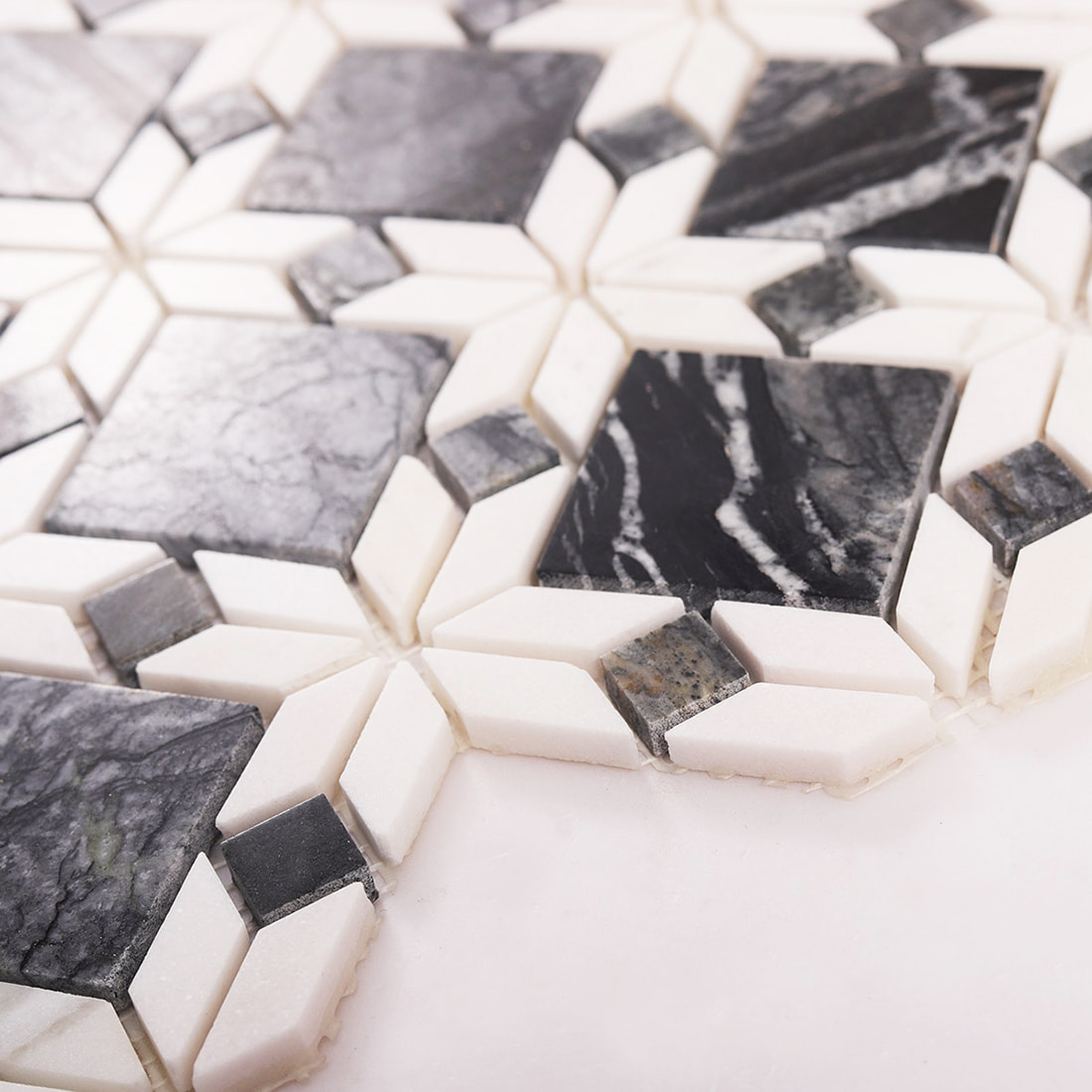
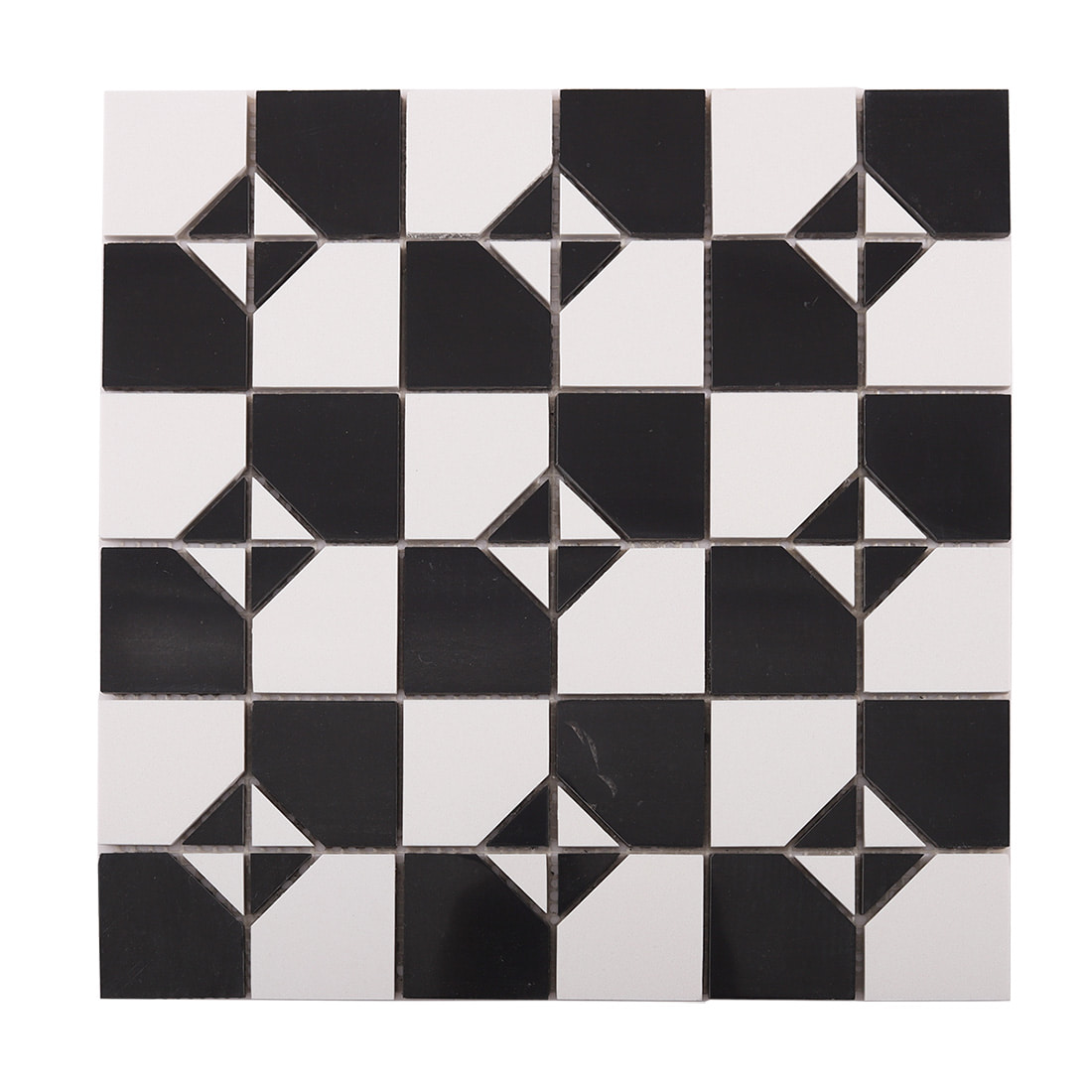
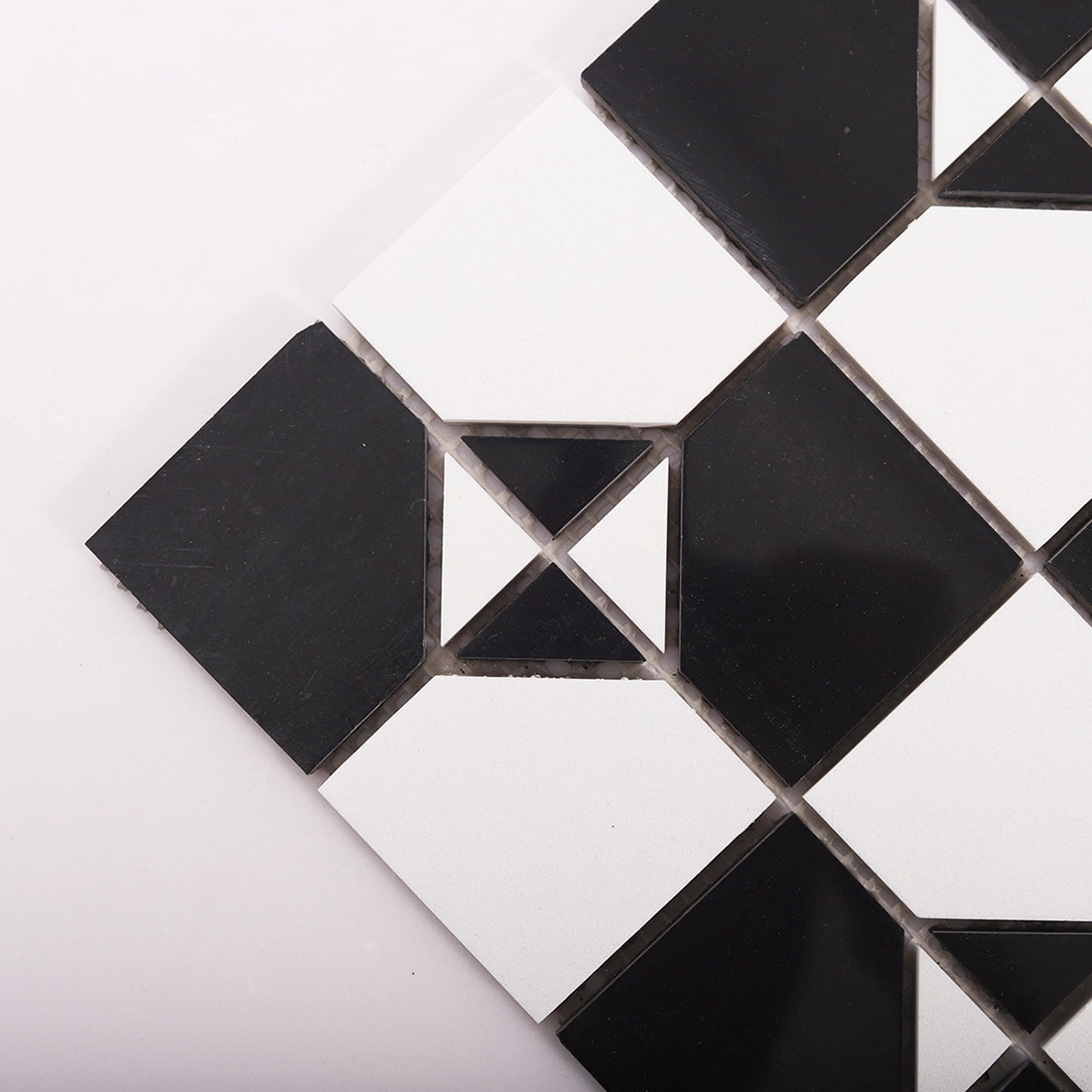
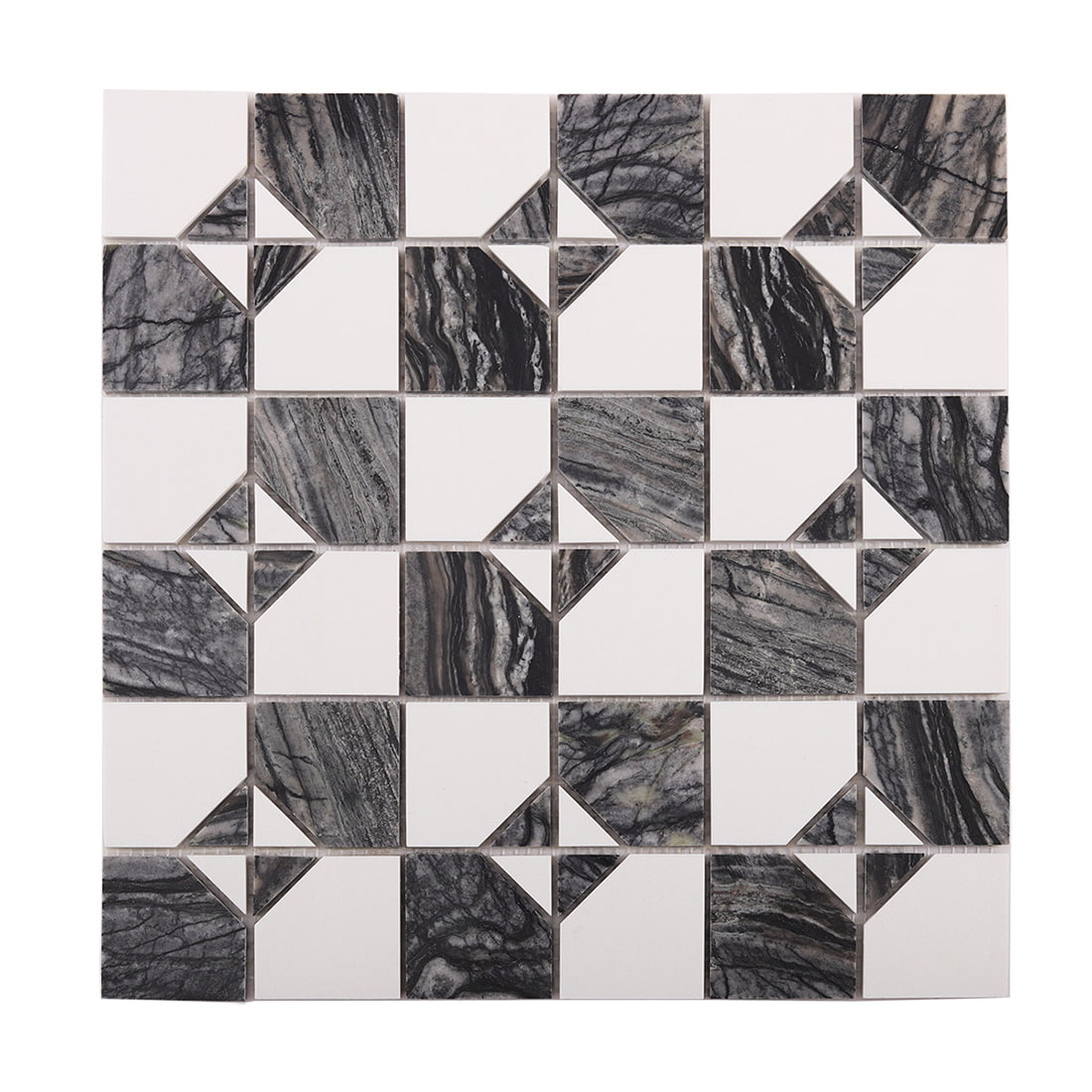
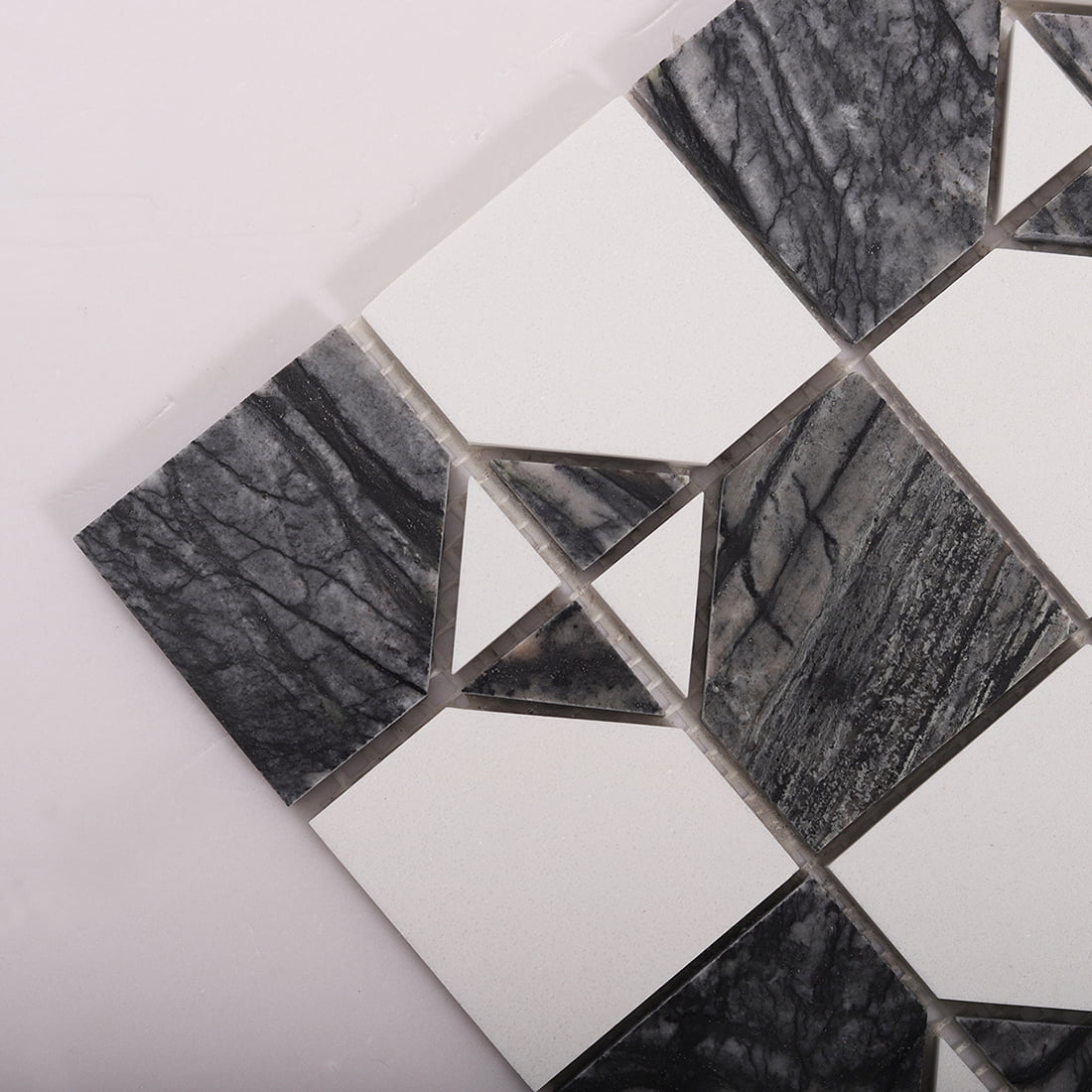
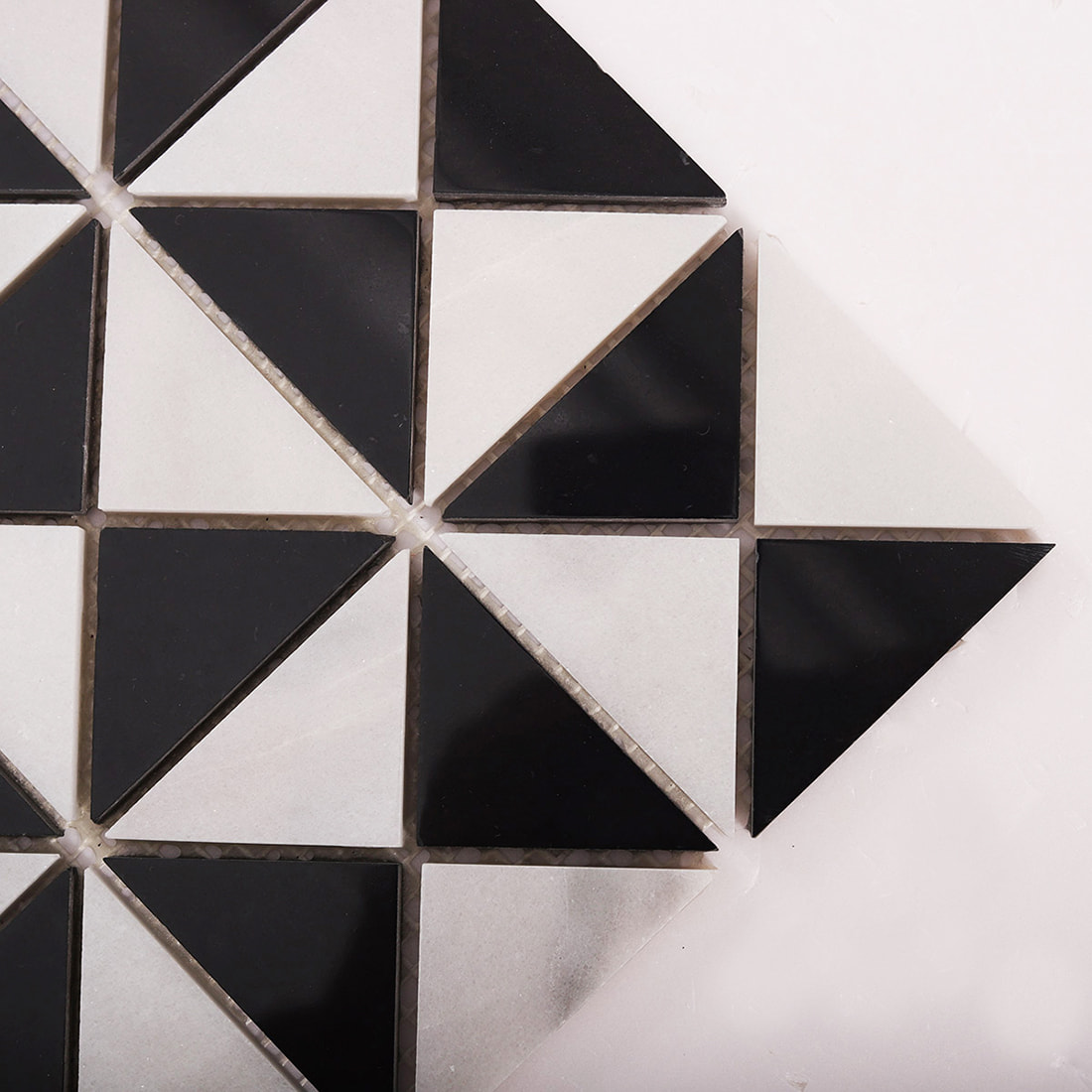
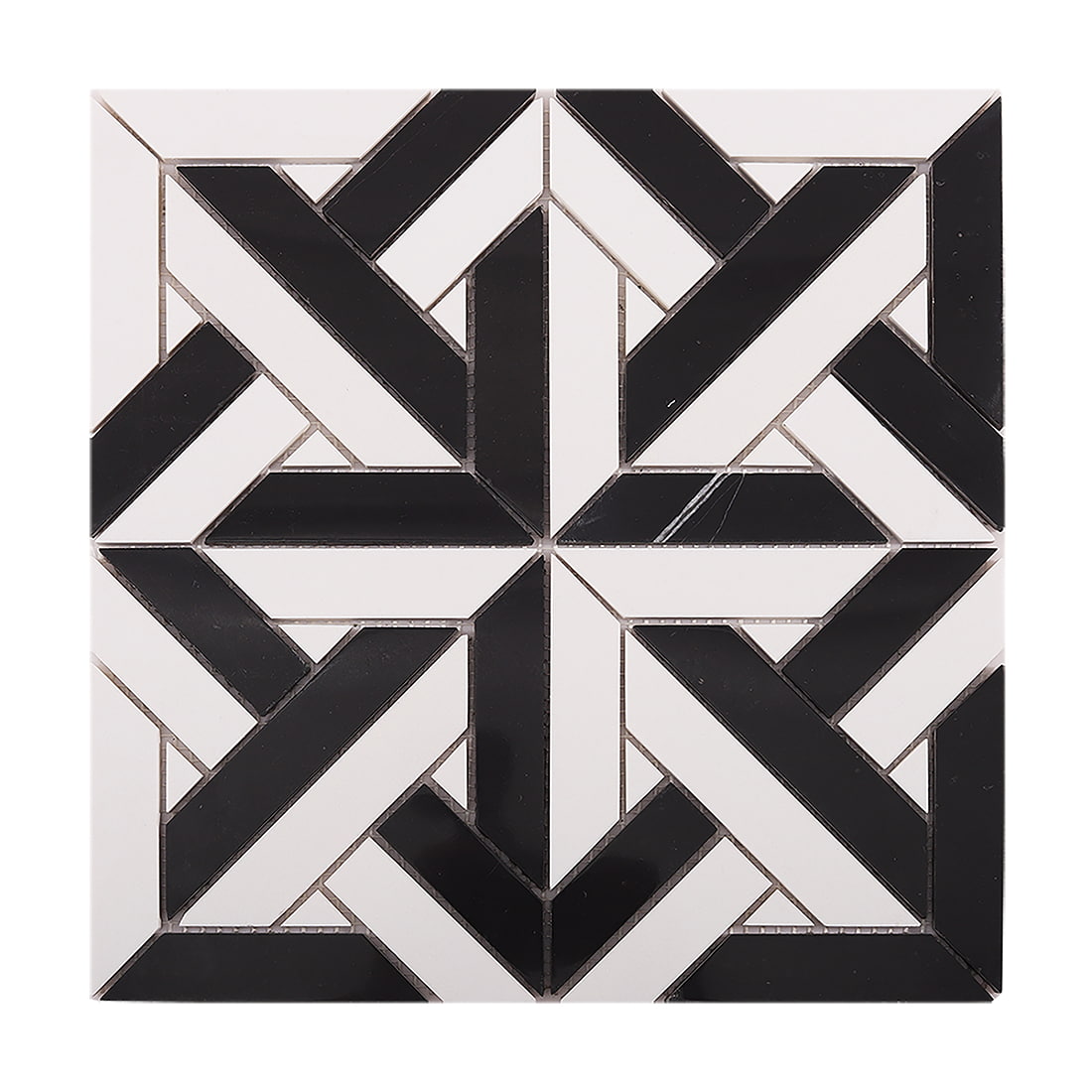
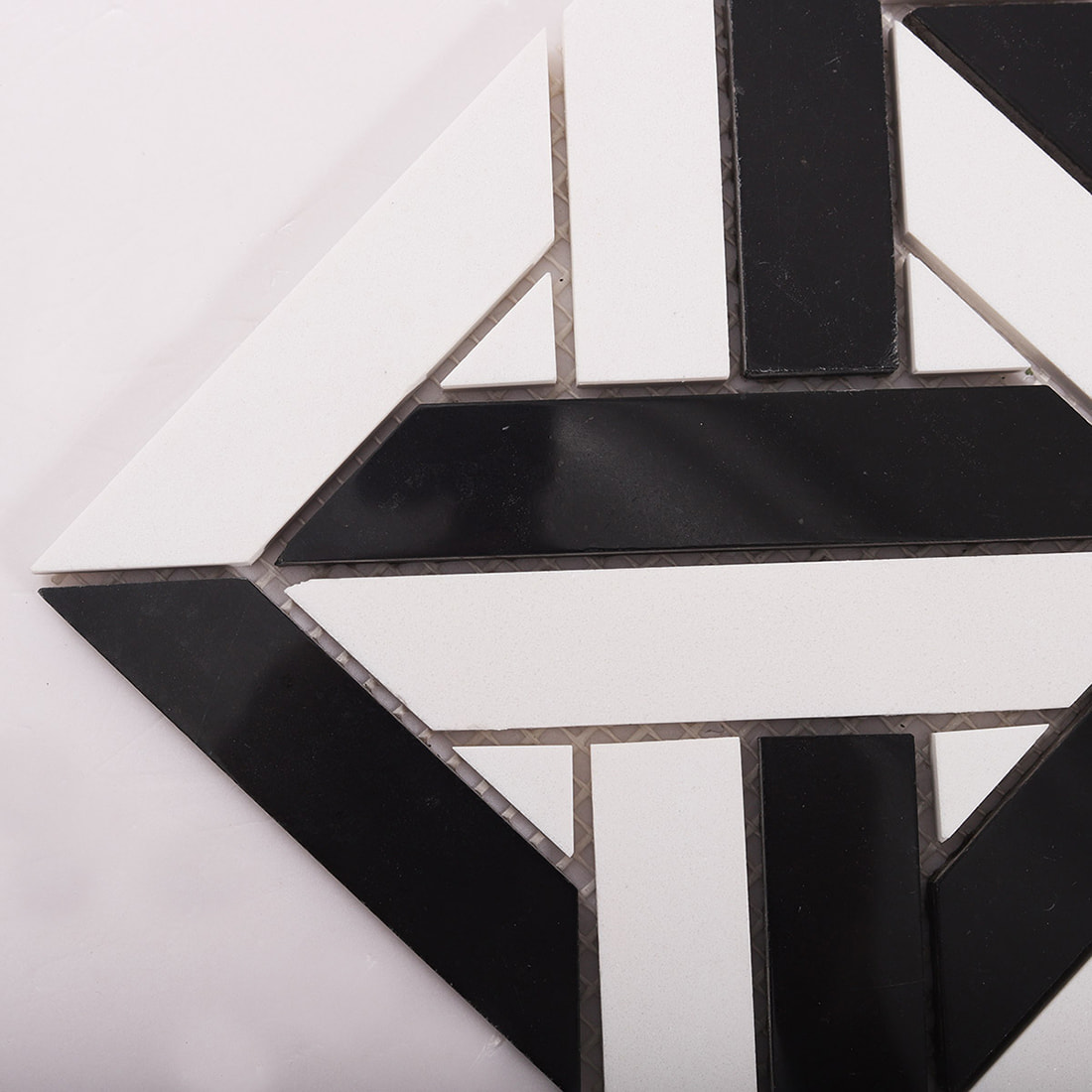
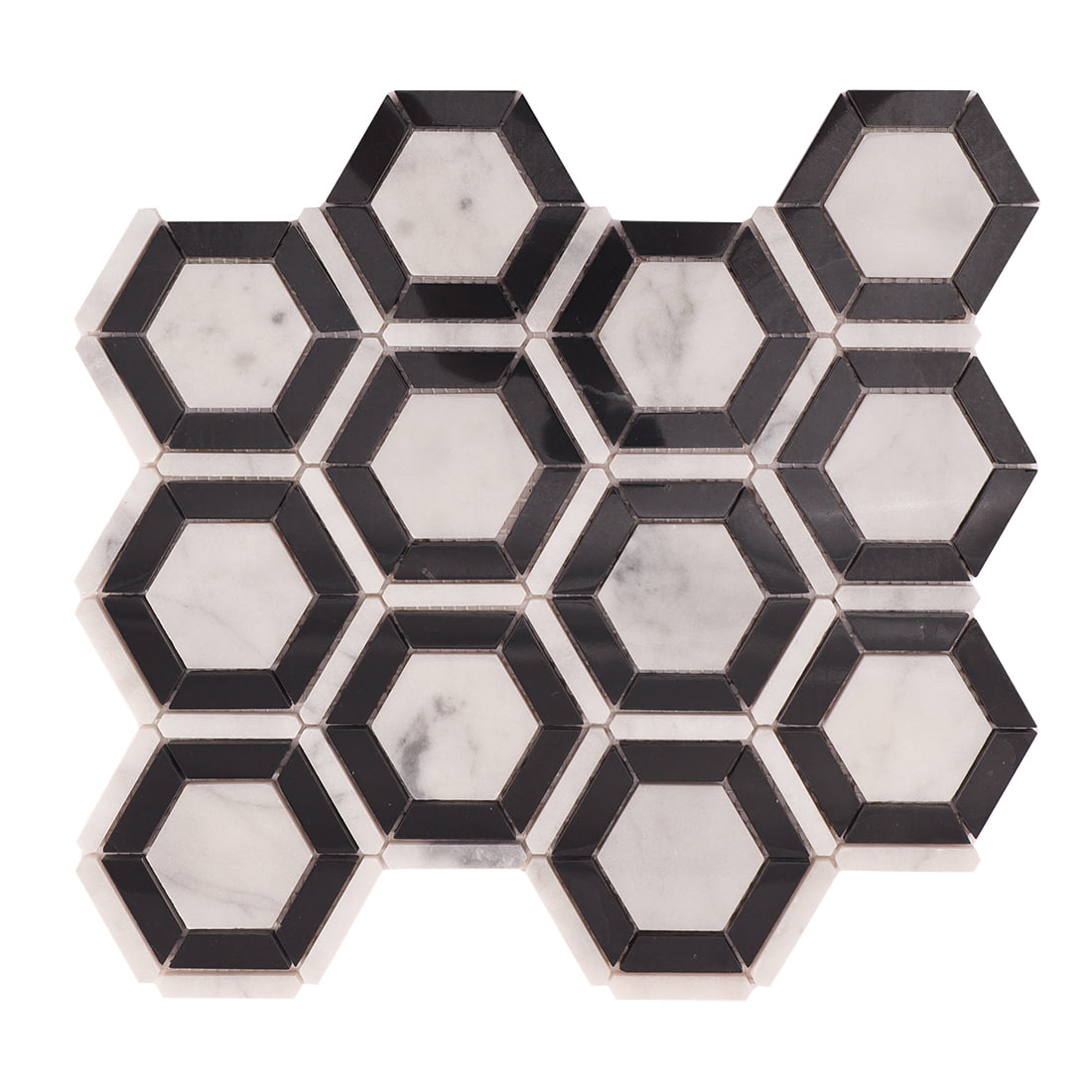
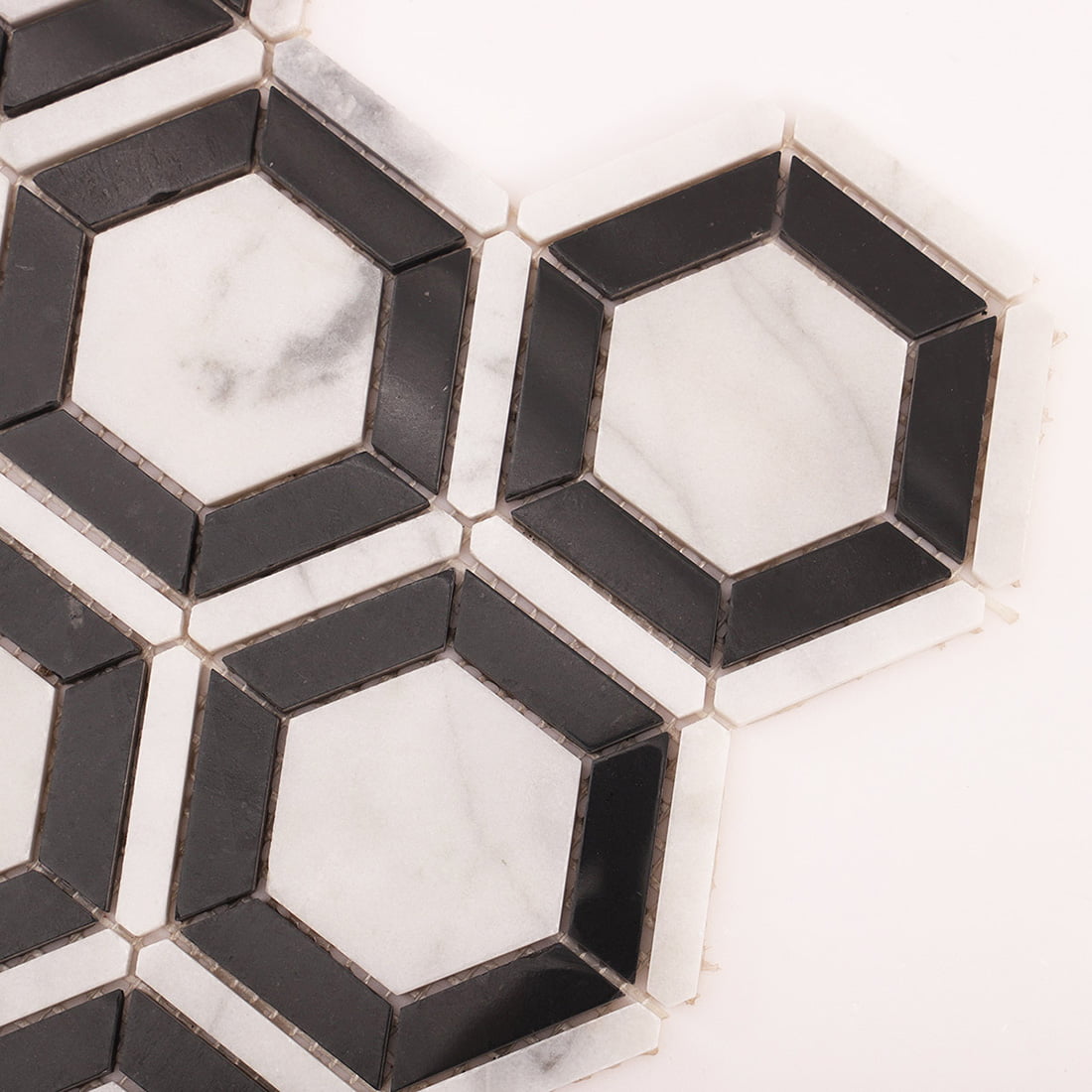
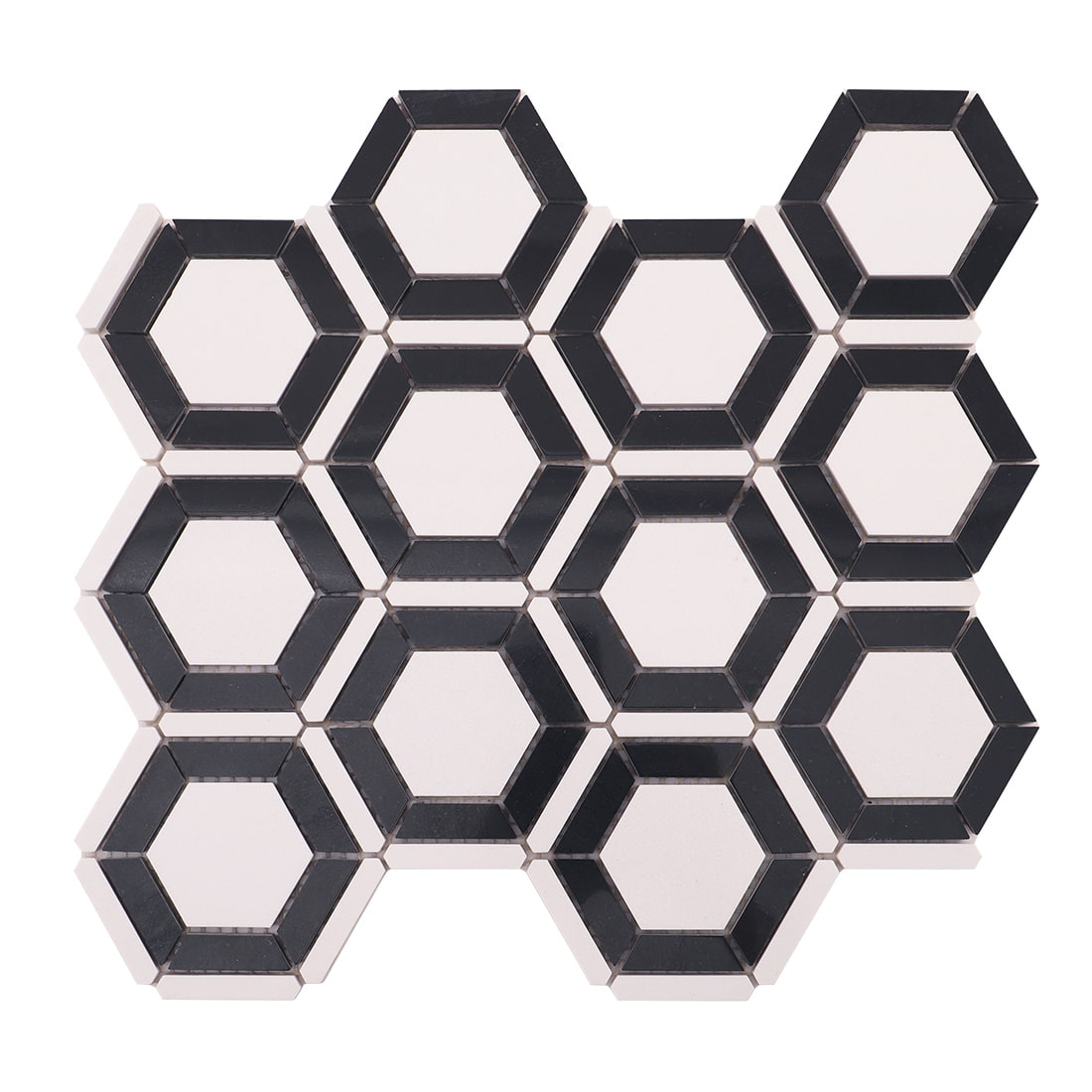
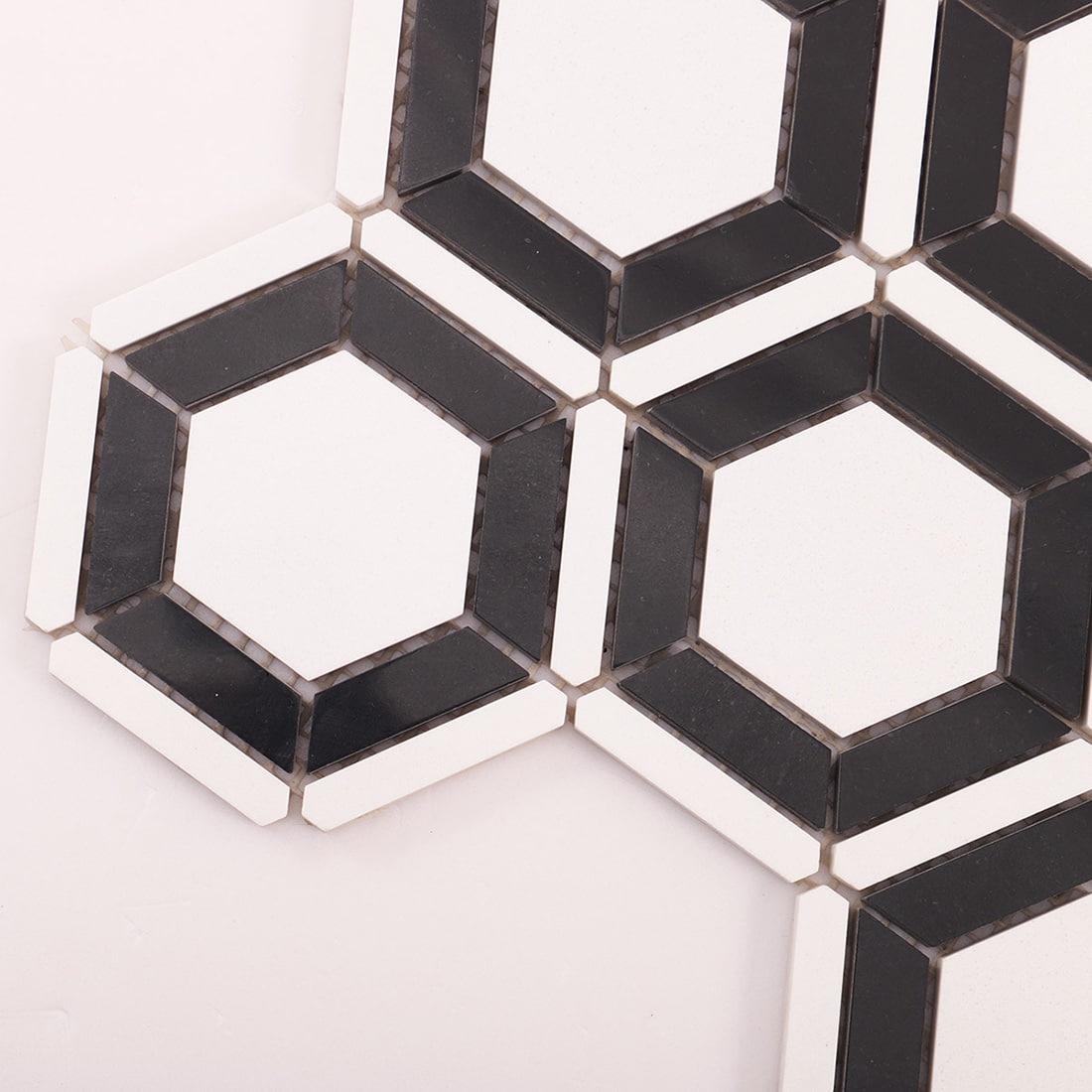
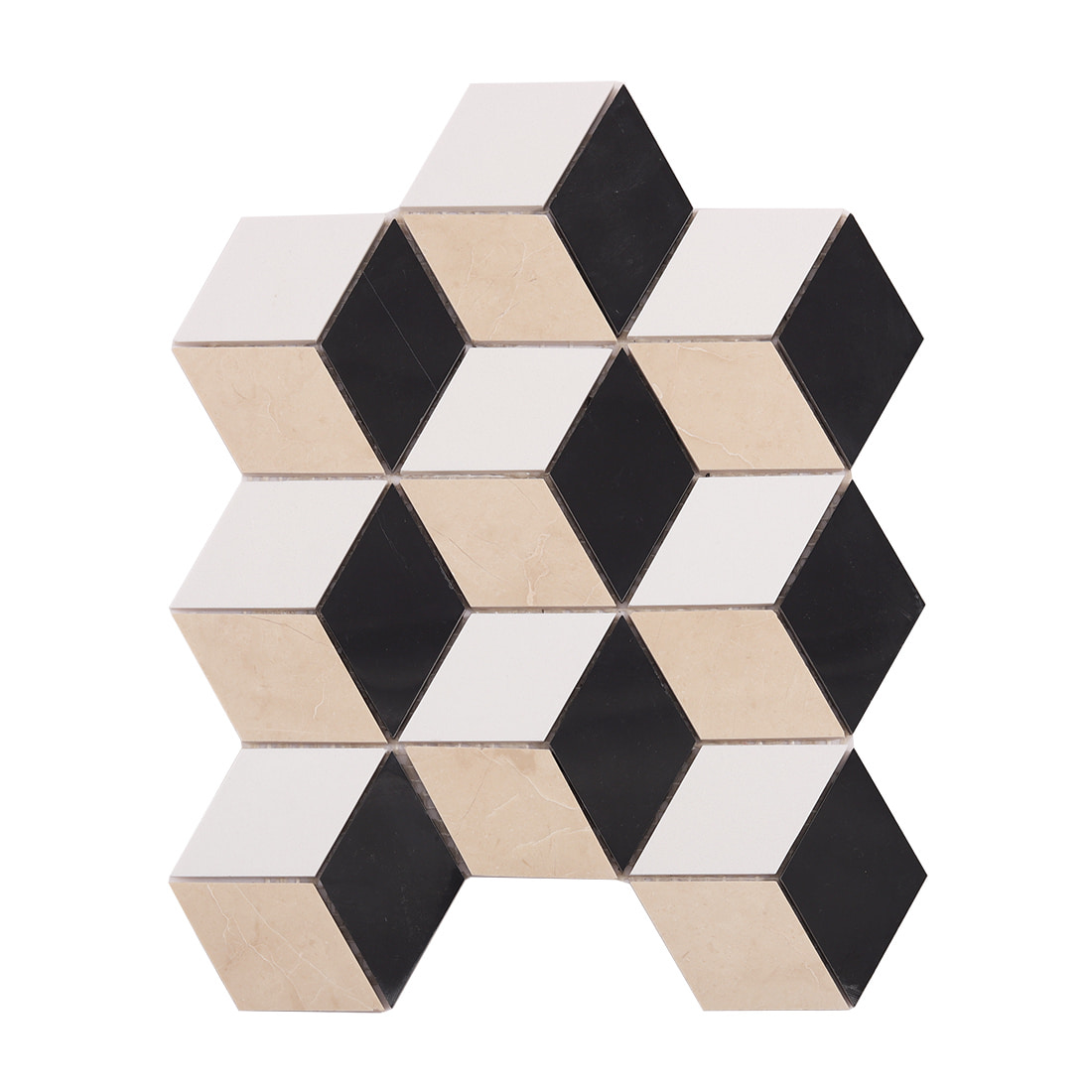
Black and White Geometric Marble Mosaic Tile$10.13 USD
-
-
-
-
-
-
-
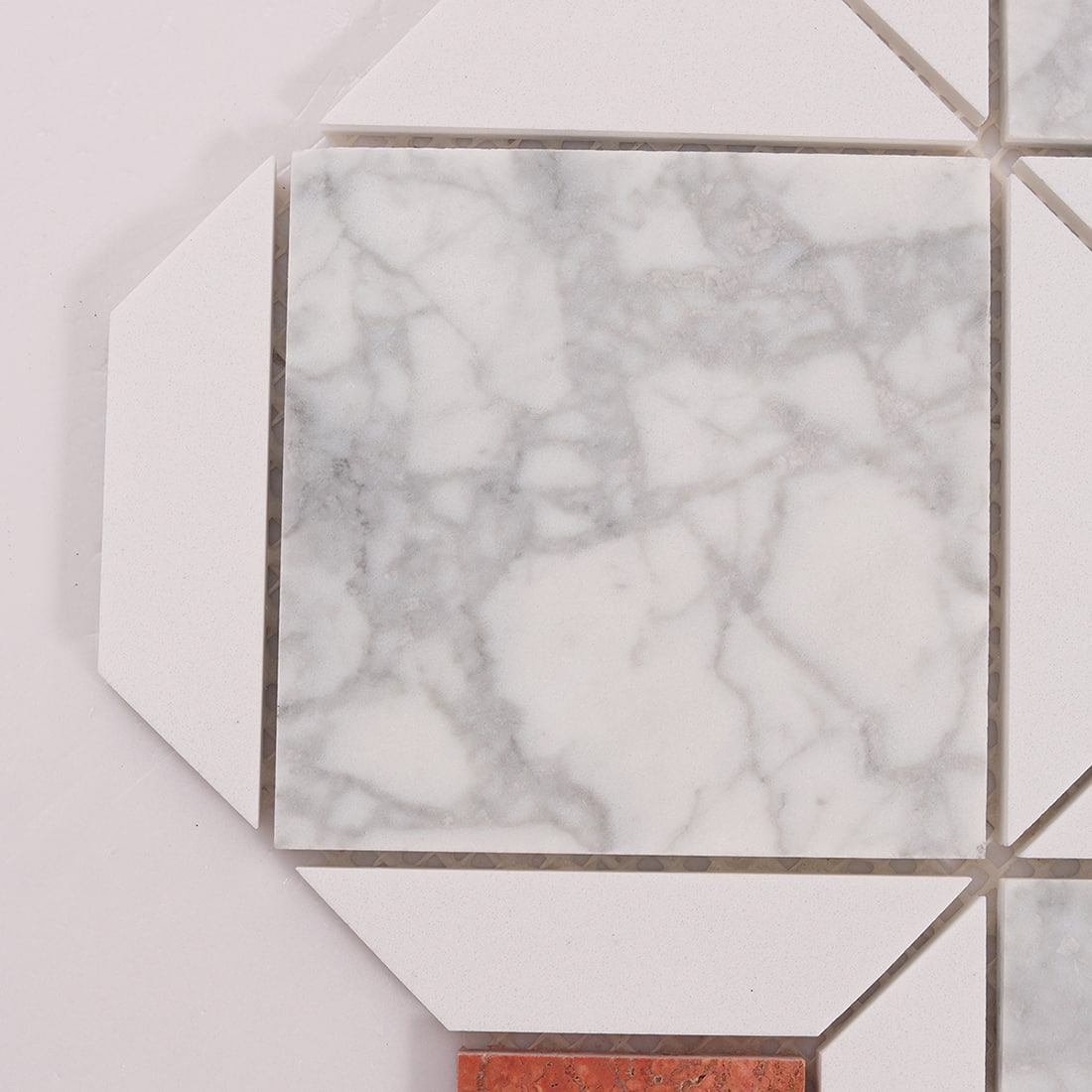
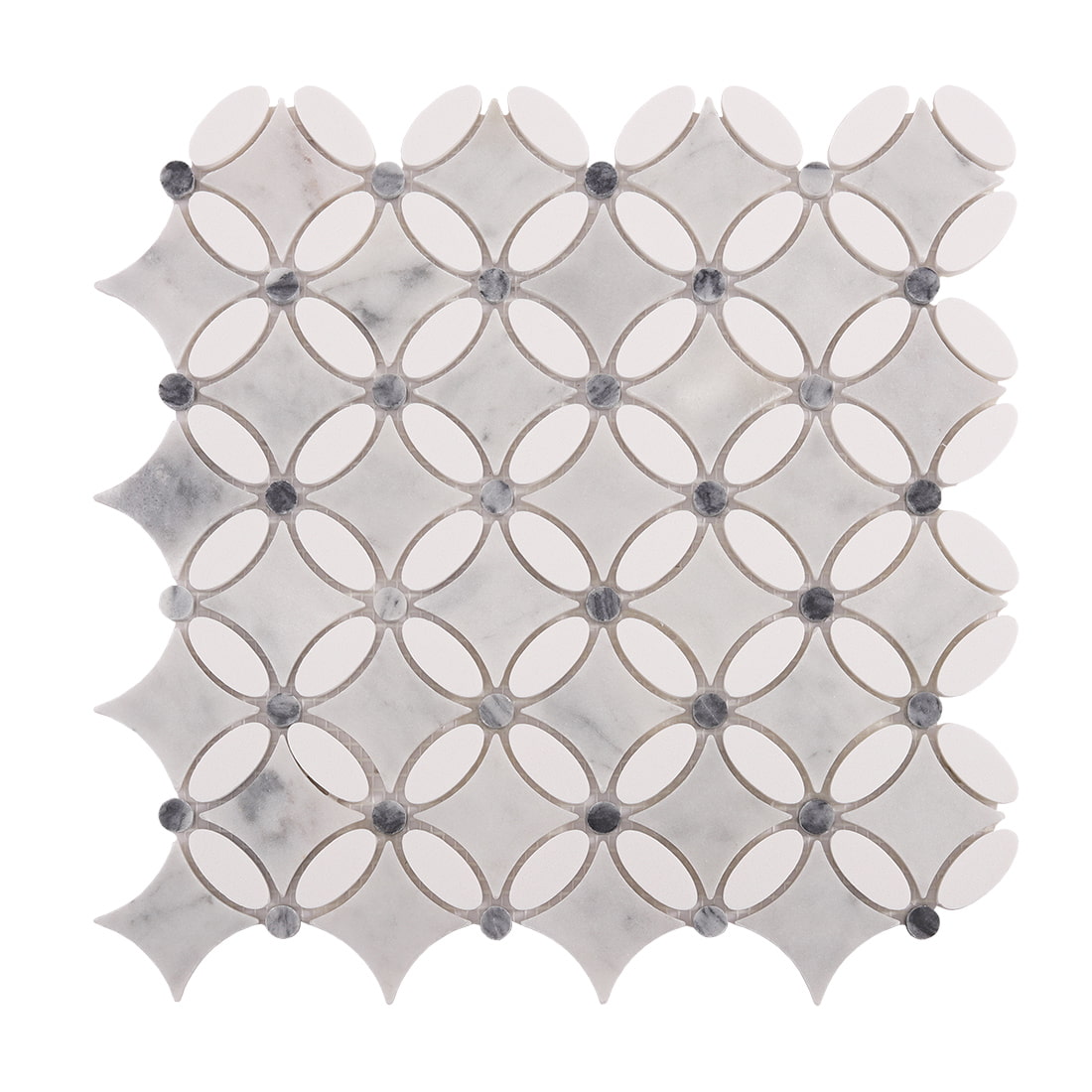
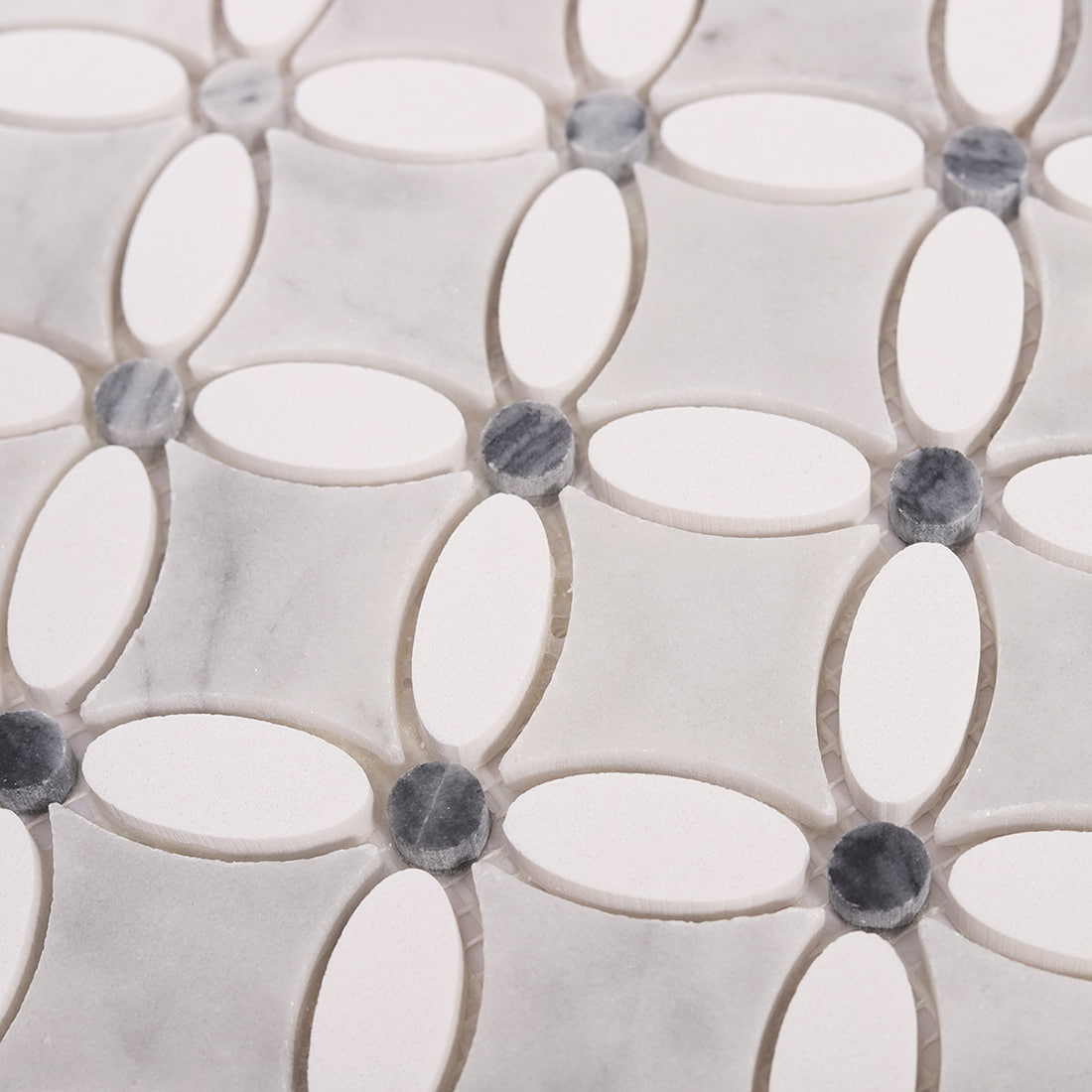
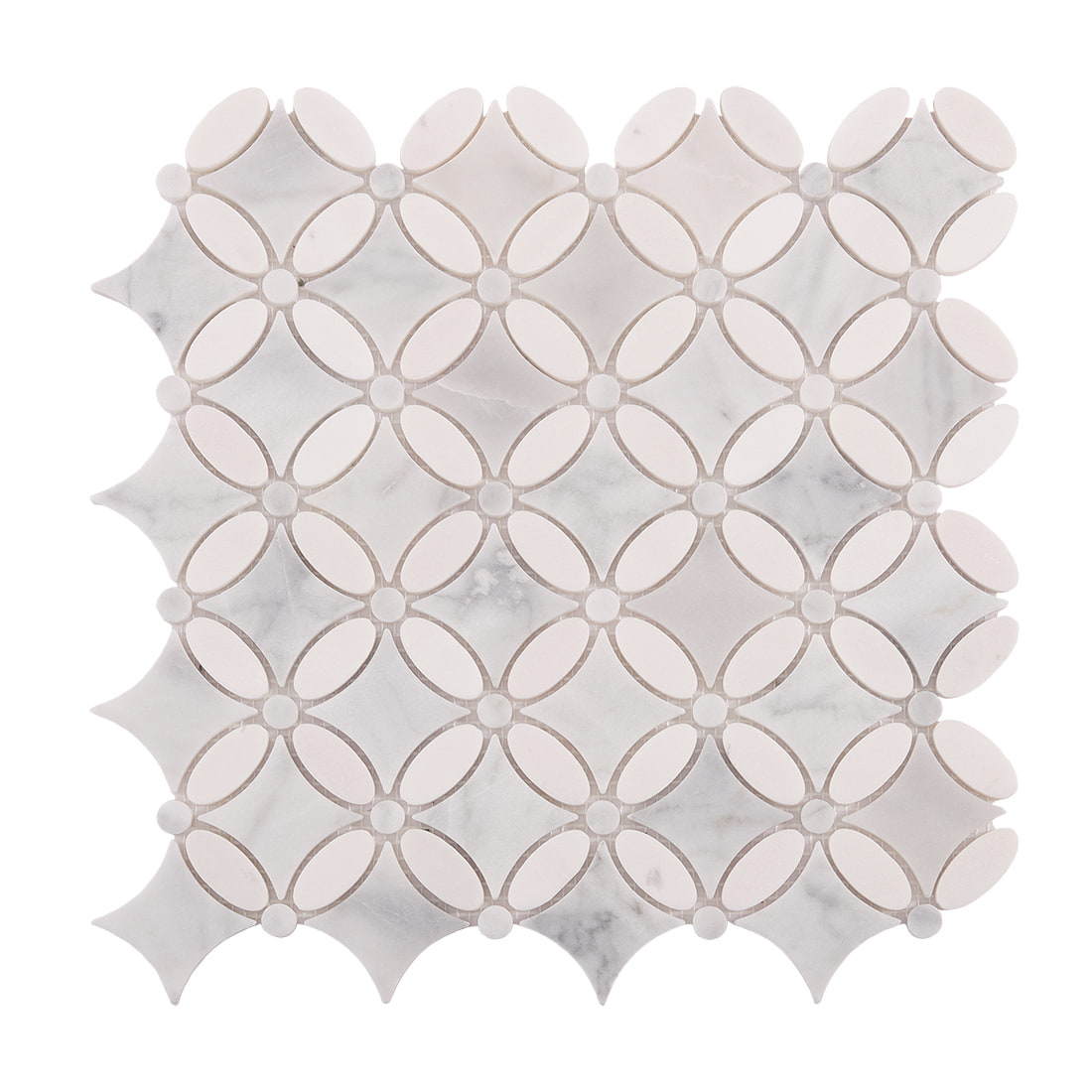
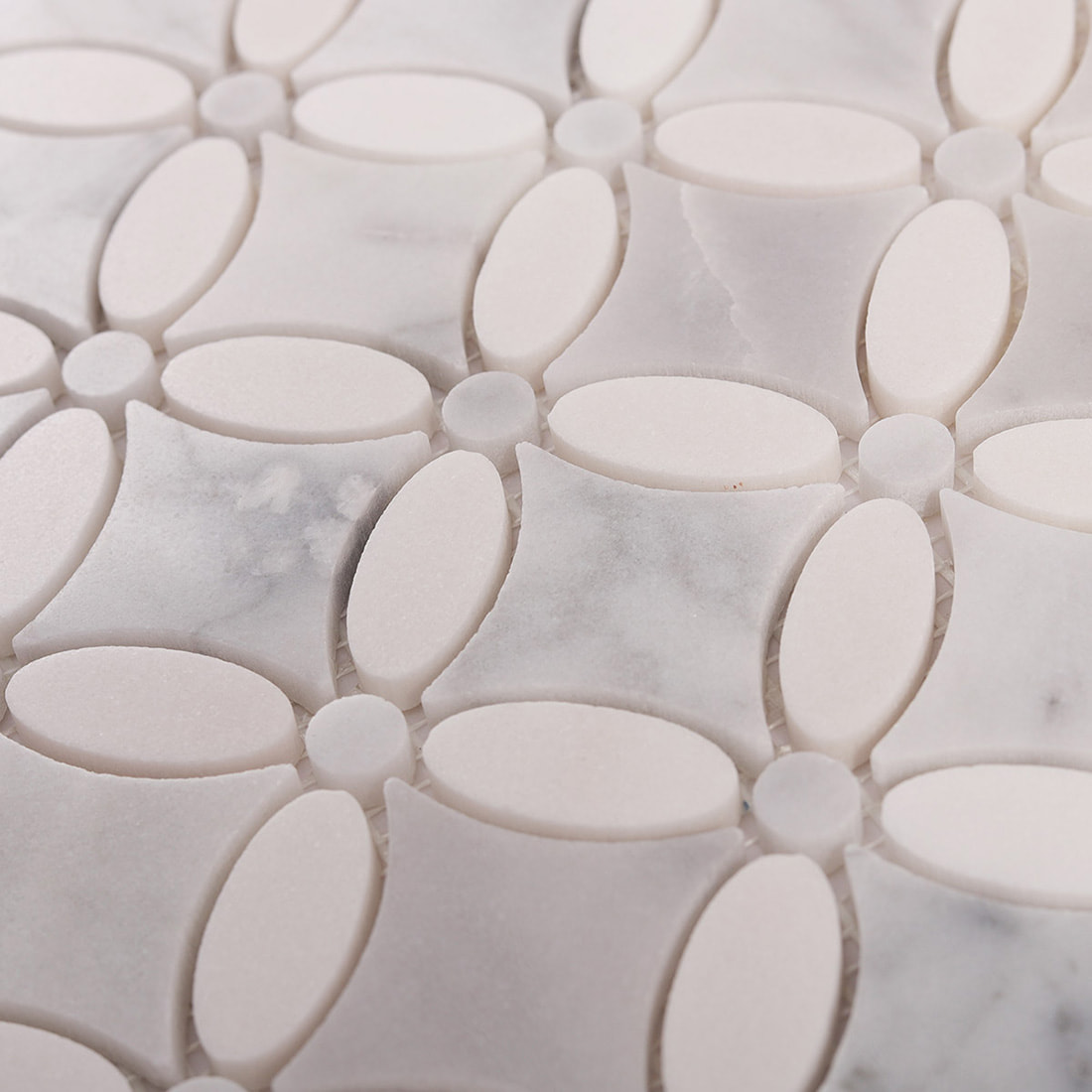
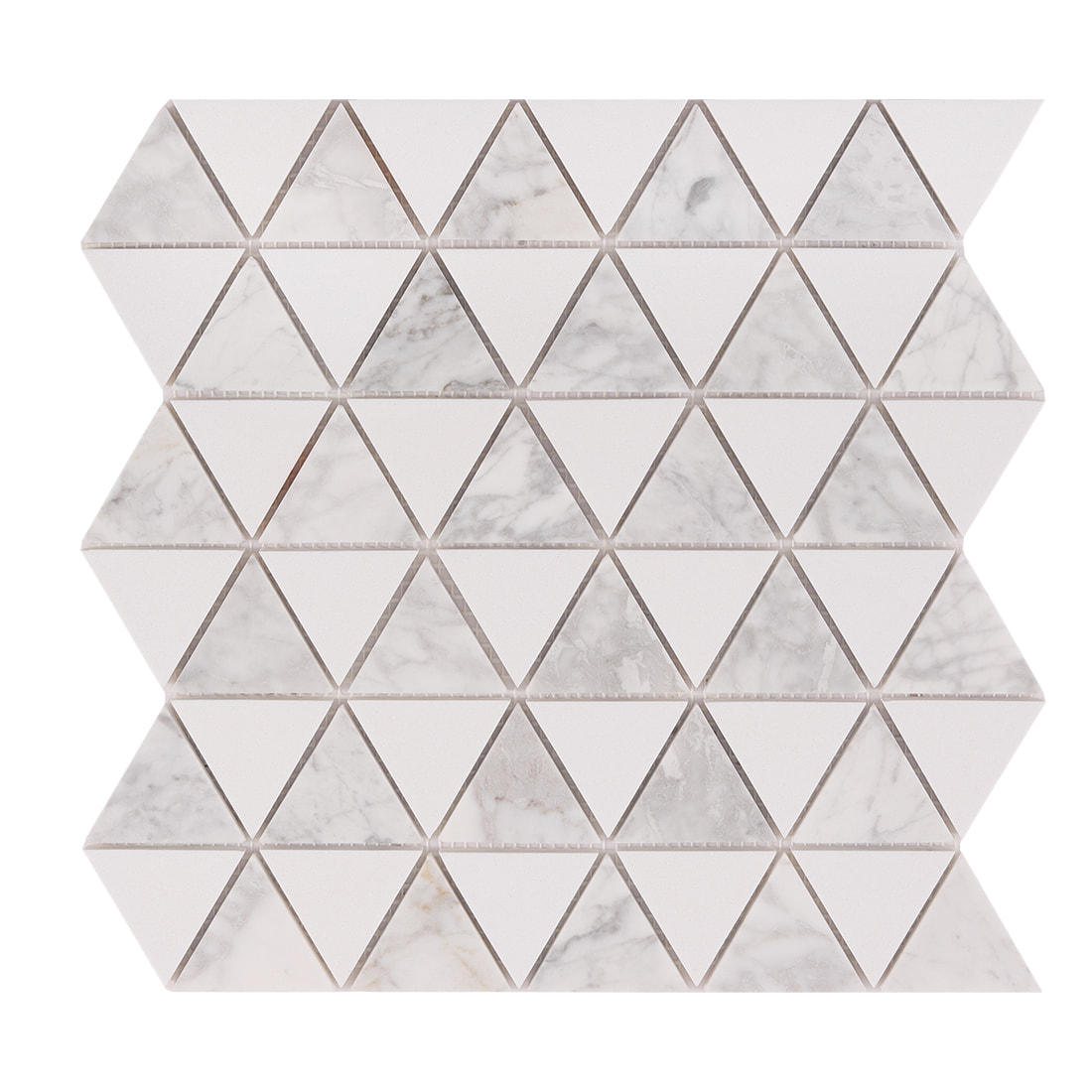
Carrara White Marble Oval Flower Mosaic Tile$15.90 USD
-
-
-
-
-
-
-
-
-
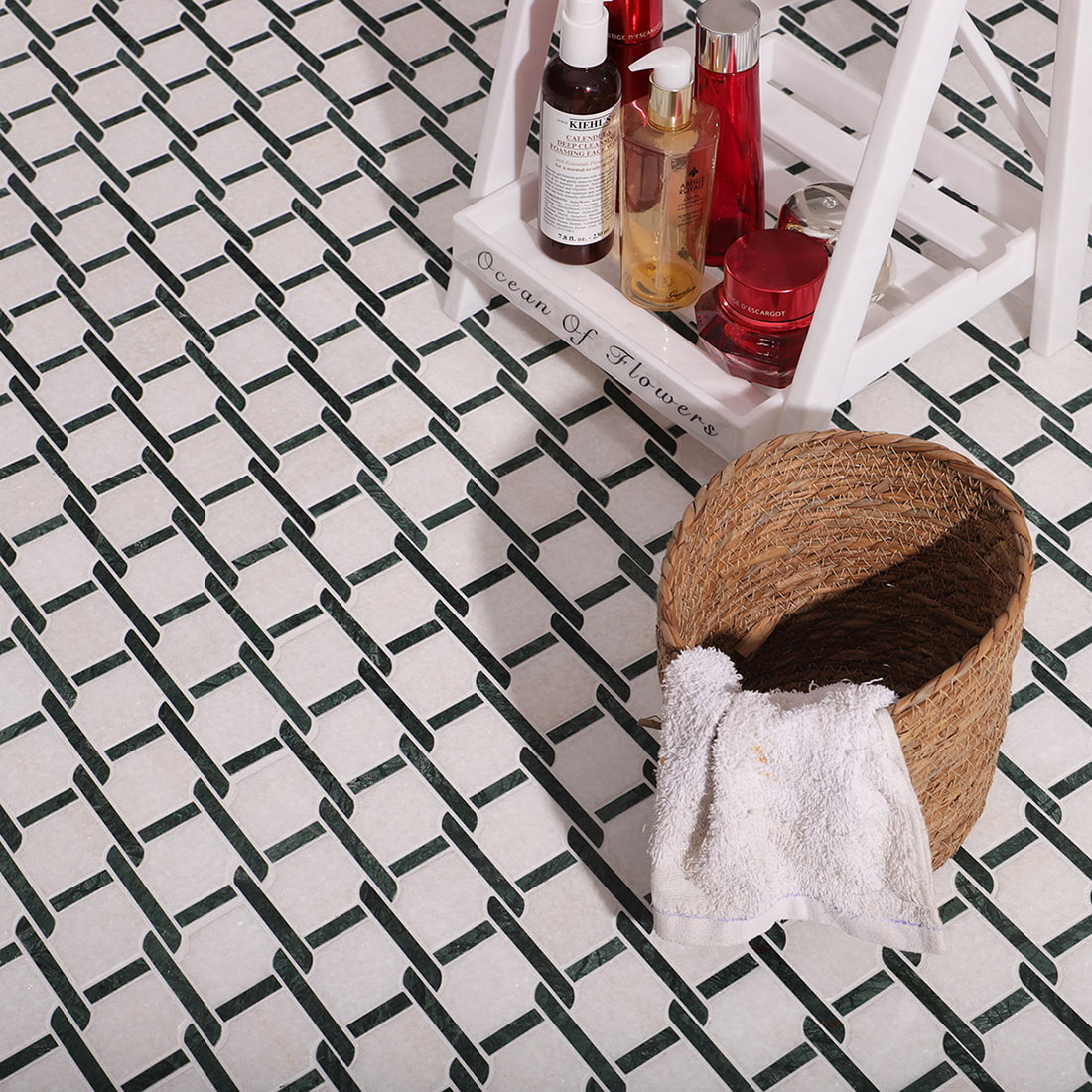
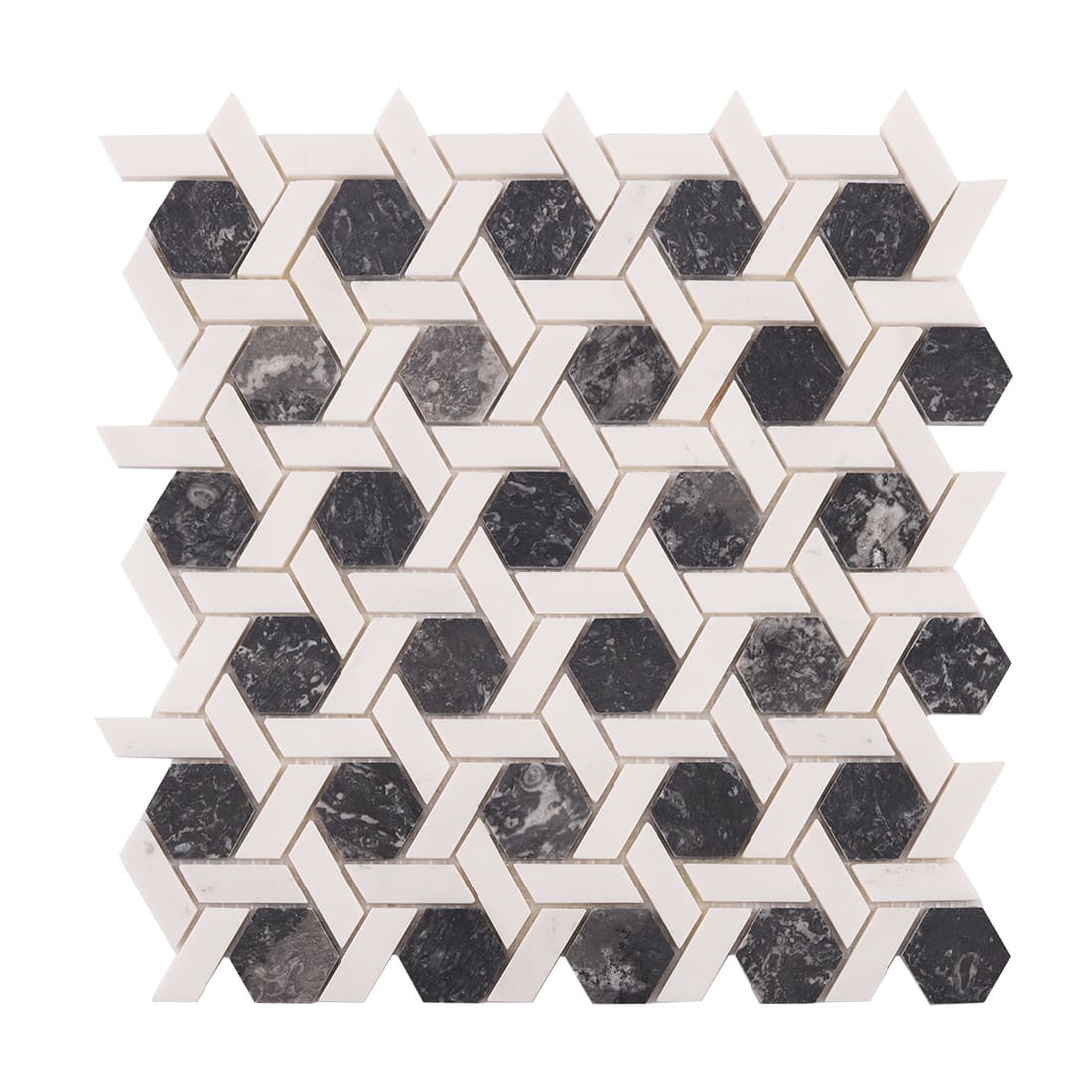
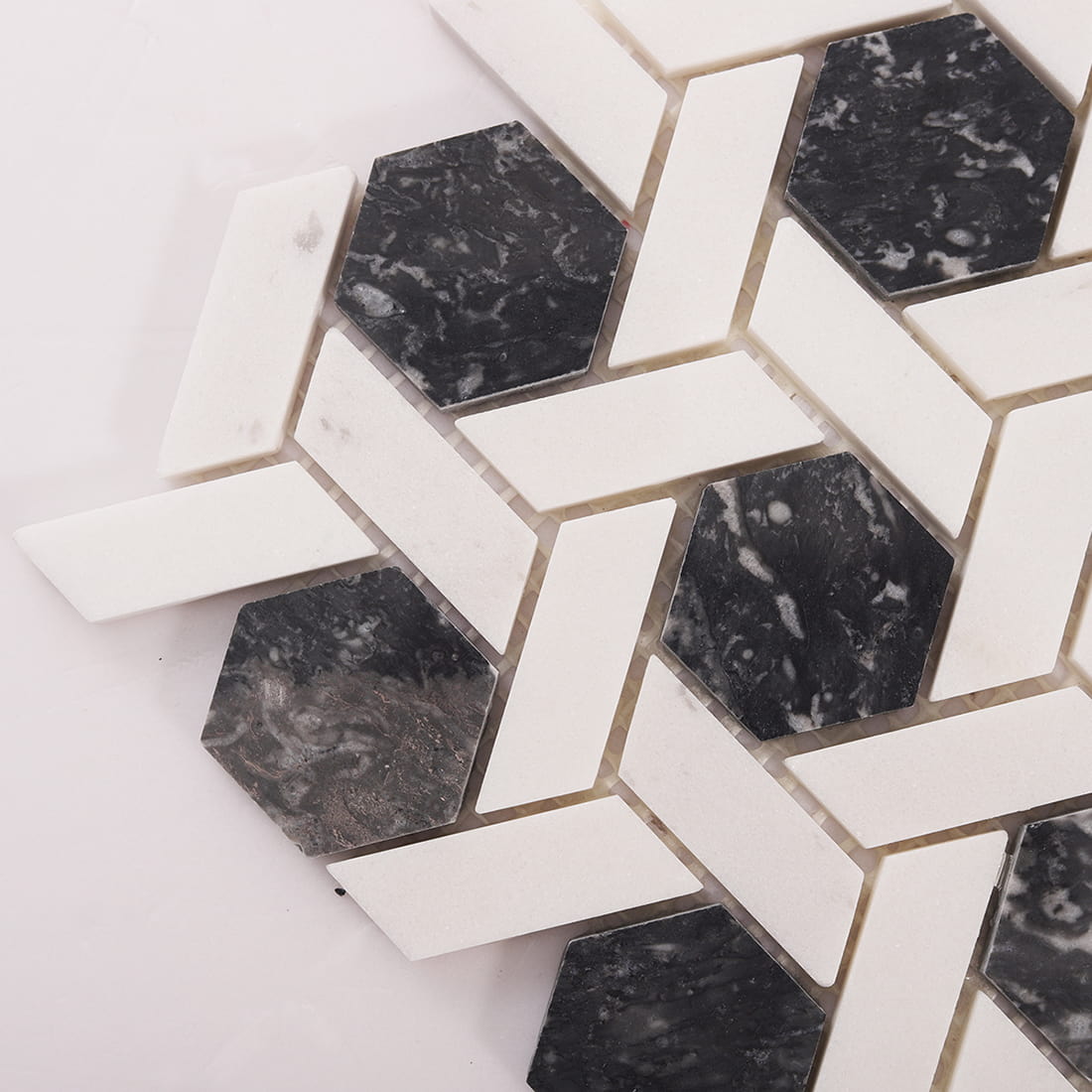
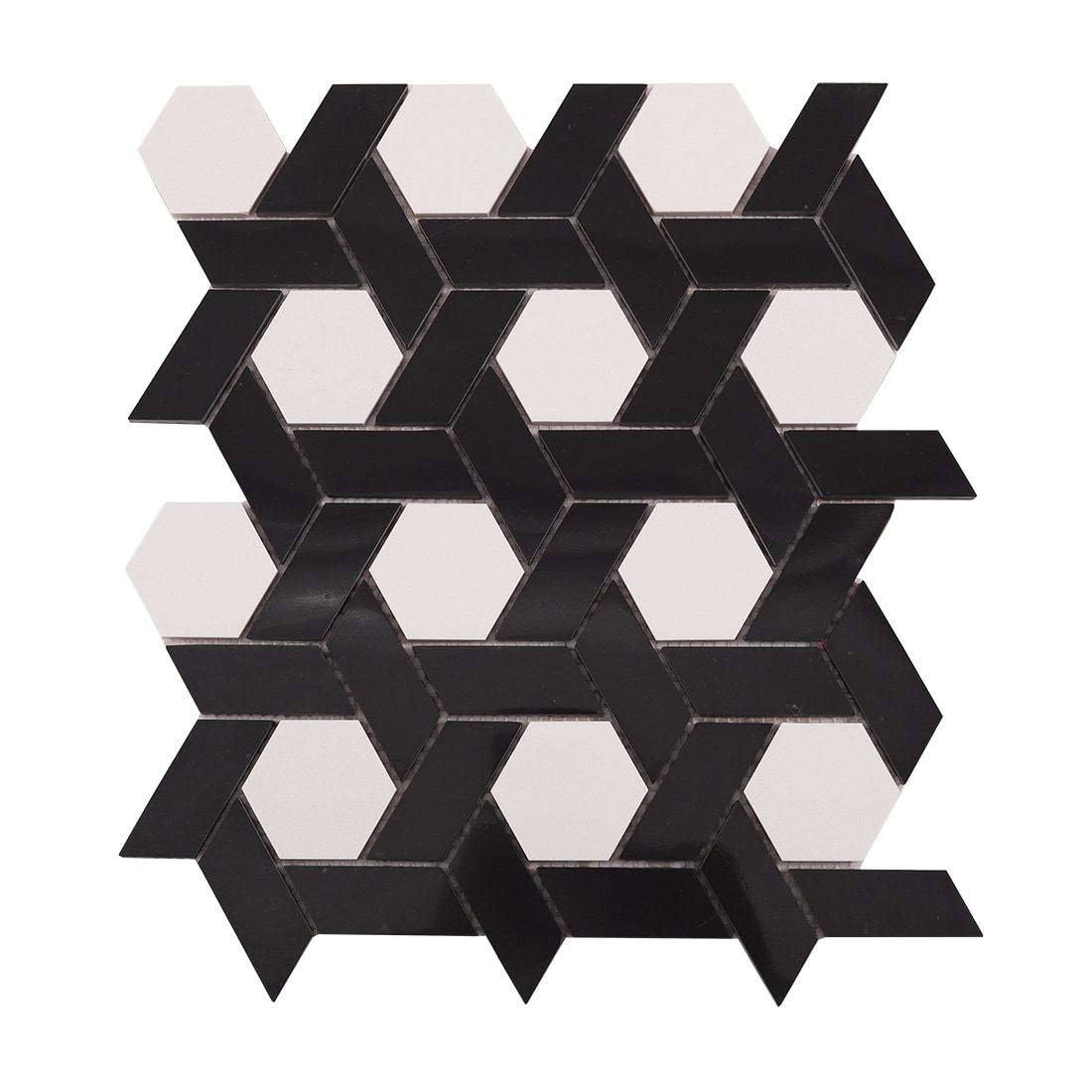
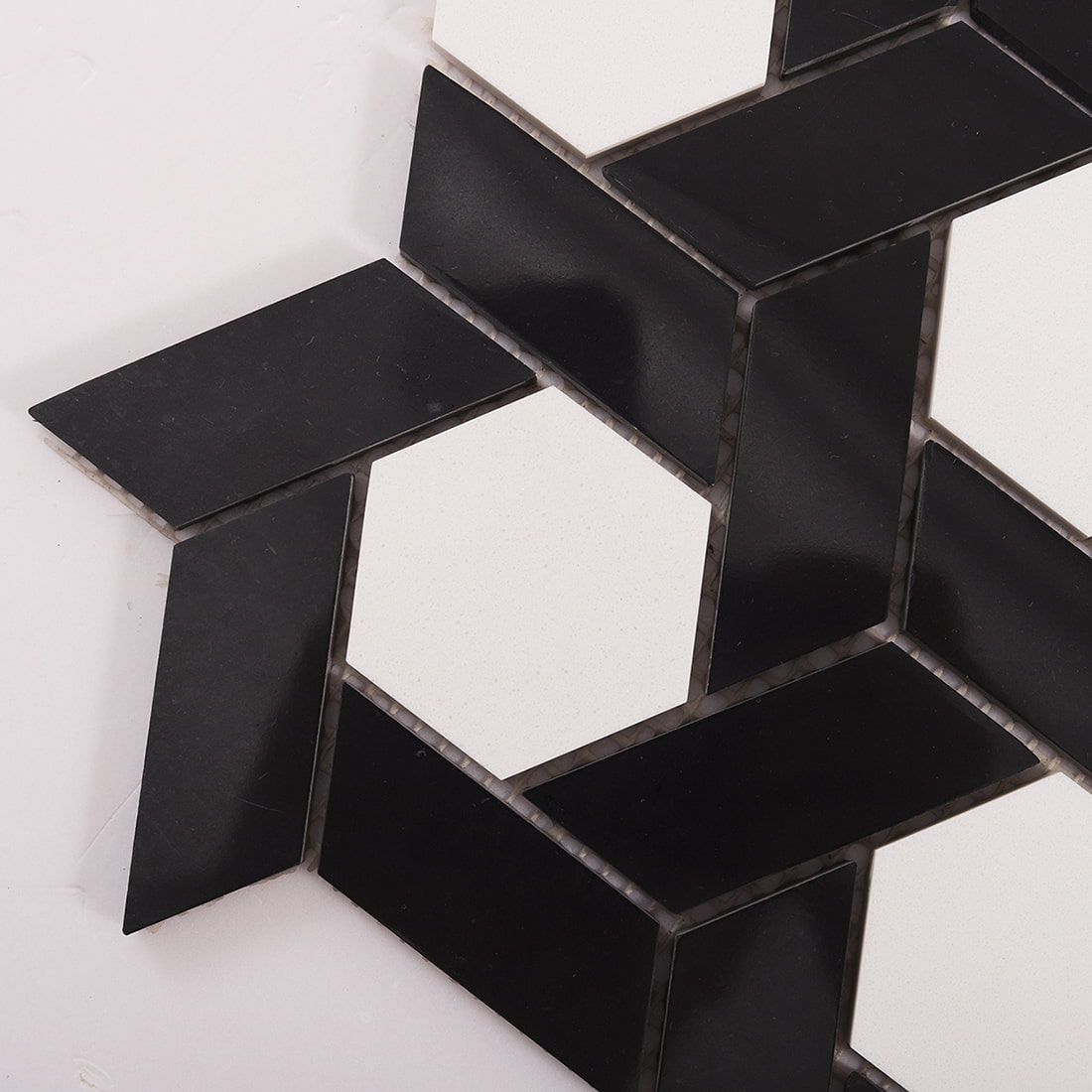
Dark Grey Weaved Hexagon Marble Mosaic Tile$11.36 USD
-
-
-
-
-
-
-
-
-
-
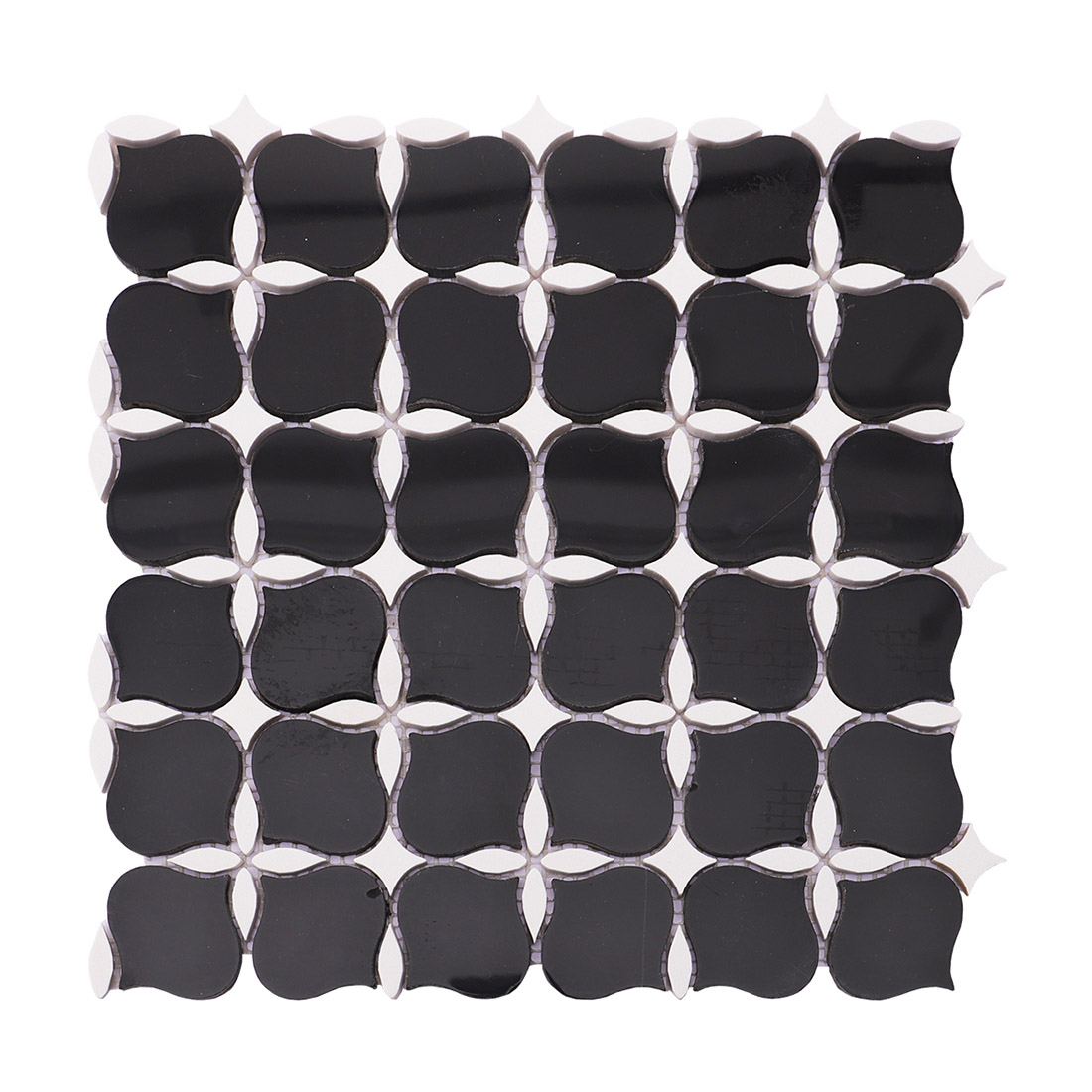
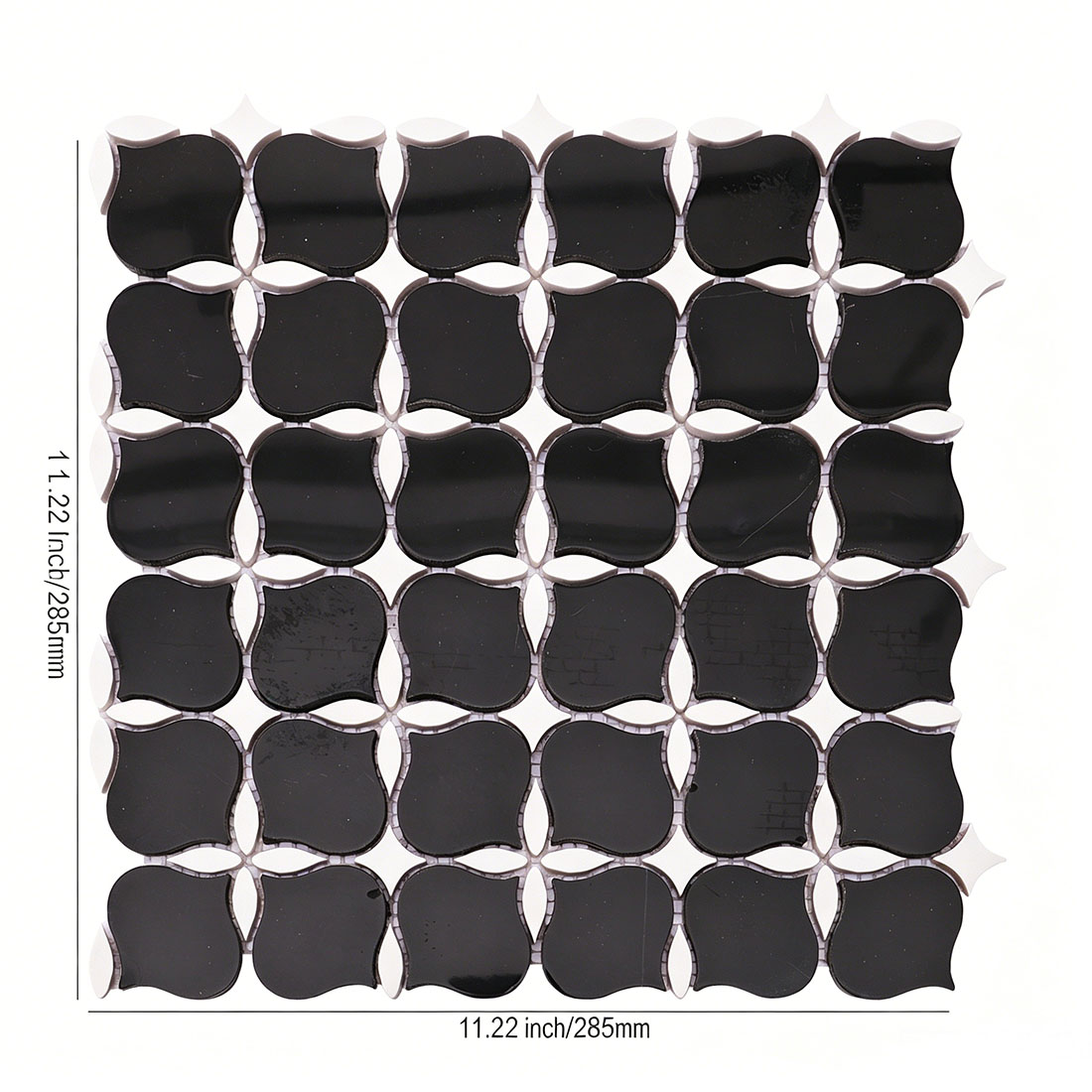
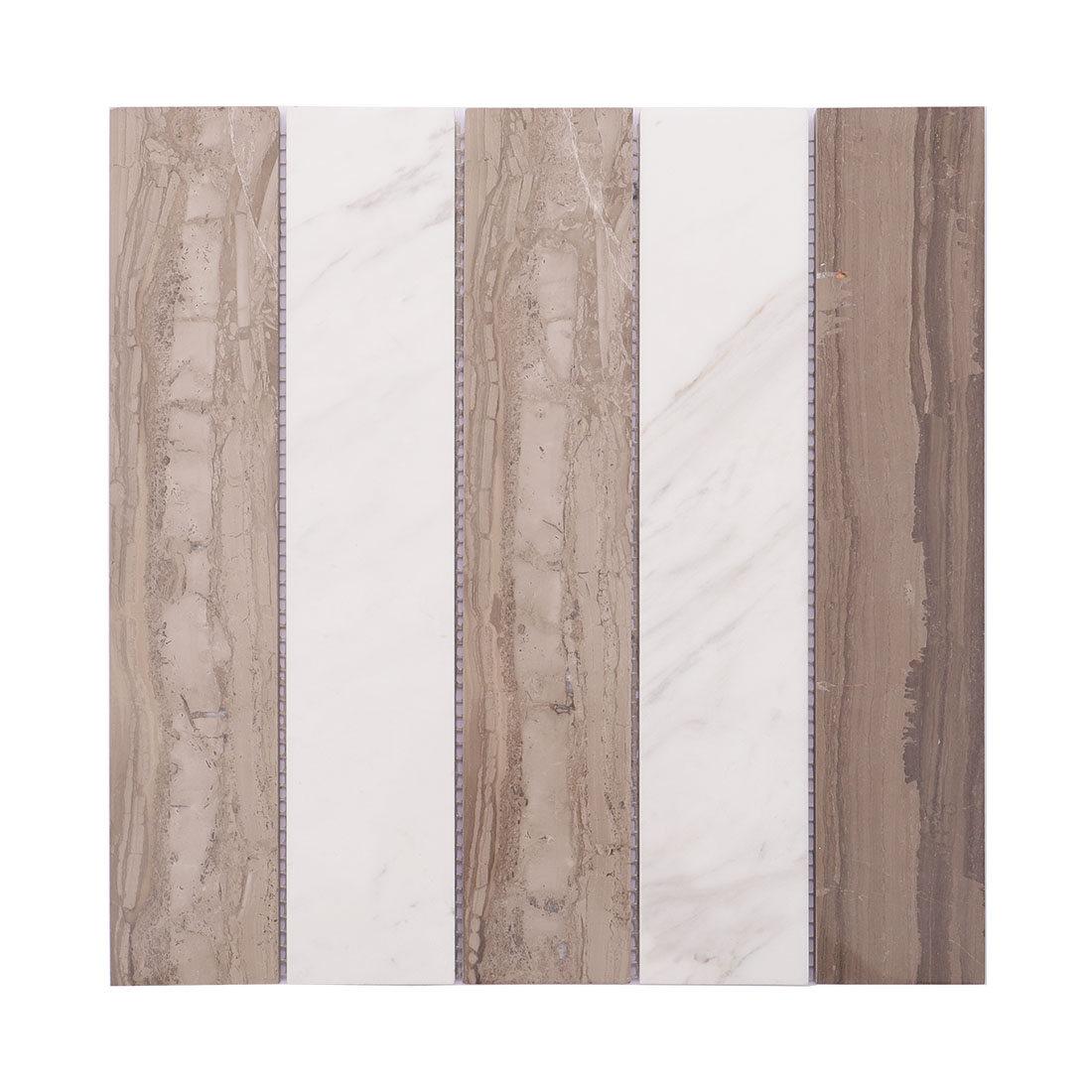
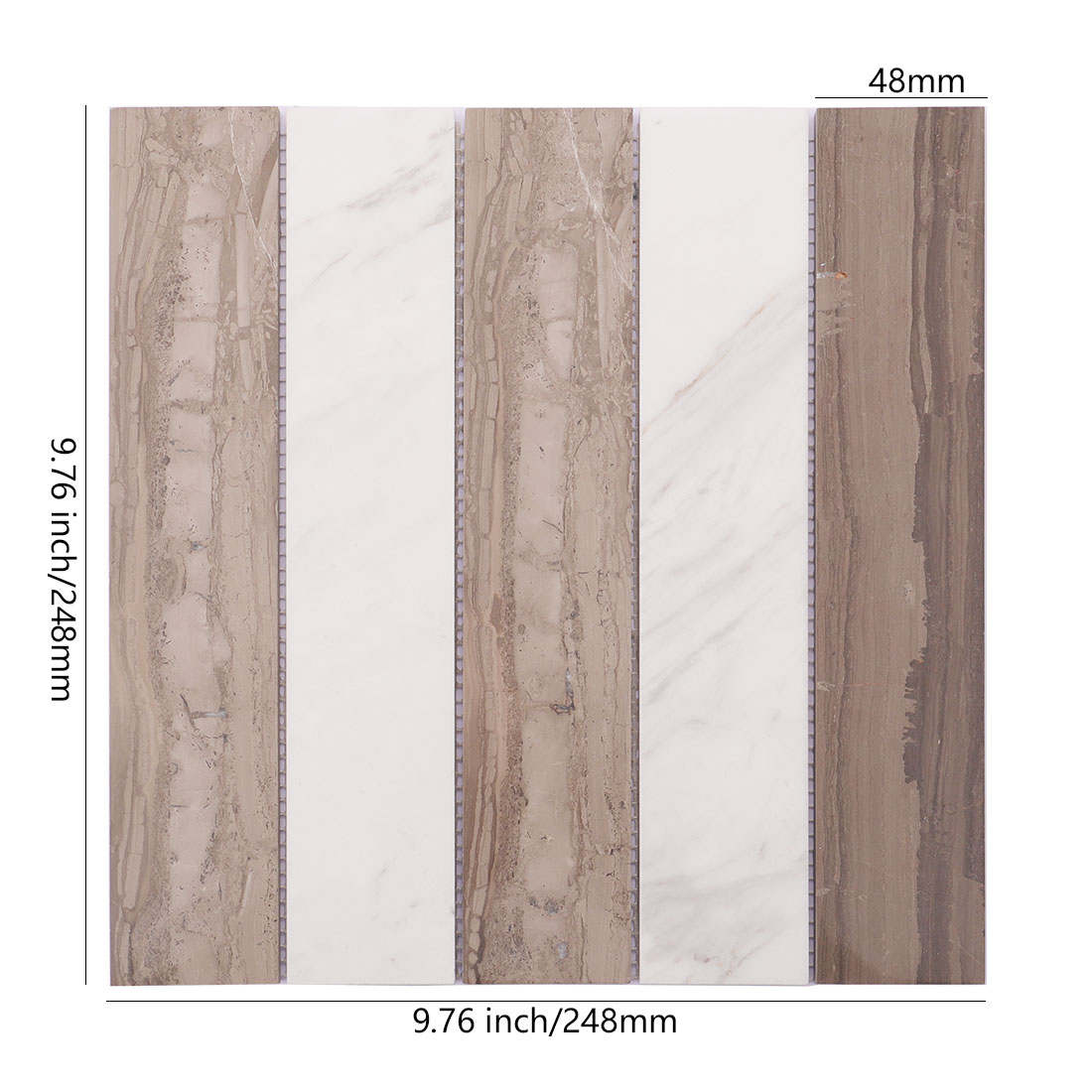
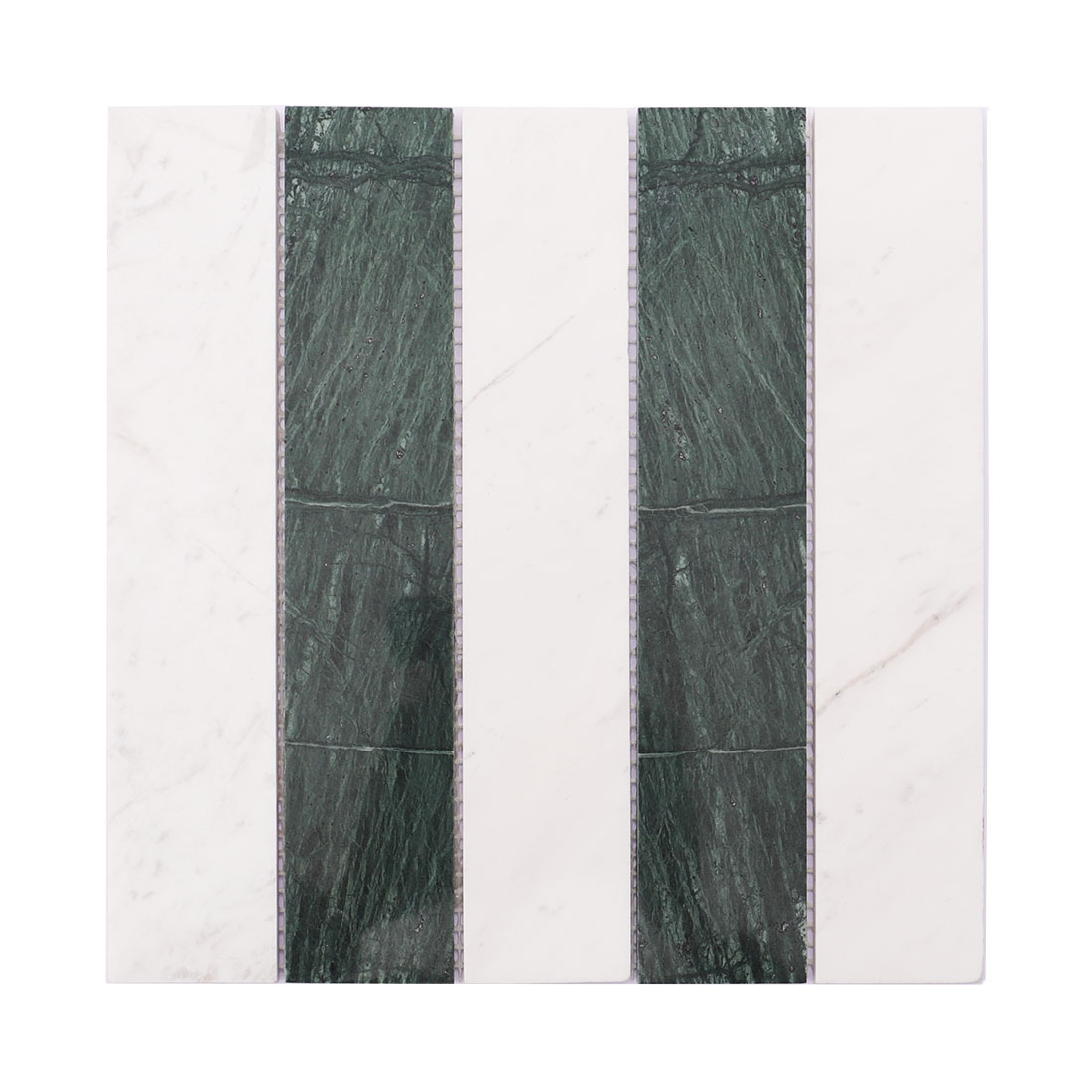
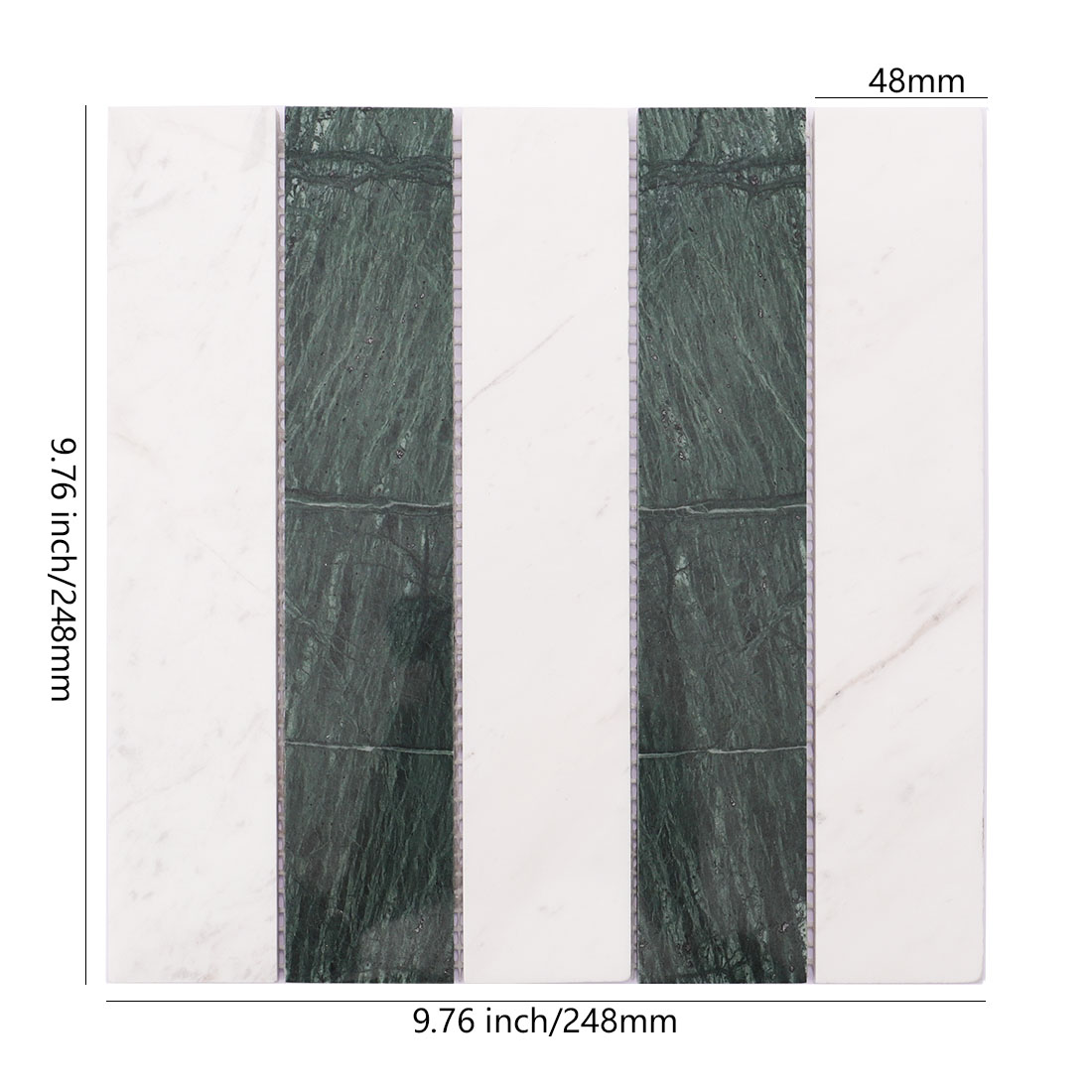
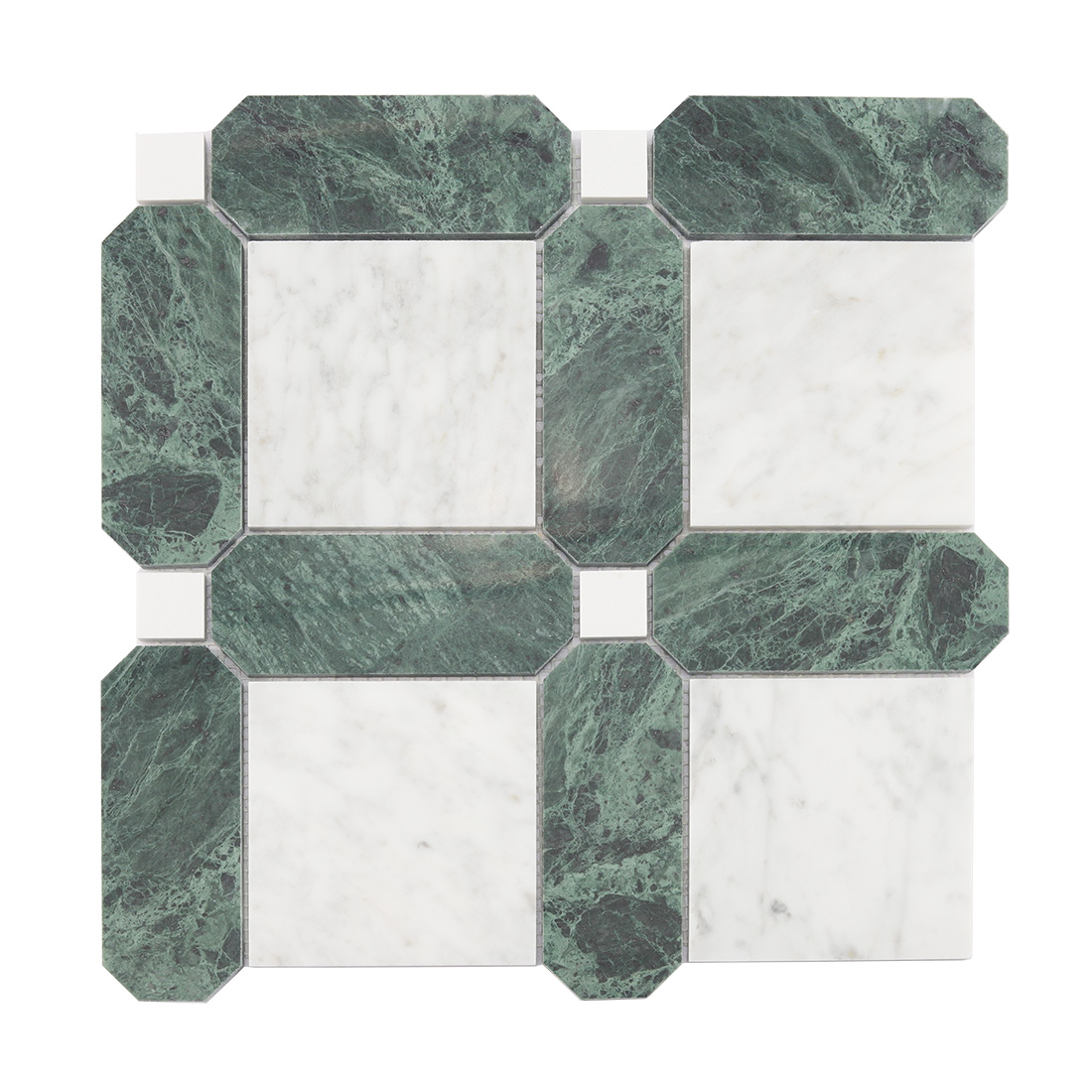
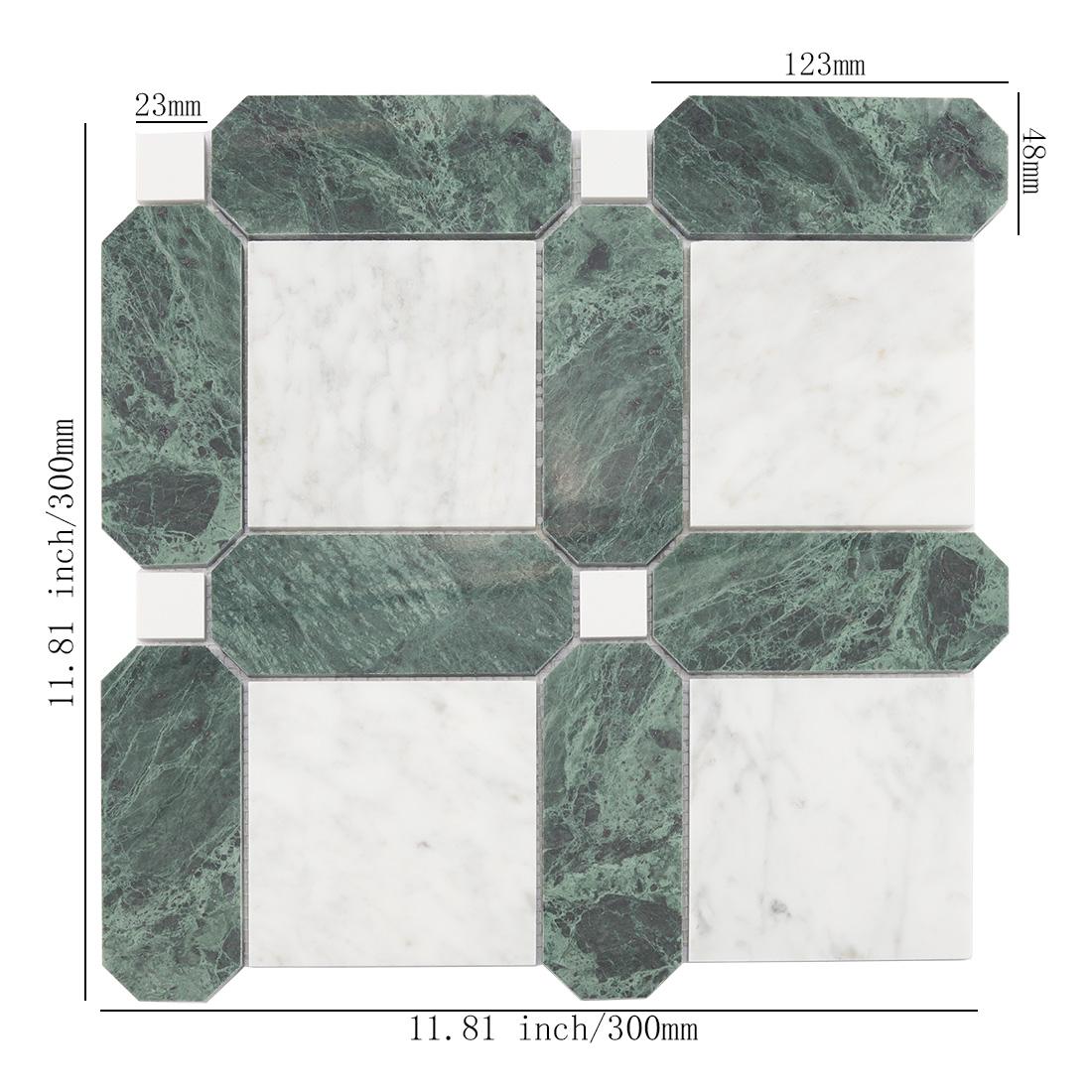



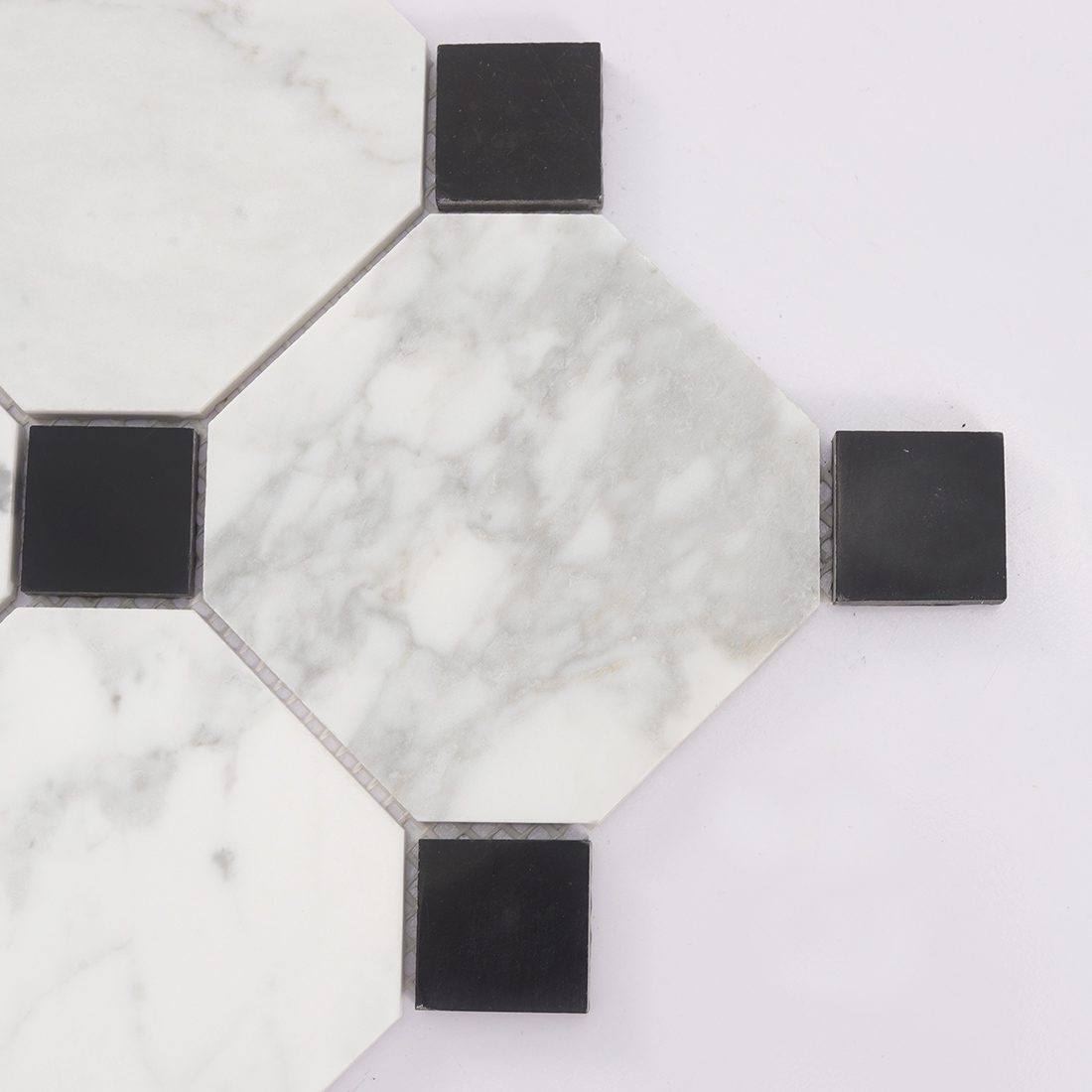
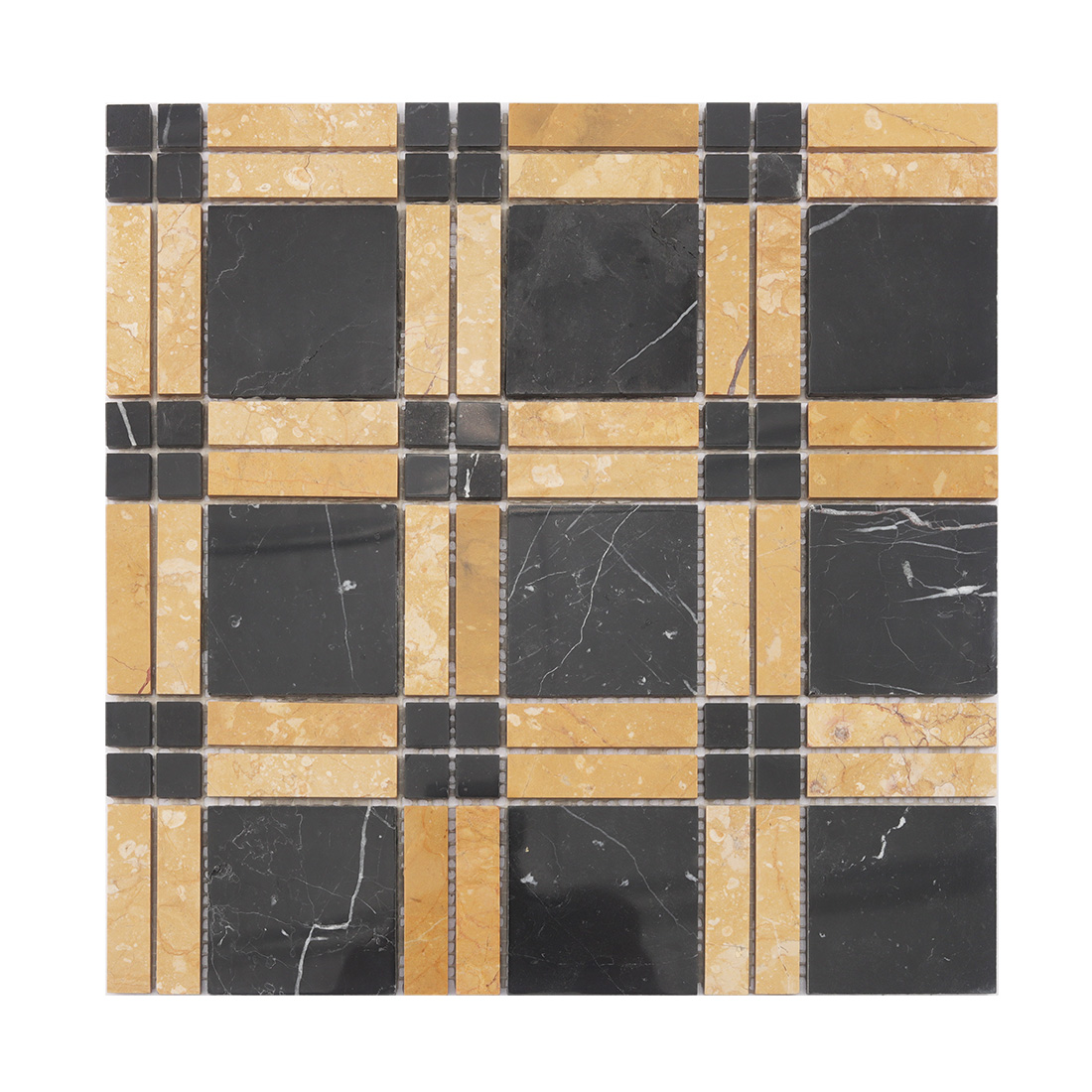

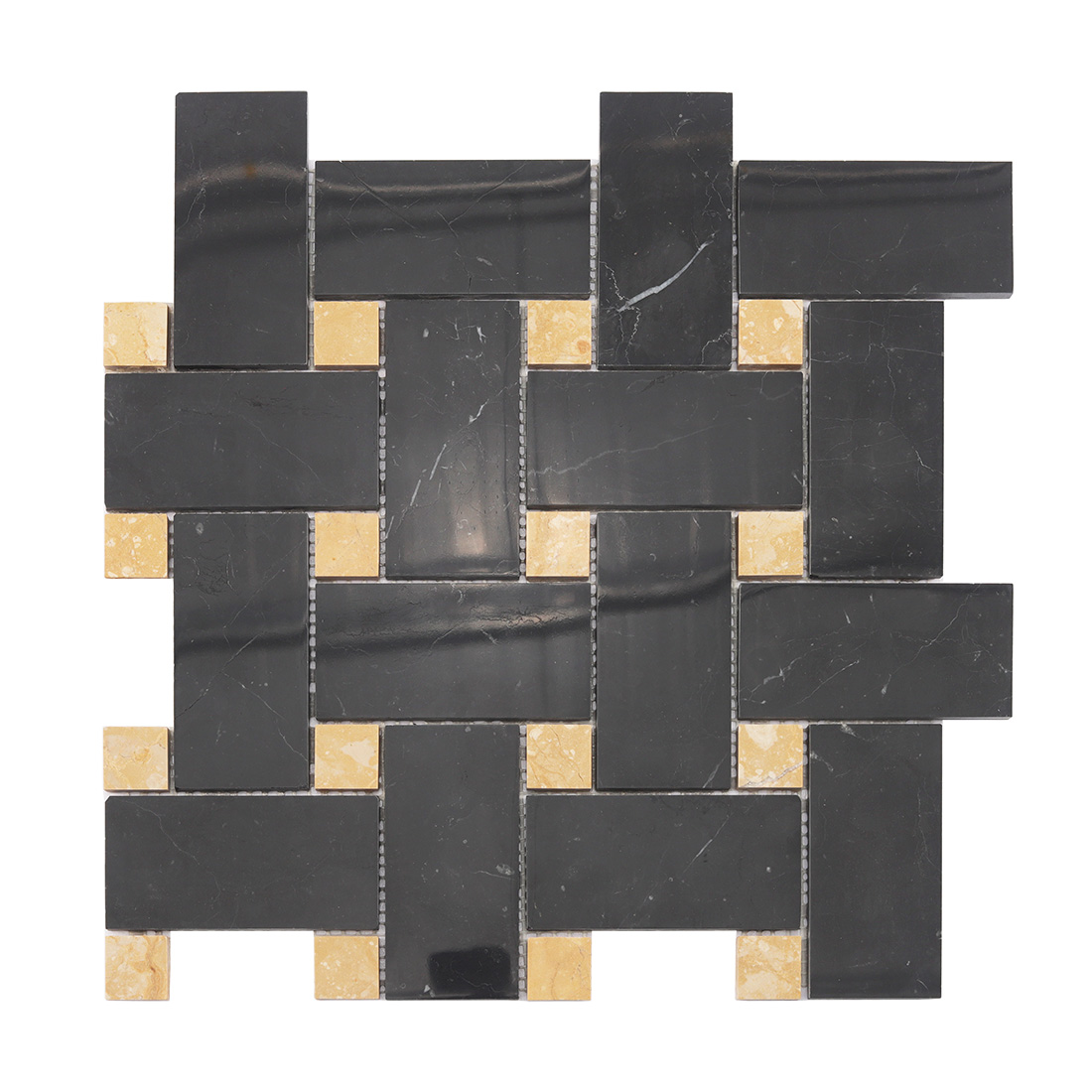

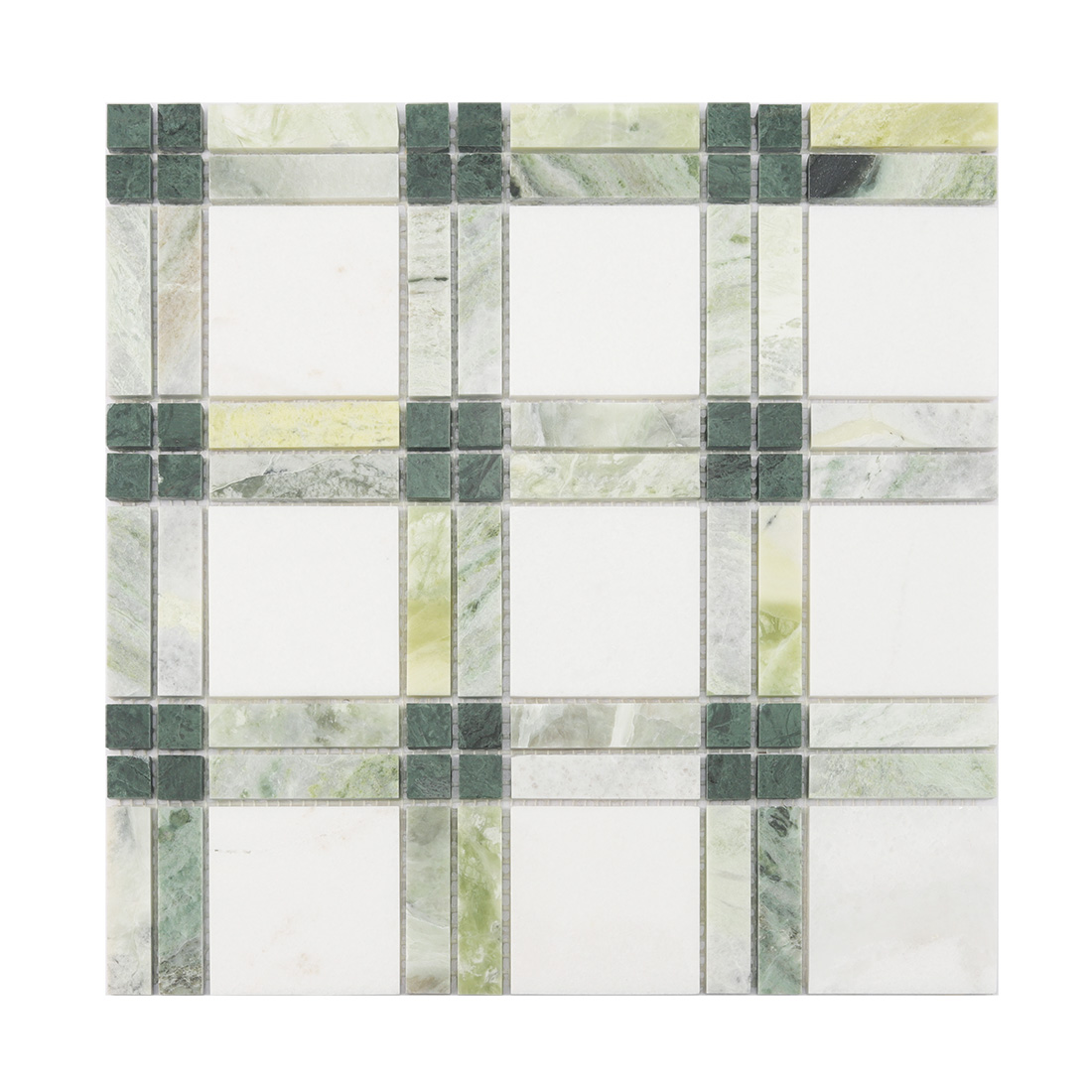


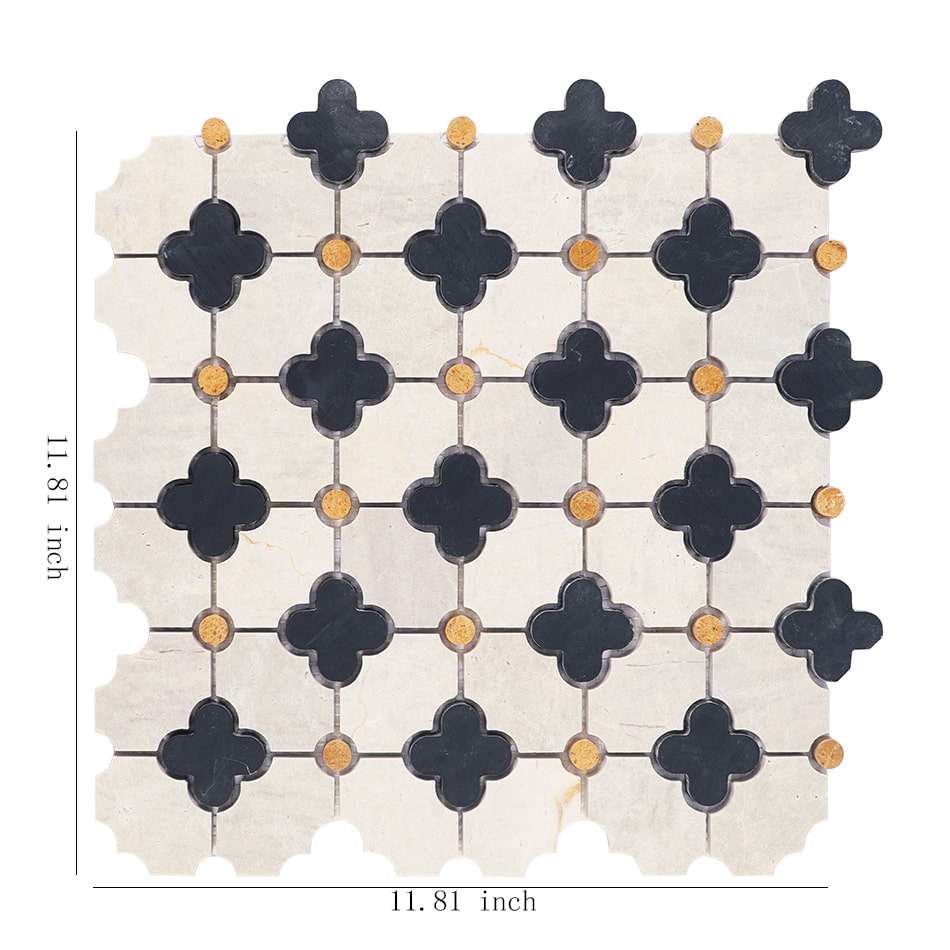
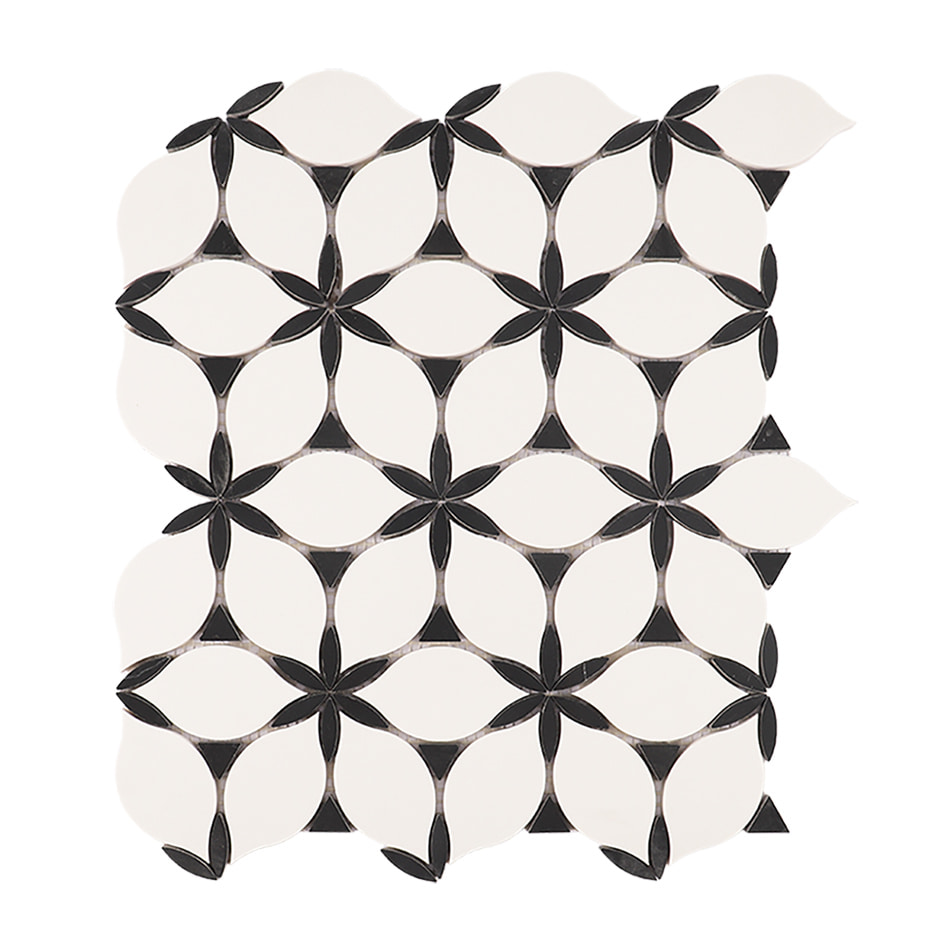
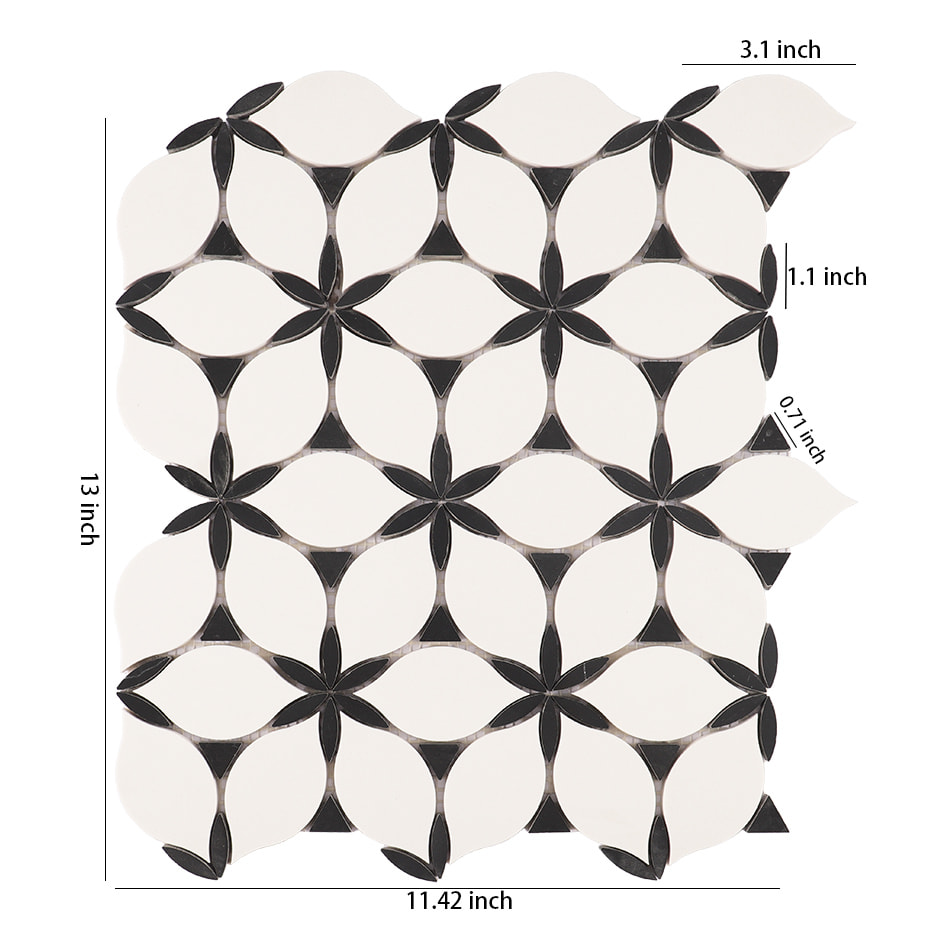
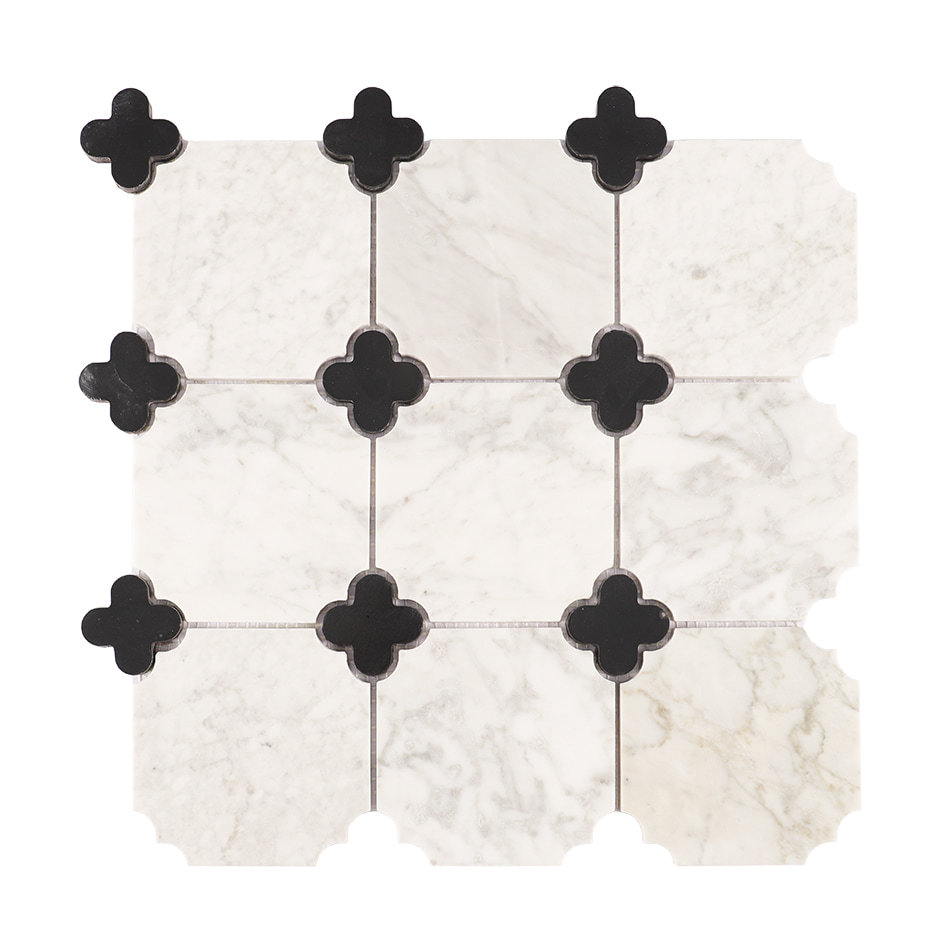


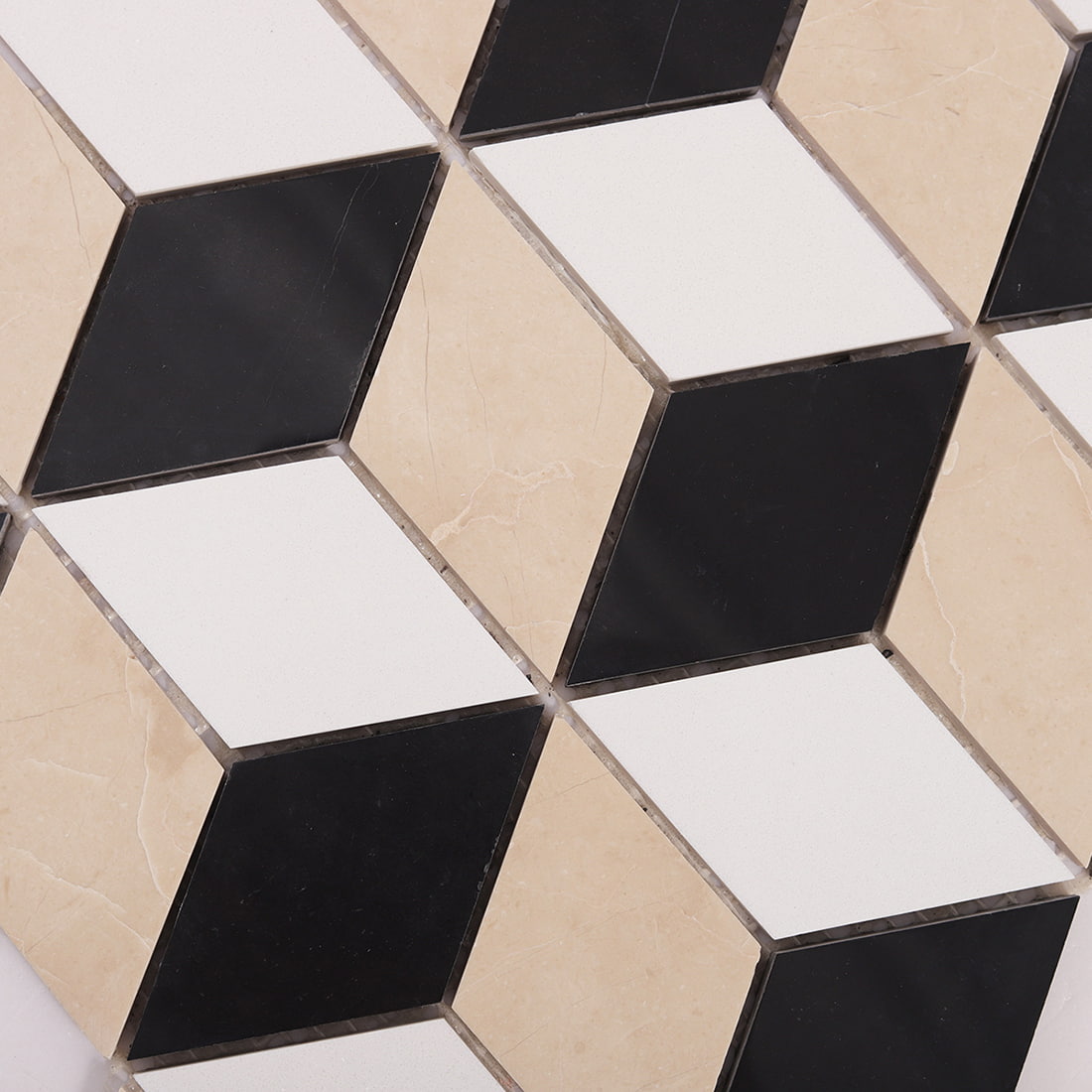

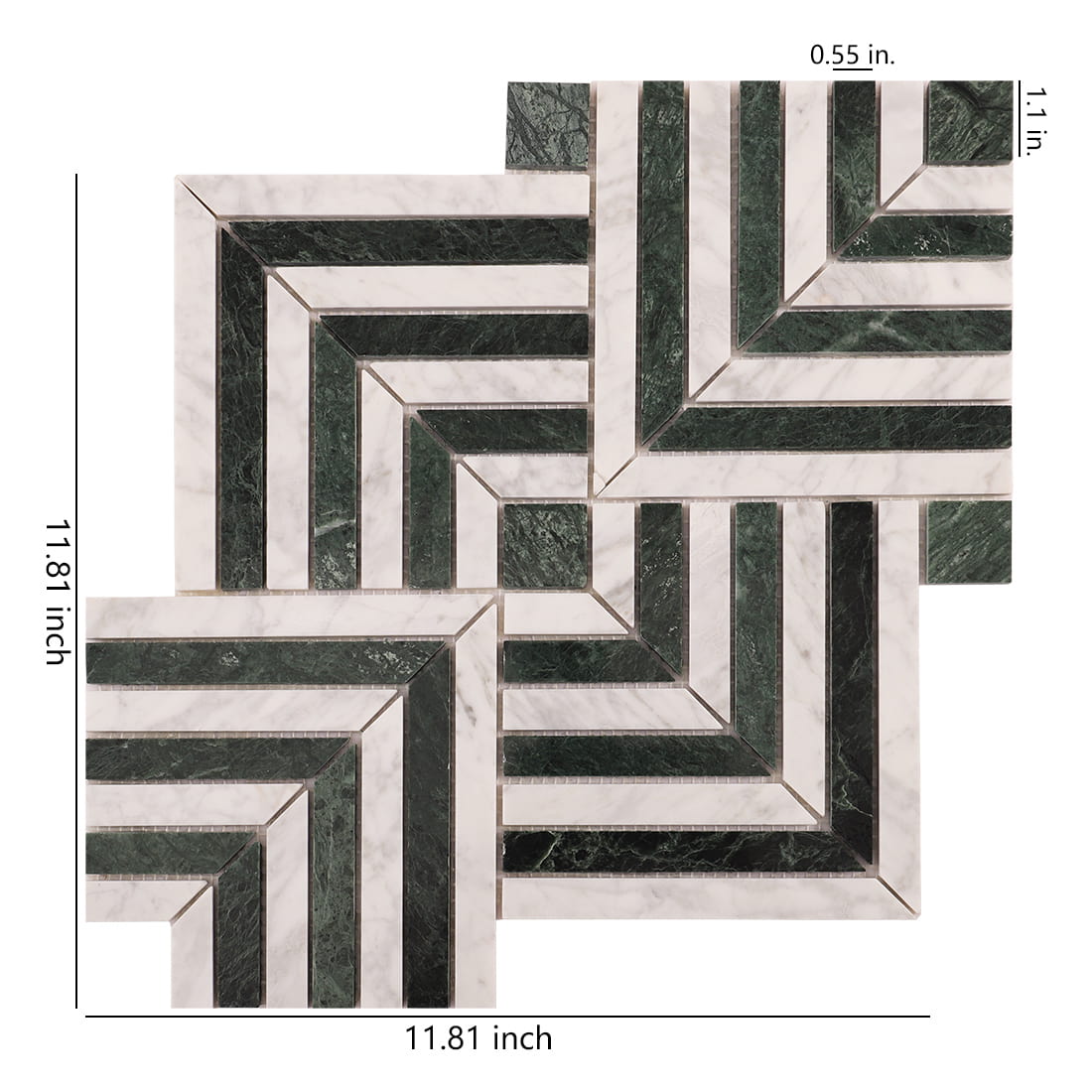
Classic Floor Tiles: Timeless Style for Lasting Interiors
Classic floor tiles combine enduring design, dependable performance, and versatile beauty. Instead of following short-lived trends, they rely on balanced colors, familiar shapes, natural textures, and proven layouts that continue to look appropriate as furniture, paint colors, and interior styles change.
At Woos Tiles, our classic floor tile collection includes elegant marble and natural stone, durable porcelain and ceramic options, small-format mosaics, checkerboard patterns, basketweave designs, geometric compositions, and custom stone layouts. Whether you are renovating a traditional bathroom, planning a sophisticated entryway, or specifying flooring for a hotel or restaurant, these tiles create a refined foundation designed to last.
Browse the collection by material, color, shape, finish, pattern, and application. Always review the specifications of the individual product to confirm floor suitability, wet-area performance, sealing requirements, and recommended installation conditions.
What Are Classic Floor Tiles?
Classic floor tiles are tiles whose colors, proportions, materials, and patterns have remained visually relevant across multiple design periods. They often feature marble, limestone, travertine, porcelain, or ceramic in neutral shades such as white, cream, beige, gray, taupe, brown, and black.
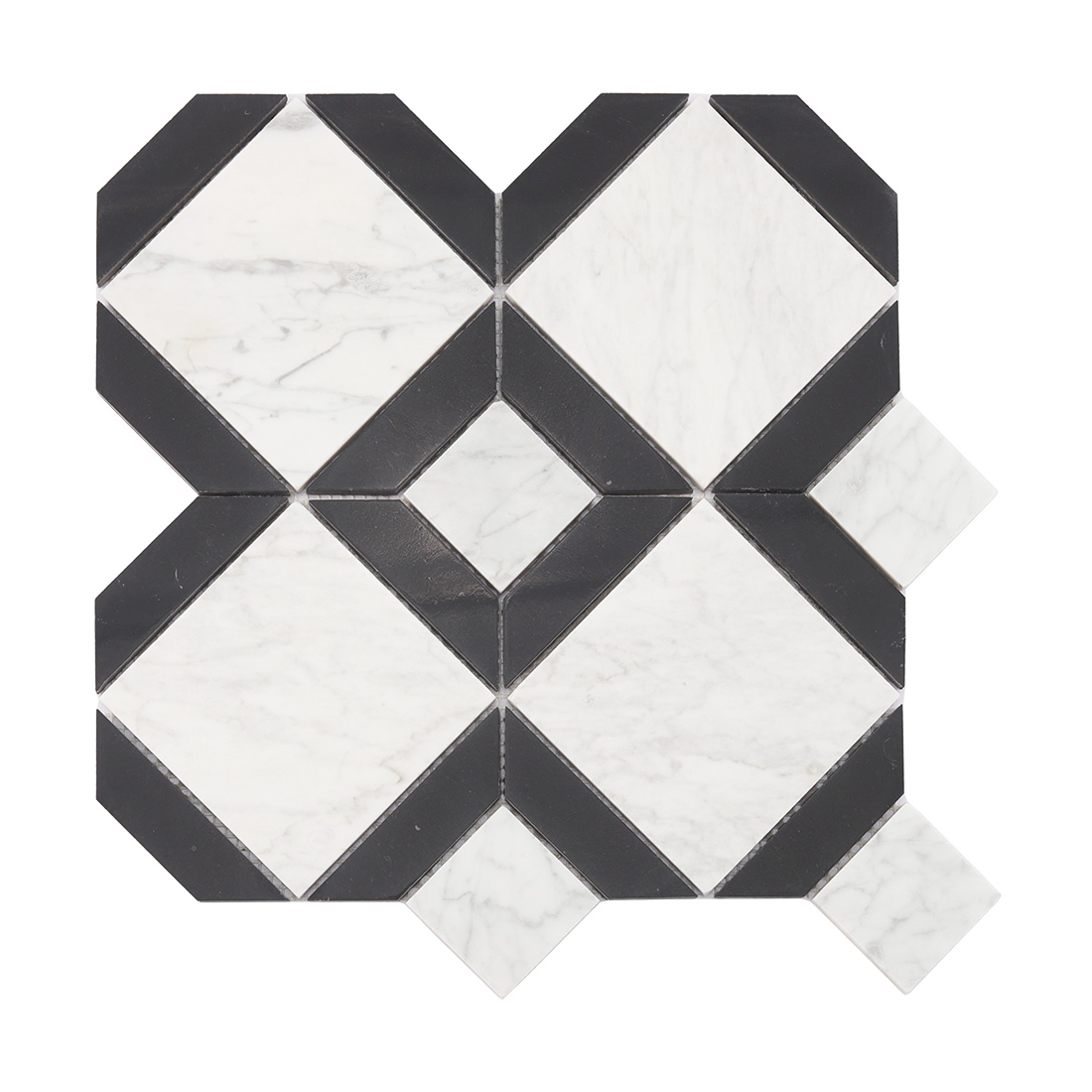
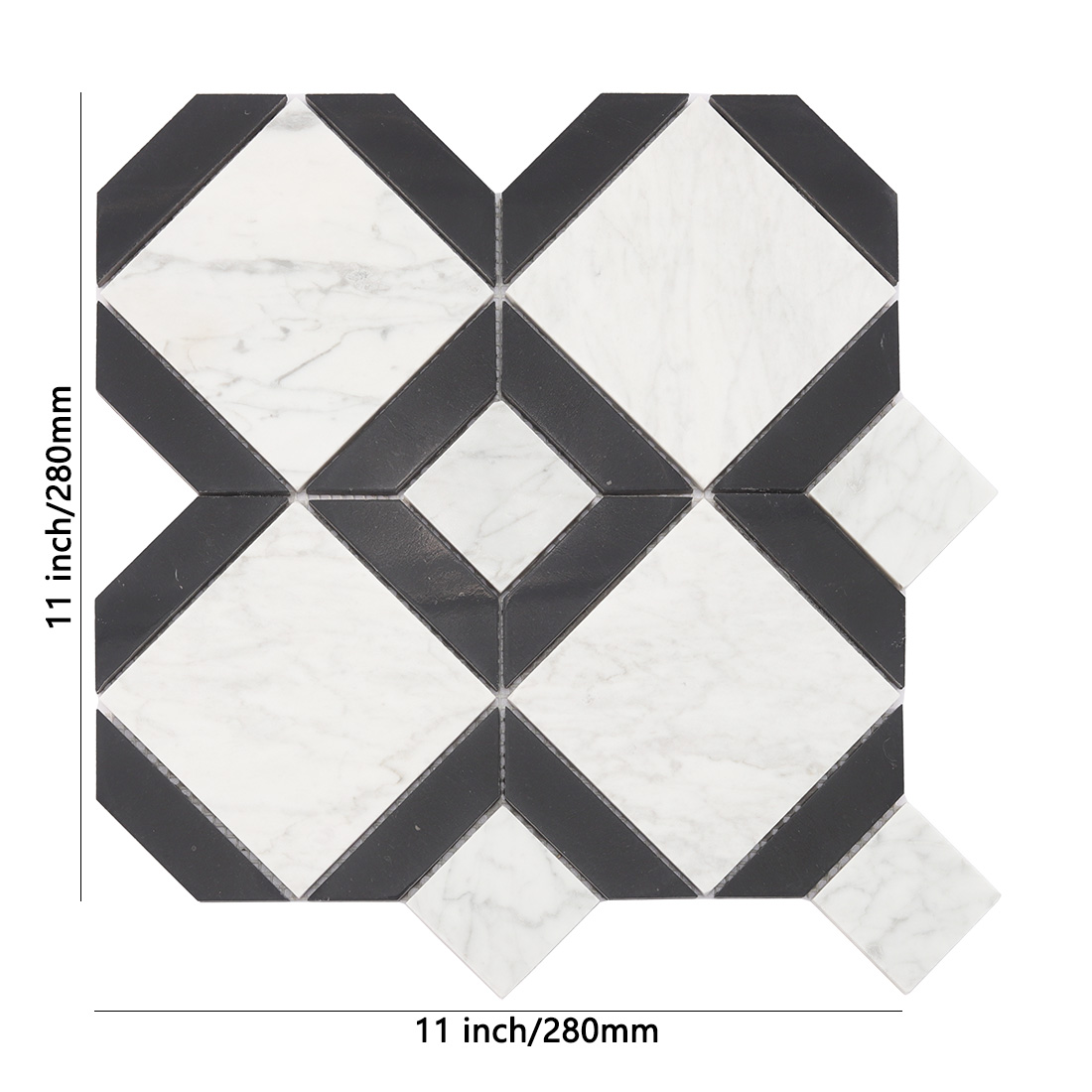
Popular classic shapes include squares, rectangles, hexagons, octagons, penny rounds, and elongated strips. These shapes may be installed in straightforward grids or arranged into checkerboard, basketweave, herringbone, octagon-and-dot, lattice, border, and geometric mosaic patterns.
Classic does not mean old-fashioned. A traditional black-and-white marble floor can complement a historic home, while the same pattern in soft beige and cream can feel calm and contemporary. The enduring character comes from visual balance rather than attachment to one specific decorating style.
Why Choose Classic Tile Flooring?
Timeless Design
Classic tile flooring avoids overly specific colors and motifs that can quickly date a room. Natural stone veining, subtle tonal variation, restrained geometry, and balanced contrasts work with traditional, transitional, modern, minimalist, French-inspired, and industrial interiors.
Reliable Everyday Performance
Properly selected floor-rated tiles withstand regular foot traffic, cleaning, furniture, and everyday use. Porcelain is especially practical for busy or moisture-prone areas, while marble, limestone, and travertine offer authentic natural character when correctly installed and maintained.
Performance varies by product. Review the manufacturer’s specifications rather than assuming every ceramic, stone, or mosaic tile is suitable for the same application.
Easy Design Coordination
Neutral classic flooring provides a flexible base for changing furniture, cabinetry, wall colors, and decorative accessories. It can quietly support the overall room or become a focal point through checkerboard contrast, a detailed border, or a custom geometric pattern.
Long-Term Value
Tile is a permanent finish that is more difficult to replace than paint or furnishings. Selecting a visually enduring design can reduce the likelihood of premature remodeling while creating a floor that continues to complement the property over time.
Residential and Commercial Versatility
Classic floor tiles can be used in homes, hotels, restaurants, boutiques, offices, showrooms, and other commercial interiors. For high-traffic commercial areas, confirm traffic classification, abrasion resistance, slip performance, maintenance requirements, and any applicable project standards before ordering.
Explore Classic Floor Tiles by Material
Marble Floor Tiles
Marble is one of the most recognizable materials in classic interior design. Its natural veining and tonal movement ensure that no two pieces look exactly alike. White marble creates a bright and architectural appearance, while black, green, beige, brown, and multicolor marble can produce a richer, more dramatic floor.
Marble is available in square tiles, rectangular tiles, mosaics, borders, medallions, checkerboard combinations, and custom geometric pieces. Honed finishes offer a softer appearance, while polished marble reflects more light and creates a formal look.
Because marble is a natural stone, it may be sensitive to acidic substances and can require sealing. Confirm that the selected finish is appropriate for the intended floor, especially in wet or high-traffic areas.
Travertine and Limestone Floor Tiles
Travertine and limestone bring warm, understated character to classic interiors. Their beige, cream, ivory, gray, and taupe shades work especially well in Mediterranean, European, rustic, transitional, and natural minimalist spaces.
Travertine may contain natural pores and tonal variation, while limestone often has a quieter, more uniform appearance. Both materials can be cut into squares, rectangles, hexagons, octagons, mosaics, and custom shapes.
These stones require installation and care products suitable for natural stone. Sealing needs depend on the stone, finish, location, and supplier recommendations.
Porcelain Floor Tiles
Porcelain is a practical choice for customers who want classic style with comparatively simple maintenance. Available in marble-look, limestone-look, cement-look, wood-look, solid-color, and decorative patterns, porcelain can recreate many traditional surfaces while offering consistent dimensions and dependable performance.
Many porcelain products are suitable for kitchens, bathrooms, entryways, living areas, and commercial interiors. Some collections may also be approved for showers, freeze-thaw conditions, or outdoor spaces. Check the specific use classification rather than relying on appearance alone.
Ceramic Floor Tiles
Ceramic tile offers a broad range of colors, patterns, and traditional formats. Small squares, decorative motifs, encaustic-inspired designs, and heritage colors can add warmth and period character to kitchens, bathrooms, and other residential areas.
Not every ceramic wall tile is suitable for flooring. Choose a product specifically identified as floor-rated and confirm that its wear classification matches the anticipated traffic.
Natural Stone Mosaic Floor Tiles
Natural stone mosaics combine small pieces of marble, limestone, travertine, or other stone into detailed repeat patterns. Their additional grout joints can provide visual texture and make mosaics especially attractive for bathroom floors, shower floors, entryways, powder rooms, and decorative floor insets.
Basketweave, octagon-and-dot, penny round, hexagon, pinwheel, lattice, and geometric stone mosaics are among the most enduring options. Sheet-mounted construction can simplify alignment, but careful installation remains essential for consistent spacing and a level finished surface.
Decorative Mixed-Material Mosaics
Some classic mosaics combine natural stone with glass, metal, or shell accents. These materials can create elegant borders, central insets, and decorative transitions.
Do not assume that a mixed-material wall mosaic can also be installed on a floor. Each component and the complete mosaic assembly must be approved for the intended traffic, moisture, cleaning products, and installation environment.
Popular Classic Floor Tile Patterns
Checkerboard Floor Tiles
Checkerboard is one of the most recognizable classic floor tile patterns. Alternating light and dark squares create a balanced grid with strong architectural presence. Black and white marble is the traditional combination, but cream and beige, green and white, brown and ivory, or soft tonal pairings offer a quieter interpretation.
Tiles may be aligned with the walls for a structured appearance or installed diagonally to create movement and make the pattern feel more expansive. Checkerboard flooring works particularly well in entryways, kitchens, bathrooms, cafés, restaurants, and boutique commercial spaces.
Basketweave Floor Tiles
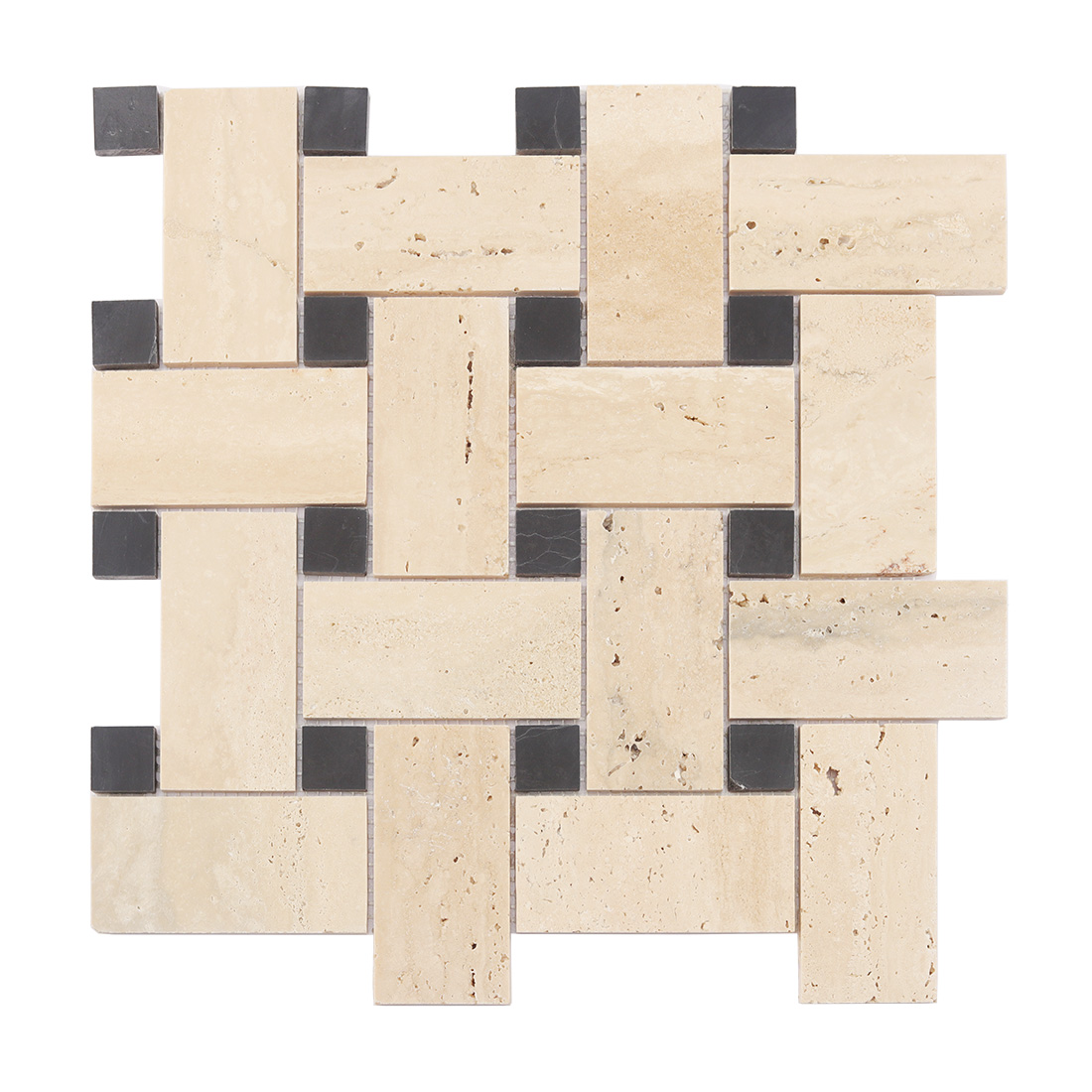
Basketweave tile recreates the appearance of interlaced material by combining small rectangles and square accent pieces. The pattern adds movement without overwhelming the room and is frequently used in classic bathrooms, powder rooms, shower areas, hotel interiors, and elegant entryways.
White marble with black dots is a familiar choice, while beige, gray, green, and mixed-stone combinations can create a warmer or more contemporary effect.
Octagon-and-Dot Tiles
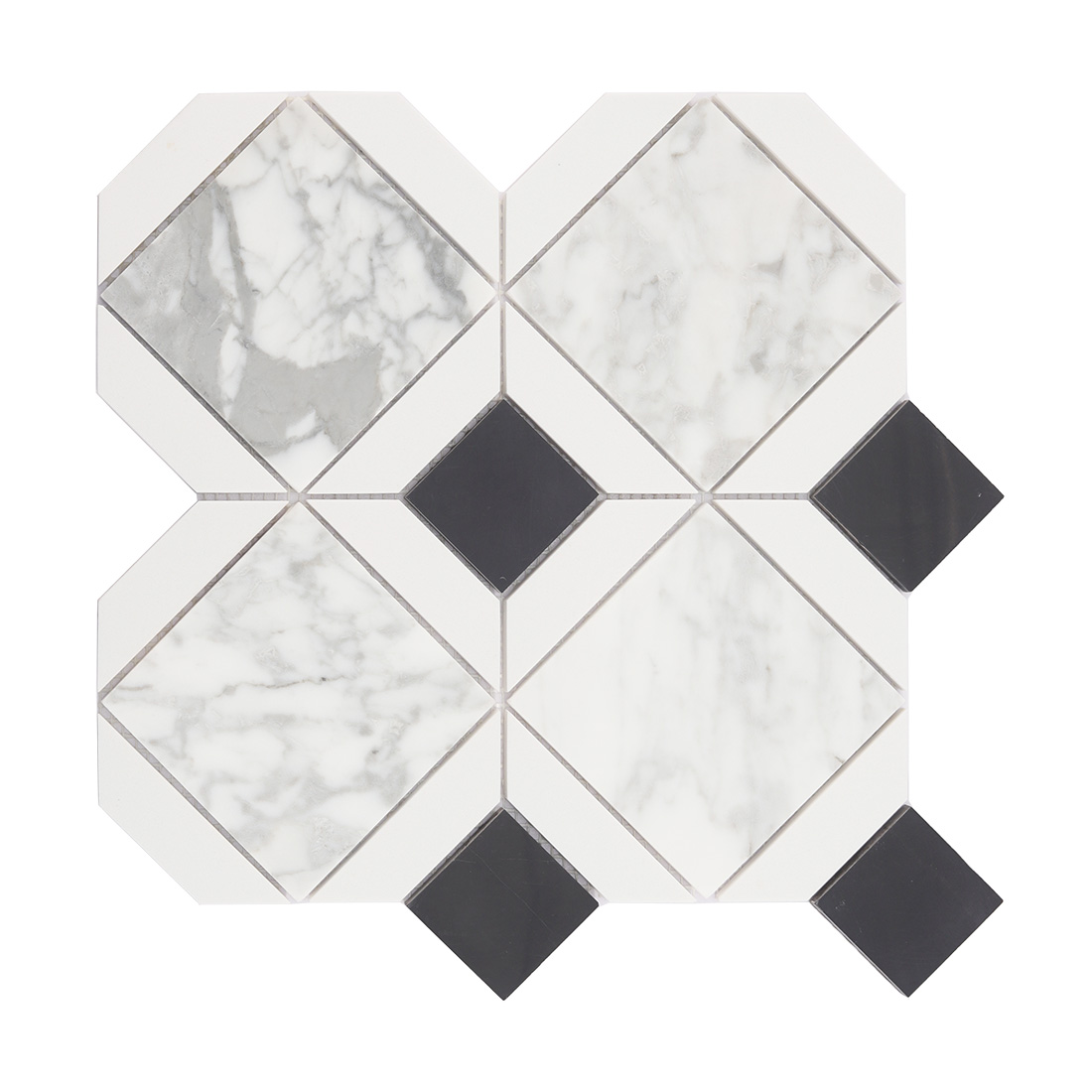
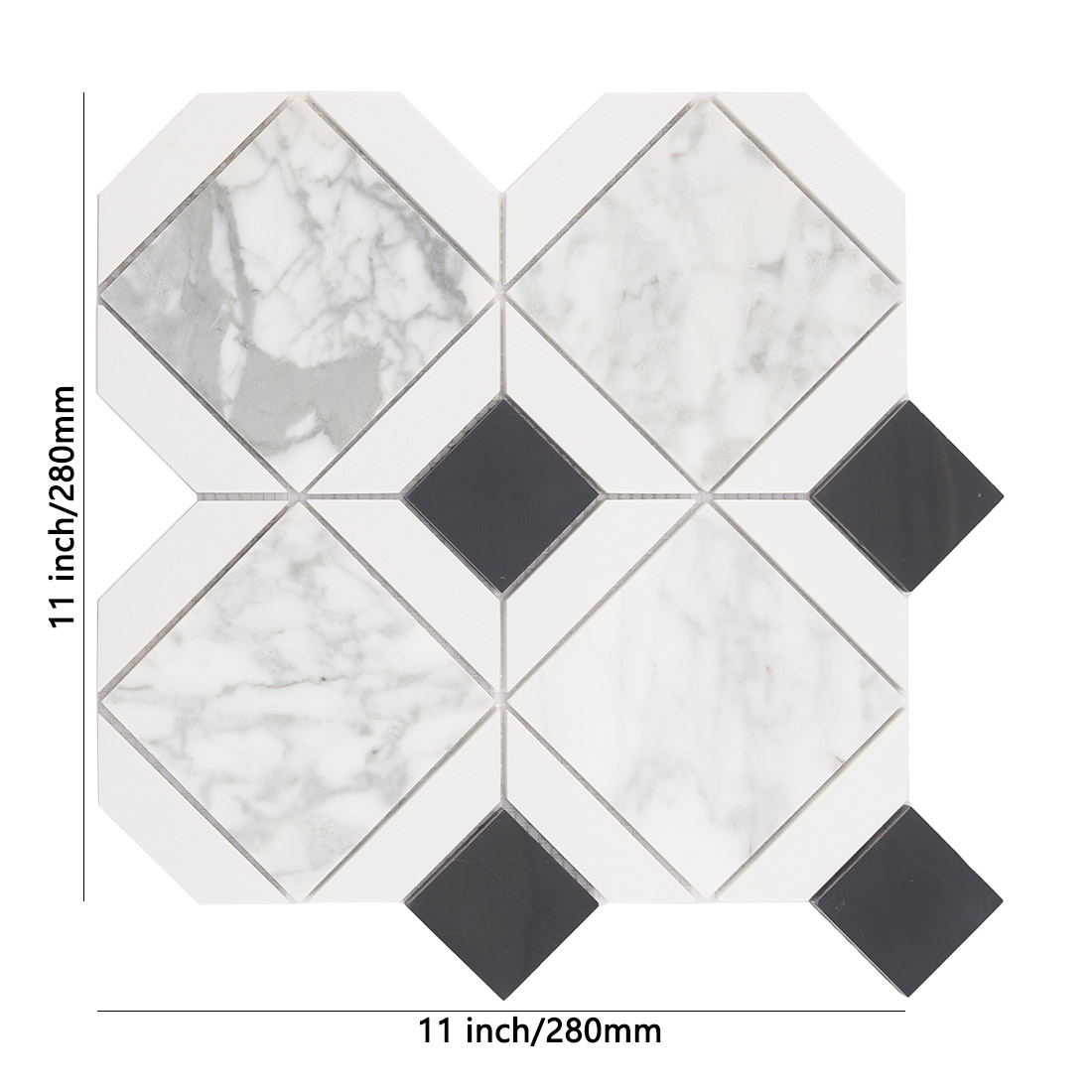
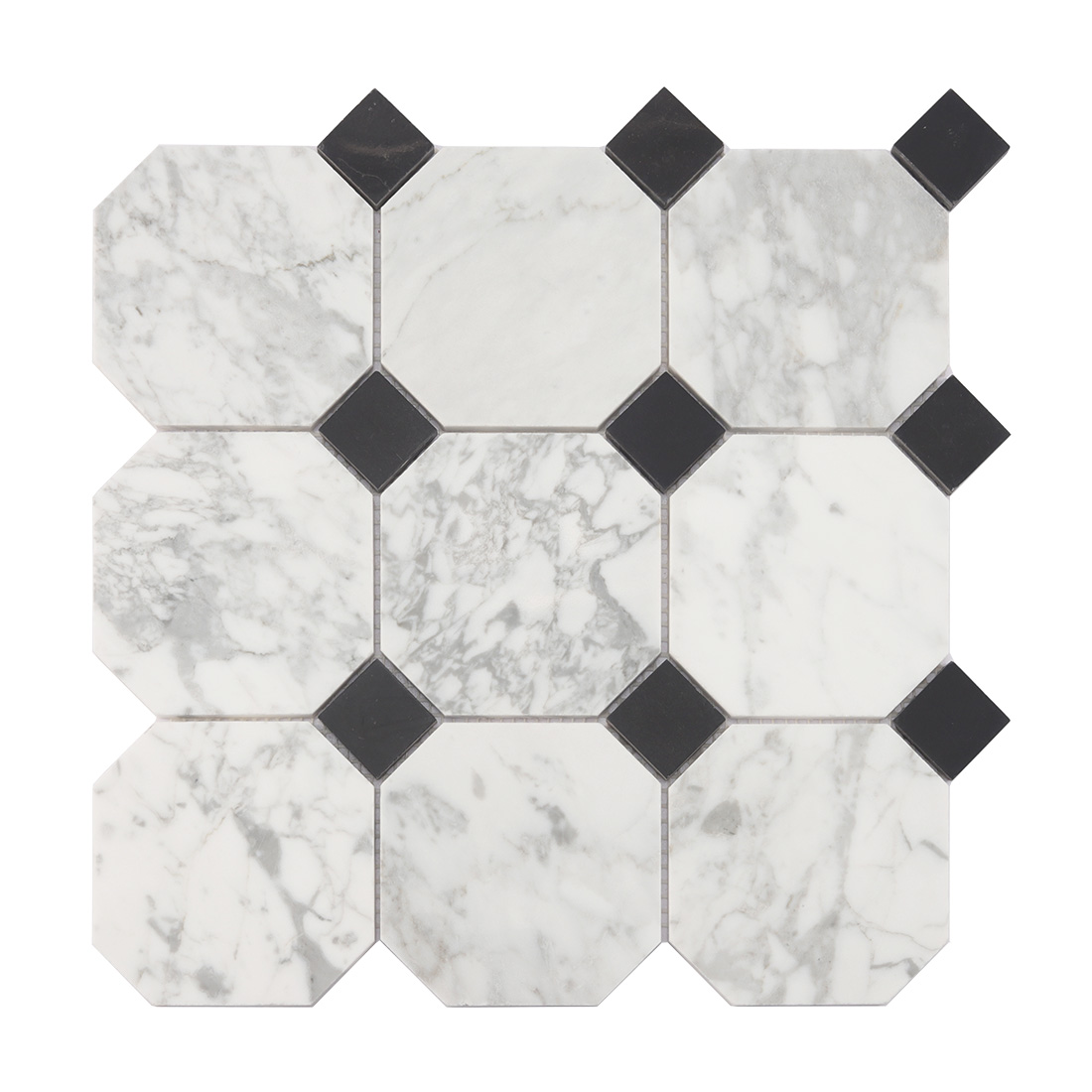
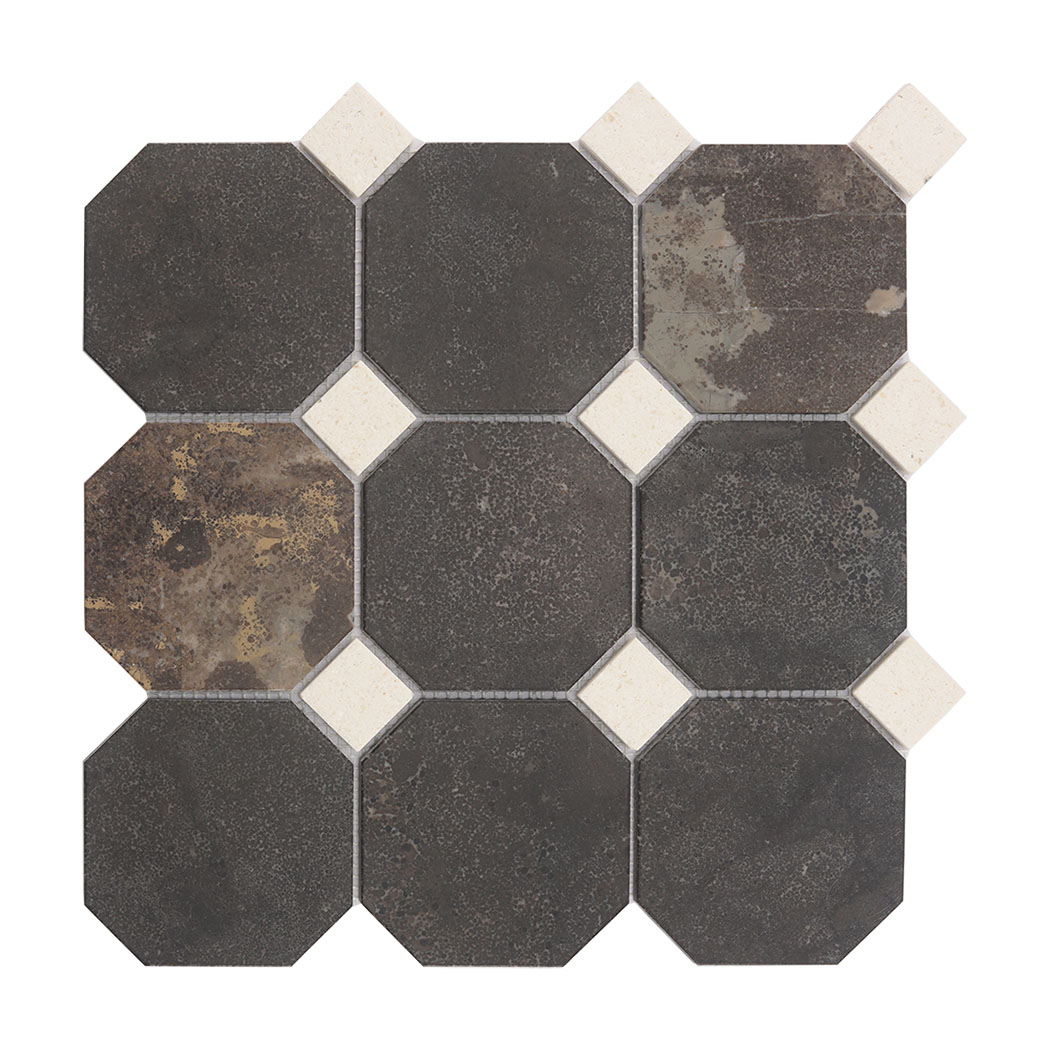
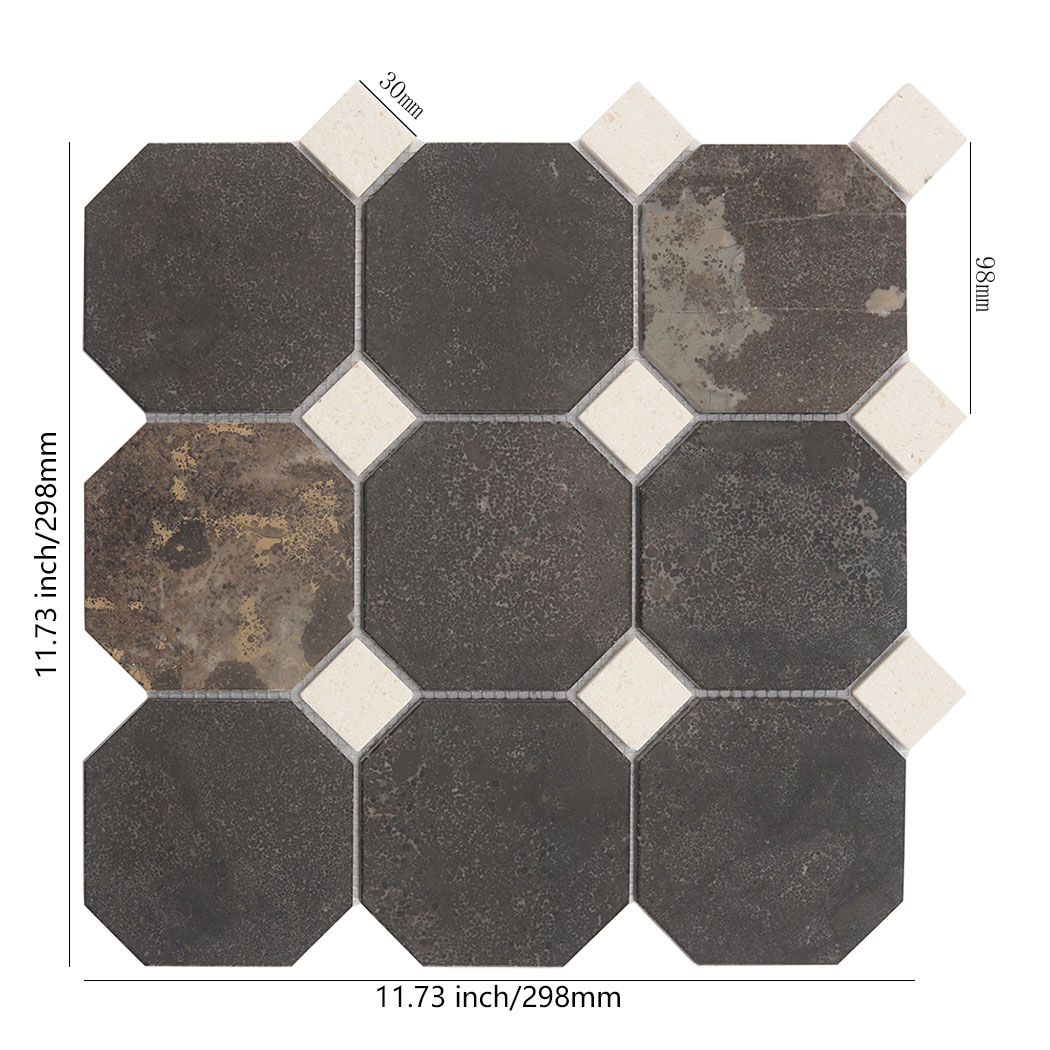
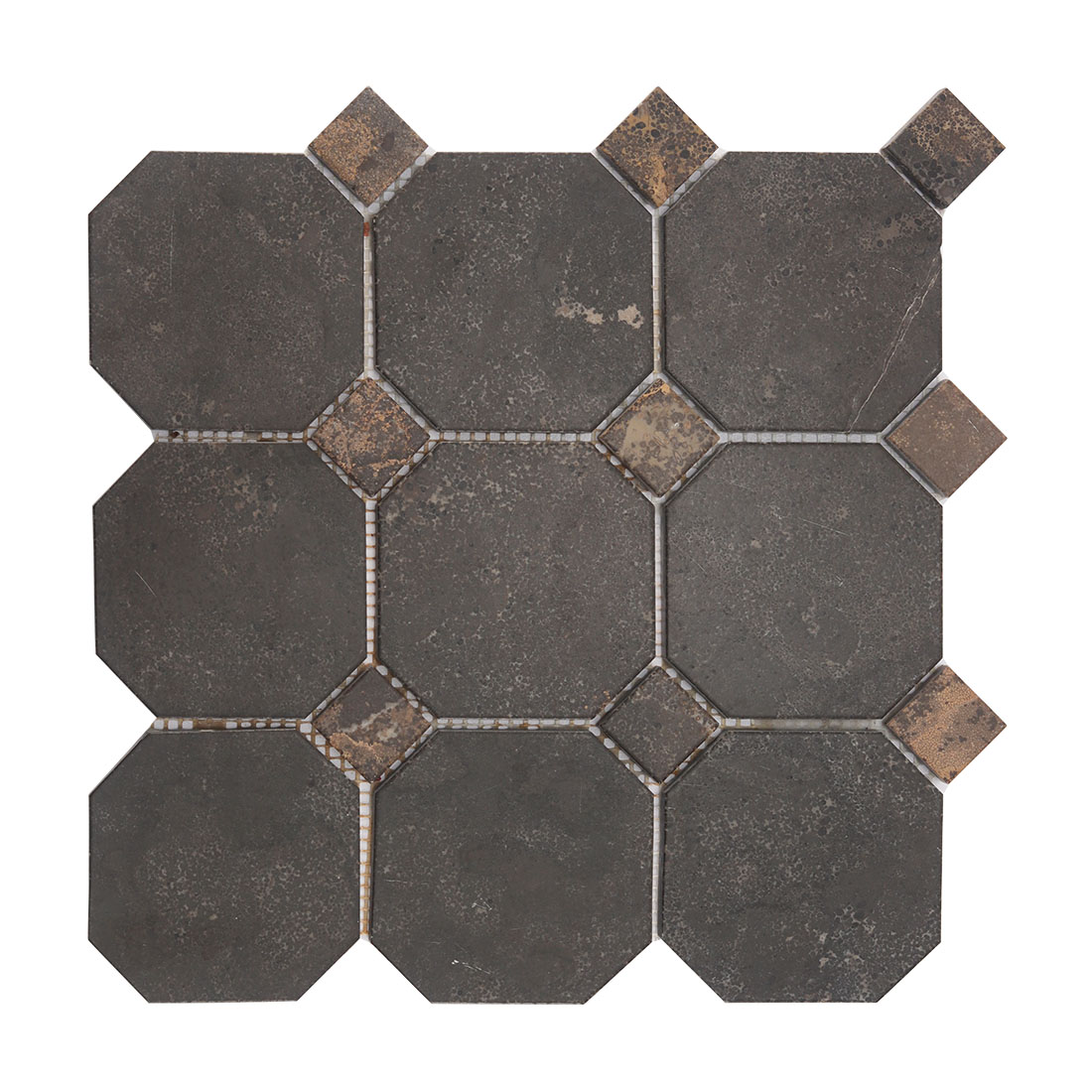
Octagonal tiles separated by small contrasting dots are closely associated with traditional bathrooms, kitchens, and entry halls. The pattern is orderly, detailed, and easy to coordinate with both vintage and modern fixtures.
White octagons with black dots create a high-contrast heritage look. Cream, gray, beige, or marble combinations soften the pattern while preserving its classic structure.
Hexagon, Penny Round, and Small Square Mosaics
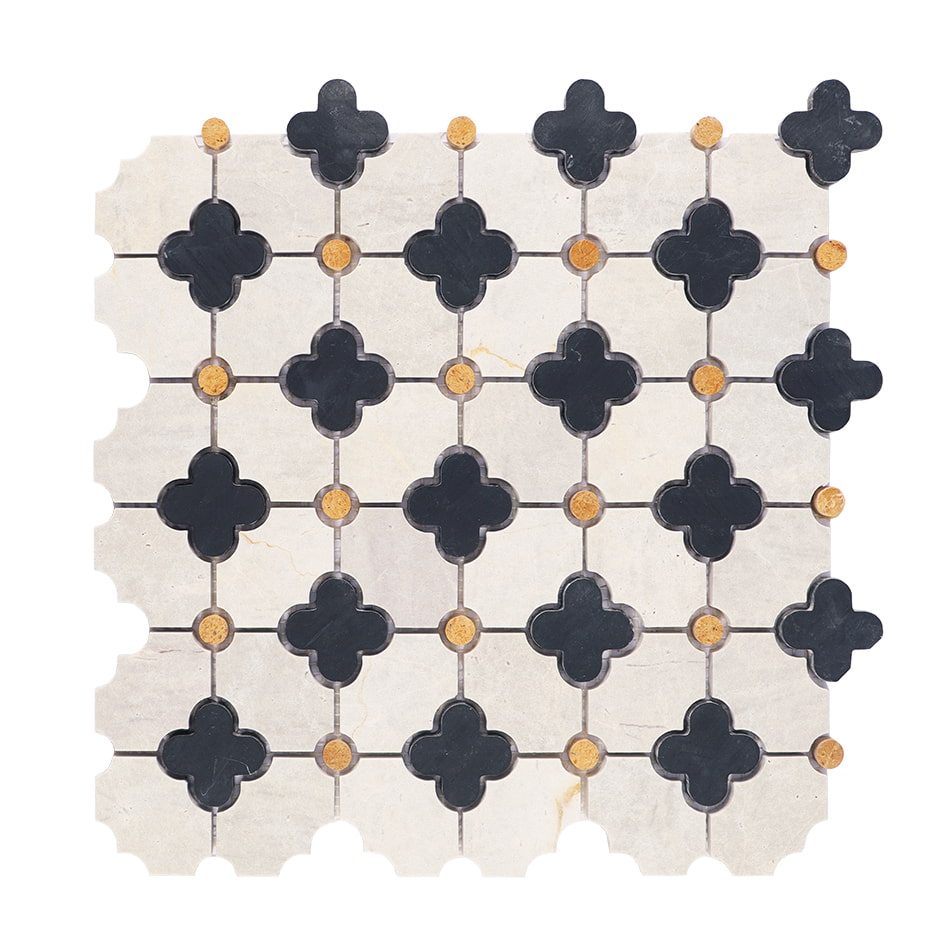
Small-format hexagons, penny rounds, and square mosaics have been used for generations because they are adaptable and visually balanced. They can create a solid field, a two-color border, a flower motif, a monogram, or a custom geometric composition.
These mosaics are especially useful in compact bathrooms and shower floors, where their scale creates detail without making the space feel crowded. Floor and wet-area suitability must still be confirmed for the specific product.
Herringbone and Parquet-Inspired Layouts
Rectangular tiles arranged in herringbone introduce directional movement while maintaining a familiar, established look. Marble, stone, porcelain, and ceramic rectangles can all be used to create this pattern when their dimensions are suitable.
Herringbone can visually lengthen a hallway, define an entryway, or add interest to an otherwise neutral bathroom floor. Borders may be added to frame the pattern and produce a more tailored finish.
Geometric and Lattice Patterns
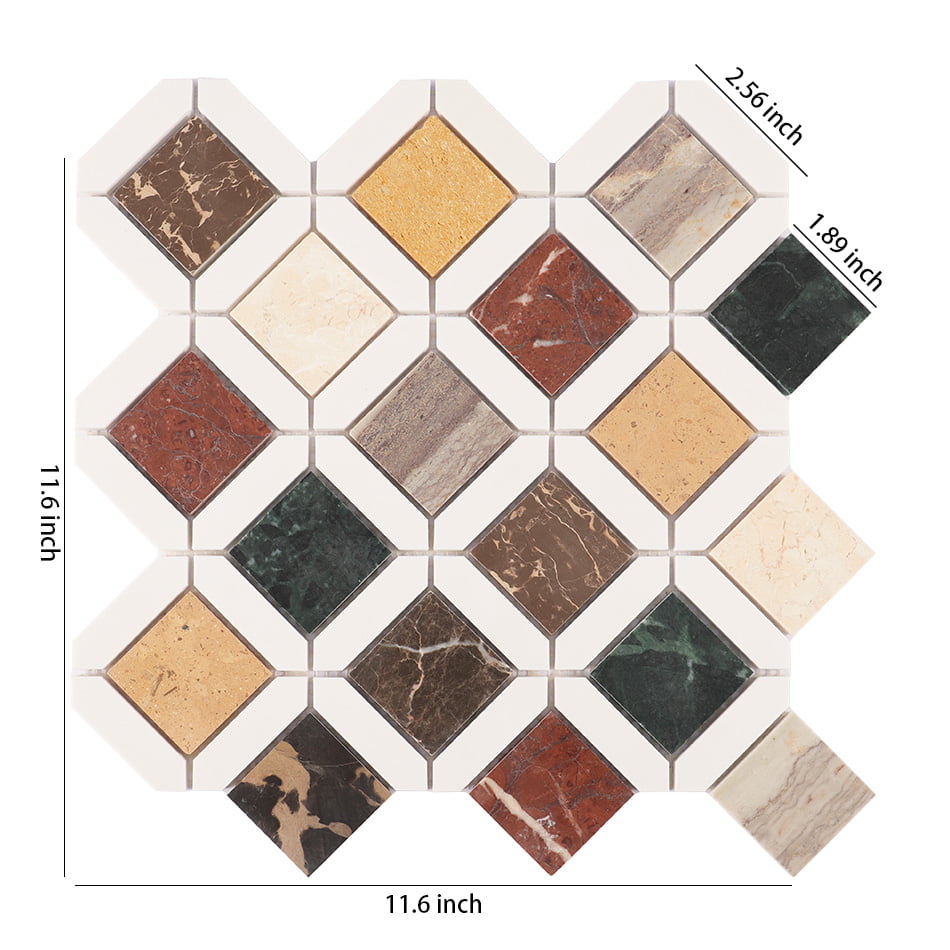
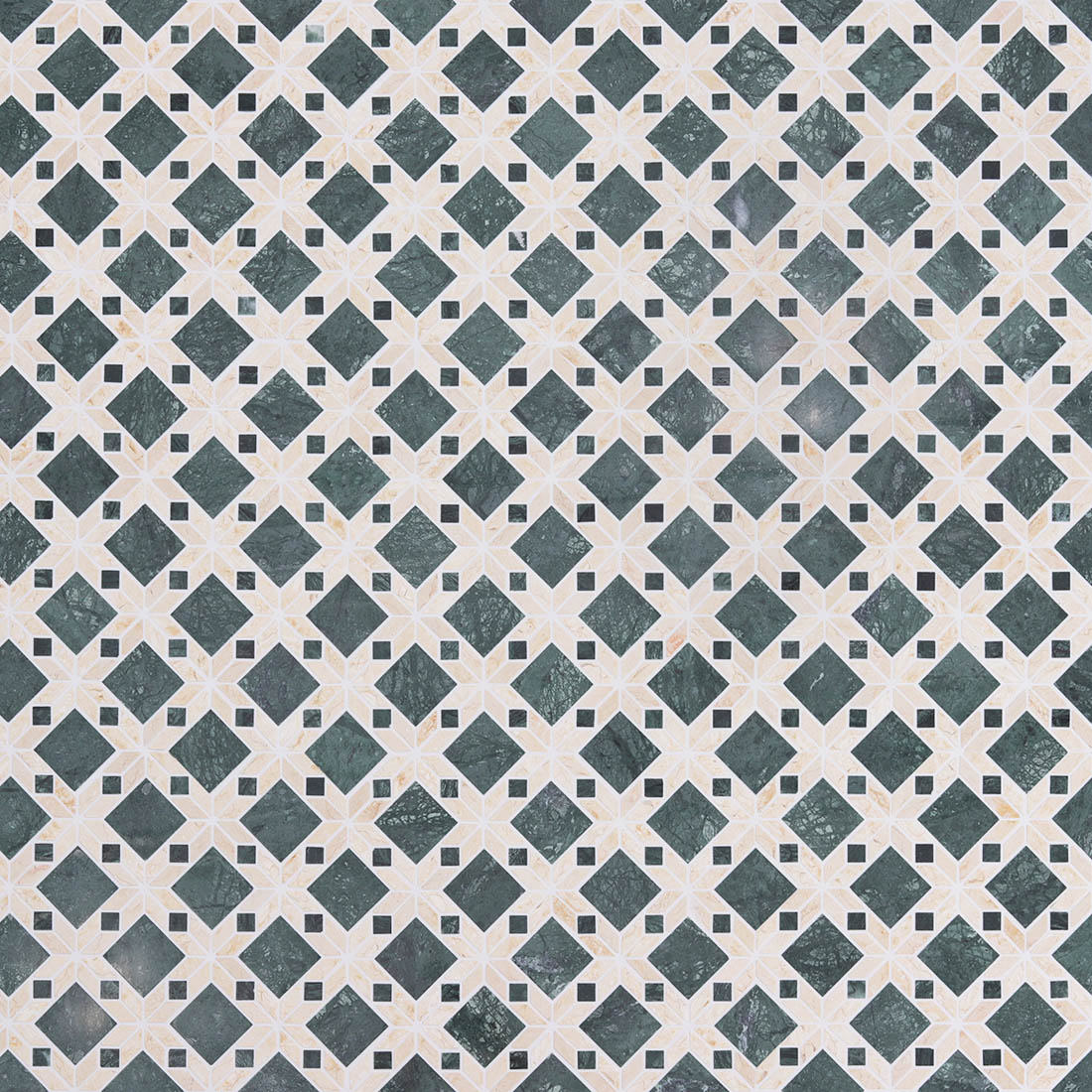
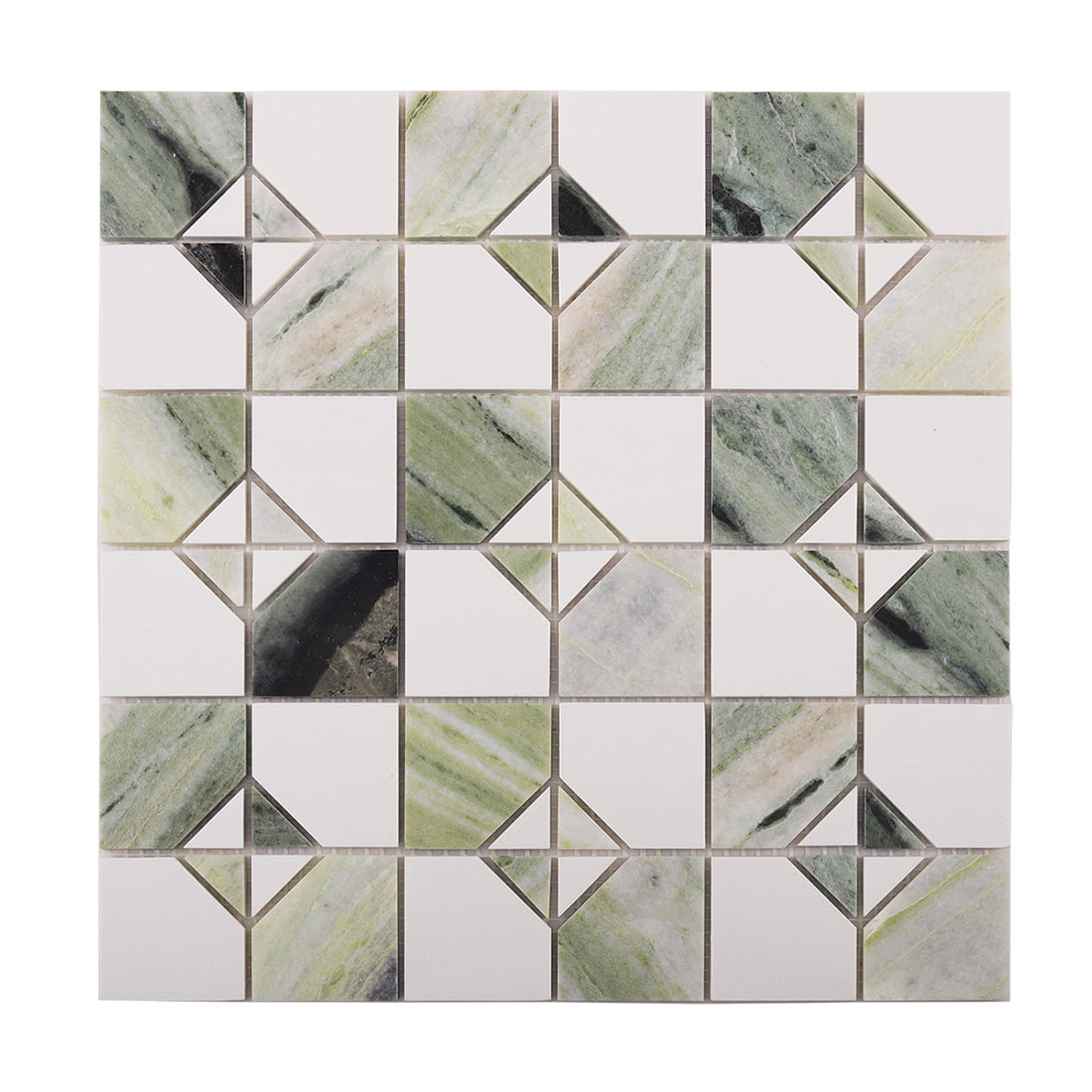
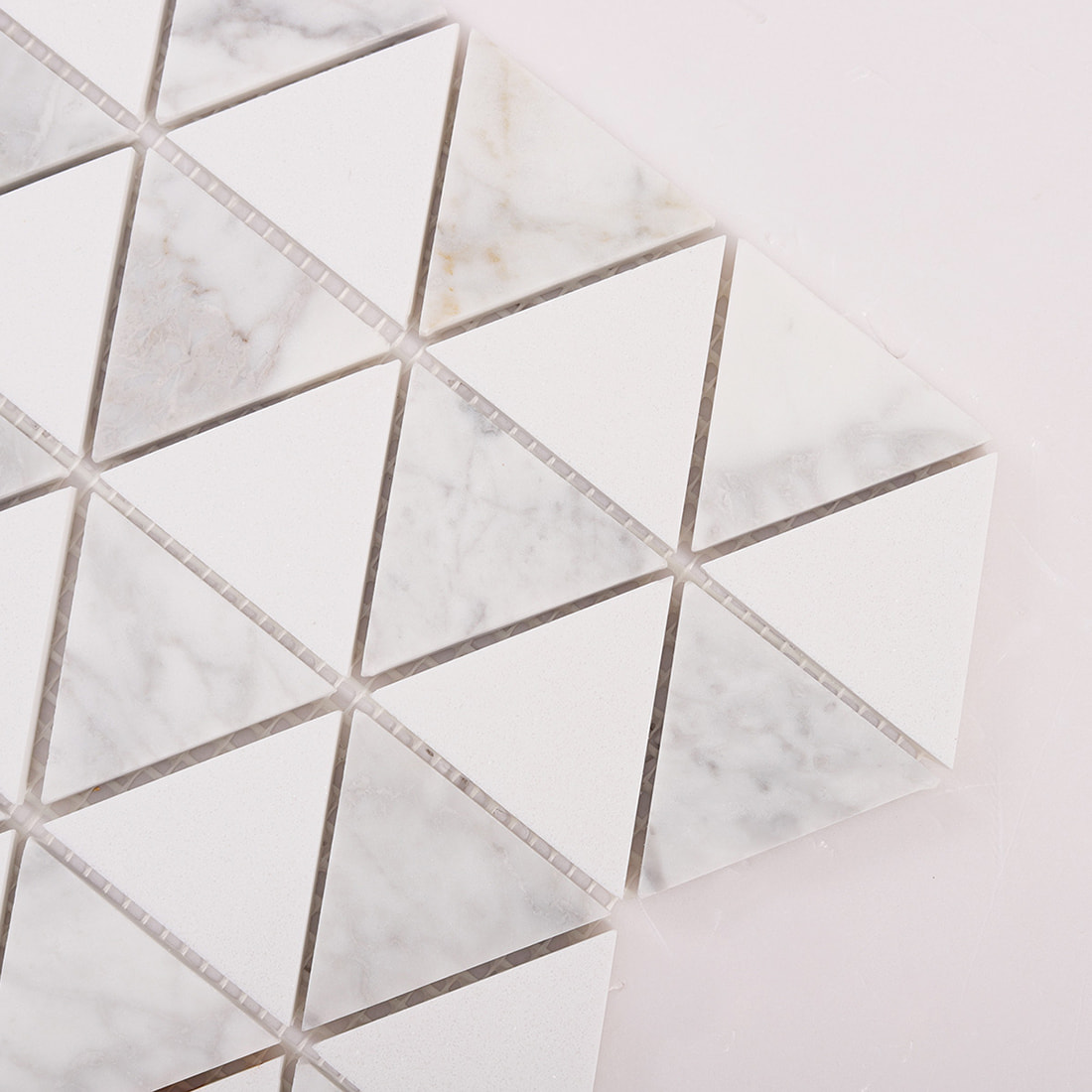
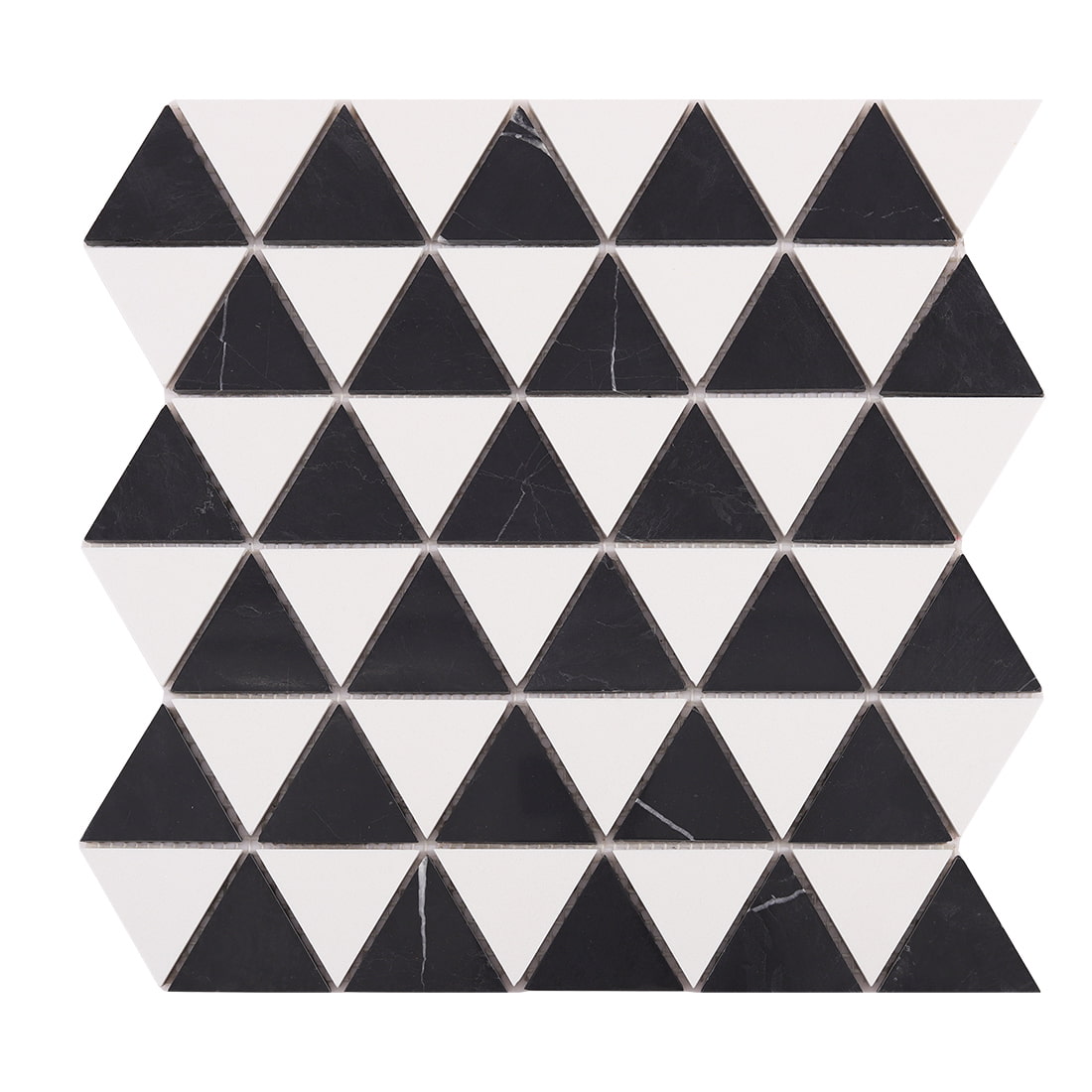
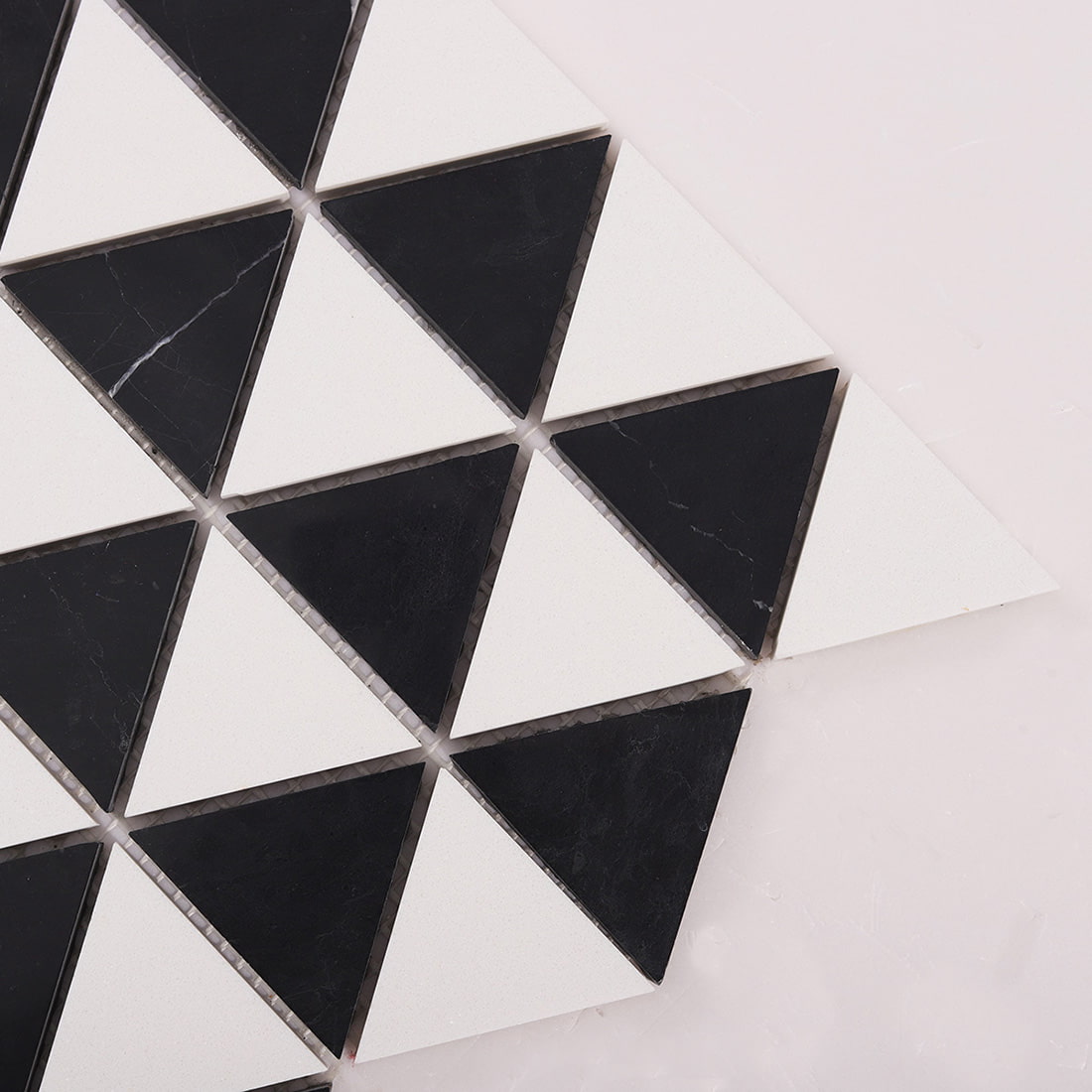
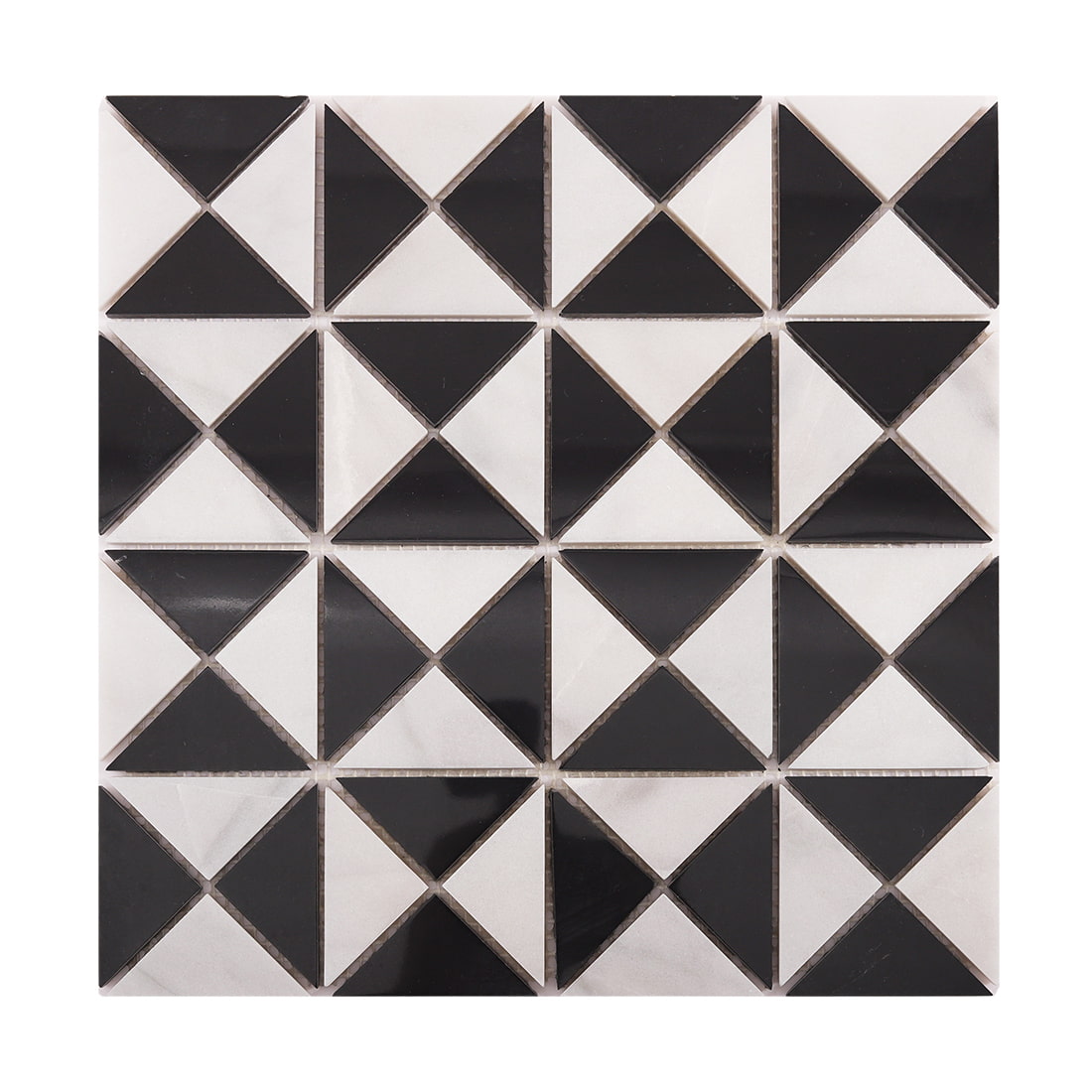
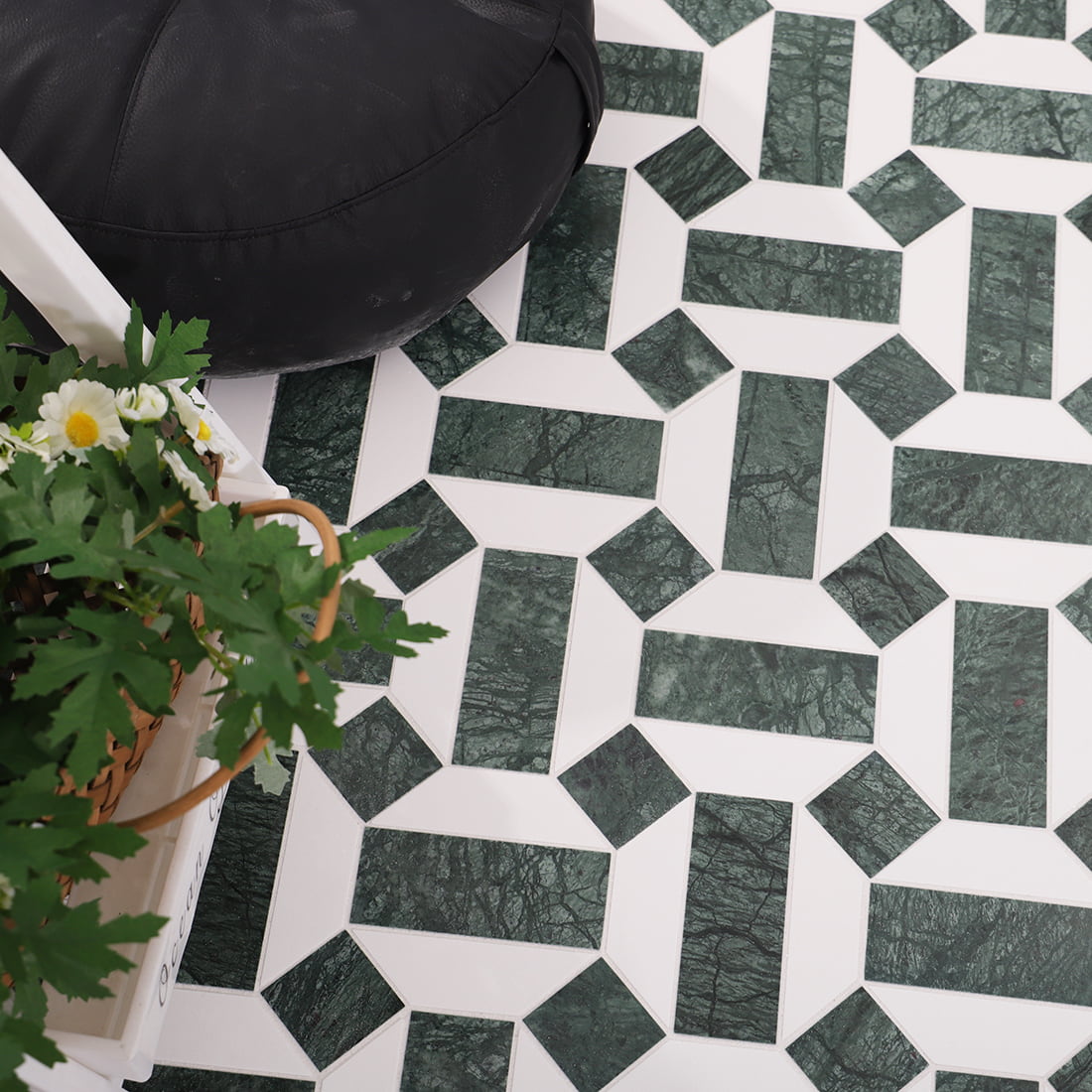
Geometric classic floor tiles combine squares, rectangles, triangles, hexagons, octagons, circles, and custom-cut pieces into repeating compositions. Symmetry keeps the design organized, while variations in stone, color, and finish add depth.
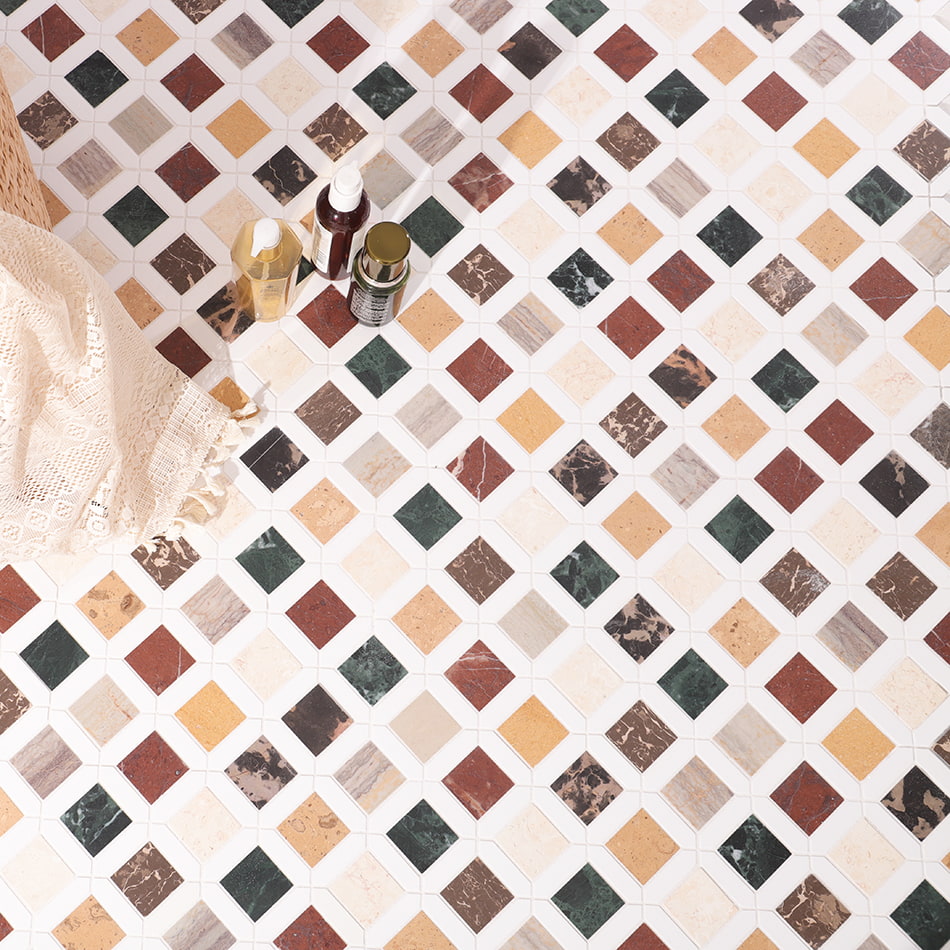
A subtle tone-on-tone geometric floor can support a minimalist interior. High-contrast marble or multicolor stone can create a statement floor for a hotel lobby, restaurant, luxury residence, or commercial showroom.
Borders, Medallions, and Custom Insets
Borders help define the perimeter of a room, frame a central pattern, or create a transition between different flooring materials. Medallions and custom insets can highlight an entrance, reception area, dining room, or other focal point.
For a cohesive result, coordinate the field tile, border width, pattern scale, grout color, room dimensions, and surrounding architecture before production or installation begins.
Classic Colors That Remain Easy to Coordinate
White and Black
Black-and-white flooring delivers clear contrast and architectural structure. It is ideal for checkerboard floors, octagon-and-dot mosaics, basketweave patterns, and Art Deco-inspired geometric designs.
Cream, Beige, and Taupe
Warm neutrals create a softer and more welcoming floor. They coordinate naturally with wood cabinetry, brass details, warm white walls, natural fabrics, and traditional furniture.
Gray and Charcoal
Gray floor tiles offer a balanced transition between traditional and contemporary design. Light gray can make a room feel calm and open, while charcoal provides definition without the severity of pure black.
Green, Brown, and Natural Stone Tones
Deep green marble, warm brown stone, and naturally varied earth tones introduce character while retaining an established, luxurious appearance. These colors work especially well in entryways, hospitality interiors, libraries, restaurants, and feature areas.
Choose the Right Tile Finish
Honed Finish
Honed tile has a smooth, low-sheen surface that softens color and veining. It is popular for marble and limestone floors because it creates an understated, refined appearance.
Matte Finish
Matte porcelain and ceramic tiles reduce glare and suit both classic and modern interiors. Depending on the product’s tested performance, matte finishes may be practical for kitchens, bathrooms, and other frequently used spaces.
Polished Finish
Polished tile reflects light and enhances color depth, making it attractive for formal foyers, living rooms, hotel lobbies, and decorative areas. Polished surfaces can become slippery when wet and should only be used where their specifications and site conditions permit.
Tumbled and Textured Finish
Tumbled stone has softened edges and an aged surface that complements rustic, Mediterranean, farmhouse, and European-inspired interiors. Textured finishes may provide additional surface grip, but actual suitability must be evaluated using the product’s technical information.
Where to Use Classic Floor Tiles
Bathroom and Powder Room Floors
Classic bathroom floor tiles pair well with freestanding tubs, traditional vanities, modern cabinetry, brass fixtures, chrome hardware, and neutral wall finishes. Basketweave, hexagon, penny round, octagon-and-dot, and checkerboard patterns are particularly effective.
For wet bathroom areas and shower floors, verify wet-area approval, surface traction, drainage requirements, grout selection, and sealing instructions.
Kitchen Floors
Porcelain, ceramic, and properly maintained natural stone can create durable and elegant kitchen floors. Checkerboard, limestone-look, marble-look, and muted patterned tiles coordinate easily with both painted and natural wood cabinetry.
Consider stain exposure, cleaning frequency, foot traffic, finish, and grout color when choosing kitchen flooring.
Entryways, Hallways, and Mudrooms
Entry areas benefit from flooring that can handle regular traffic, tracked-in dirt, and frequent cleaning. A framed checkerboard, geometric stone mosaic, or durable porcelain floor can establish the design character of the property immediately.
Living Rooms and Open-Plan Interiors
Large-format marble, limestone, stone-look porcelain, and neutral ceramic tiles can create a continuous visual foundation across living and dining spaces. Consistent flooring may also help connected rooms feel more spacious and unified.
Hotels, Restaurants, and Retail Spaces
Classic tile flooring can bring long-term visual relevance to hospitality and commercial interiors. Choose materials and finishes based on expected traffic, cleaning procedures, wet conditions, accessibility requirements, and commercial performance specifications.
Outdoor Areas
Only use tiles specifically approved for outdoor installation and the local climate. Confirm freeze-thaw resistance where relevant, exterior slip performance, drainage, substrate requirements, and compatibility with temperature changes.
How to Choose the Best Classic Floor Tile
Confirm the Intended Application
Start by identifying whether the tile will be used in a dry residential room, wet bathroom, shower, kitchen, commercial interior, covered patio, or fully exposed outdoor area. A product suitable for a bedroom floor may not be suitable for a commercial entrance or exterior walkway.
Review Floor and Traffic Ratings
Check whether the product is rated for residential or commercial flooring and whether its wear resistance matches expected traffic. For glazed ceramic and porcelain, review the manufacturer’s abrasion or traffic classification when provided.
Check Wet-Area Slip Information
For level interior floors expected to become wet, review the product’s wet DCOF data and use classification. DCOF is an important specification, but it is not the only factor. Drainage, surface contamination, footwear, cleaning, lighting, slope, and maintenance also influence floor safety.
Consider Water Absorption and Climate
Porcelain, ceramic, and natural stone absorb moisture at different rates. Exterior and freeze-thaw applications require products specifically approved for those conditions. Do not use indoor-only tile outdoors simply because it has a textured surface.
Select the Right Size and Pattern Scale
Large tiles reduce the number of grout joints and can make an open room feel calm and continuous. Small mosaics create more pattern detail and can adapt more easily to compact areas or sloped shower floors.
Choose a scale that works with the room dimensions. A large checkerboard may become the focal point, while a small basketweave or hexagon mosaic creates a more detailed surface.
Coordinate the Grout
Grout color significantly affects the finished appearance. Matching grout produces a quieter, more continuous field, while contrasting grout emphasizes every shape and joint.
Light grout can brighten a pattern but may require more frequent cleaning in busy floor areas. Medium gray, taupe, beige, or other coordinating shades can offer a practical visual balance. Always test grout with the actual tile before installation.
Understand Natural Variation
Natural marble, limestone, and travertine vary in color, veining, mineral markings, and texture. This variation is part of their character. Order samples and review current-lot photographs when possible, then blend pieces from multiple boxes during installation.
Order Enough Tile
Include additional material for cuts, pattern alignment, selection, accidental damage, and future repairs. Straight layouts generally create less waste than diagonal, herringbone, bordered, or complex geometric installations. Ask the installer to calculate the appropriate overage for the specific room and pattern.
Classic Floor Tile Installation Tips
A long-lasting tile floor depends on correct preparation and installation. The substrate should be stable, clean, flat, and appropriate for tile. Cracks, movement, moisture, and uneven areas must be addressed before installation begins.
Dry-lay natural stone and patterned tile before setting it. This allows the installer to distribute color variation, confirm pattern direction, position focal points, and avoid narrow cuts in highly visible areas.
Use adhesives, grout, membranes, sealers, and cleaning products compatible with the tile material and site conditions. Some light-colored or translucent natural stones may require a white mortar recommended for that stone.
Complex mosaics, borders, medallions, diagonal checkerboards, and natural stone floors are usually best installed by an experienced tile professional. Follow current installation standards and the written instructions supplied with the tile and installation products.
Cleaning and Maintaining Classic Tile Floors
Porcelain and Ceramic Care
Sweep or vacuum loose grit regularly and clean the floor with a suitable neutral cleaner. Avoid products that leave a slippery or dulling residue. Grout may require separate cleaning or sealing depending on the grout system used.
Marble and Natural Stone Care
Use a pH-neutral cleaner formulated for natural stone. Avoid vinegar, lemon-based cleaners, acidic bathroom cleaners, abrasive powders, and other products that may etch or damage the surface.
Blot spills promptly rather than spreading them across the floor. Follow the stone supplier’s guidance for sealing and resealing. A penetrating sealer can improve stain resistance, but it does not make natural stone completely stain-proof or maintenance-free.
Protect High-Traffic Areas
Use suitable entry mats to reduce abrasive dirt, add protective pads beneath furniture, and lift rather than drag heavy items. Keep a small quantity of matching tile after installation for future repairs.
Custom Classic Floor Tile Designs
Classic flooring does not have to be limited to standard patterns. Woos Tiles can help customers explore custom sizes, material combinations, geometric mosaics, borders, medallions, and decorative floor insets for residential and commercial projects.
Natural marble, travertine, limestone, and other stones can be precision-cut into squares, rectangles, hexagons, octagons, circles, triangles, and other shapes. These pieces can be arranged into symmetrical repeats, framed fields, custom transitions, branded motifs, or project-specific compositions.
For custom work, provide the room dimensions, installation drawings, preferred materials, colors, finish, pattern scale, quantity, and intended application. Allow time for design confirmation, samples, production, installation planning, and transportation.
Why Shop Classic Floor Tiles at Woos Tiles?
Woos Tiles is an online tile superstore offering marble tiles, glass tiles, metal tiles, shell tiles, stone tiles, mosaic tiles, wall tiles, floor tiles, bathroom tiles, kitchen tiles, backsplash tiles, outdoor tiles, and custom mosaic murals for residential and commercial projects.
Our broad material selection makes it easier to coordinate floors, walls, backsplashes, borders, and decorative features within one project. Customers can explore timeless standard products or contact us about custom shapes, colors, dimensions, mosaics, and project-specific designs.
Browse our classic floor tiles, compare materials and finishes, and order samples to review the color, texture, scale, and natural variation before placing a full order. For specification or customization assistance, contact Woos Tiles with your project details.
Frequently Asked Questions About Classic Floor Tiles
Are Classic Floor Tiles Outdated?
No. Classic floor tiles use balanced colors, established materials, and proven patterns that work across changing interior styles. The surrounding cabinetry, wall color, furniture, lighting, and grout can make the same tile feel traditional or contemporary.
What Is the Best Material for Classic Floor Tiles?
The best material depends on the location and maintenance expectations. Porcelain is a practical option for busy and moisture-prone areas. Marble offers authentic natural luxury. Limestone and travertine provide warm, understated character. Ceramic can be suitable for many residential floors when specifically floor-rated.
Are Checkerboard Floor Tiles Still in Style?
Yes. Checkerboard is an enduring layout rather than a single trend. Black and white creates a bold traditional look, while beige, cream, green, brown, gray, or low-contrast combinations offer softer interpretations.
Can Classic Floor Tiles Be Used in Bathrooms?
Many classic floor tiles are suitable for bathrooms, including floor-rated porcelain, ceramic, marble, and stone mosaics. Confirm wet-area suitability, slip information, sealing requirements, and maintenance instructions for the specific product.
Can Mosaic Tile Be Used on a Shower Floor?
Some mosaics are designed for shower floors, but not all are approved. Verify that the material, finish, mesh, adhesive system, and complete product are suitable for submerged or wet conditions. Proper slope, drainage, waterproofing, and installation are also essential.
Is Polished Marble Suitable for Flooring?
Polished marble can be used in approved dry floor applications and formal interiors. Because polished surfaces may become slippery when wet, always confirm the product’s specified use and consider a honed or suitable textured finish for moisture-prone areas.
Do Natural Stone Floor Tiles Need Sealing?
Many natural stones benefit from sealing, but requirements vary by stone and finish. Follow the supplier’s recommendations. Sealer improves stain resistance but does not make stone completely stain-proof.
What Tile Size Makes a Small Room Look Larger?
Larger tiles with coordinating grout can reduce visual interruptions, while small mosaics can add proportionate detail and adapt to compact or sloped areas. The best choice depends on room dimensions, pattern, tile color, cut placement, and desired character.
How Much Extra Tile Should I Order?
Order additional tile for cuts, breakage, pattern matching, material selection, and future repairs. The correct amount depends on the layout and room shape. Diagonal patterns, herringbone, borders, and custom geometry generally require more material than a straight grid.
Are Classic Floor Tiles Suitable for Commercial Spaces?
Many are, but the product must be rated for the expected commercial traffic and conditions. Review wear classification, slip performance, cleaning requirements, thickness, installation system, and applicable project standards.
Can Classic Floor Tile Patterns Be Customized?
Yes. Depending on the material and project quantity, custom colors, shapes, borders, medallions, geometric patterns, and dimensions may be available. Contact Woos Tiles with drawings, measurements, reference images, and application details for evaluation.
Create a Floor Designed to Endure
A well-chosen classic tile floor offers more than short-term visual appeal. It creates a durable, adaptable foundation that can support the architecture and interior design for many years.
Explore classic floor tiles from Woos Tiles or contact us for samples, material guidance, commercial project support, and custom mosaic solutions.