

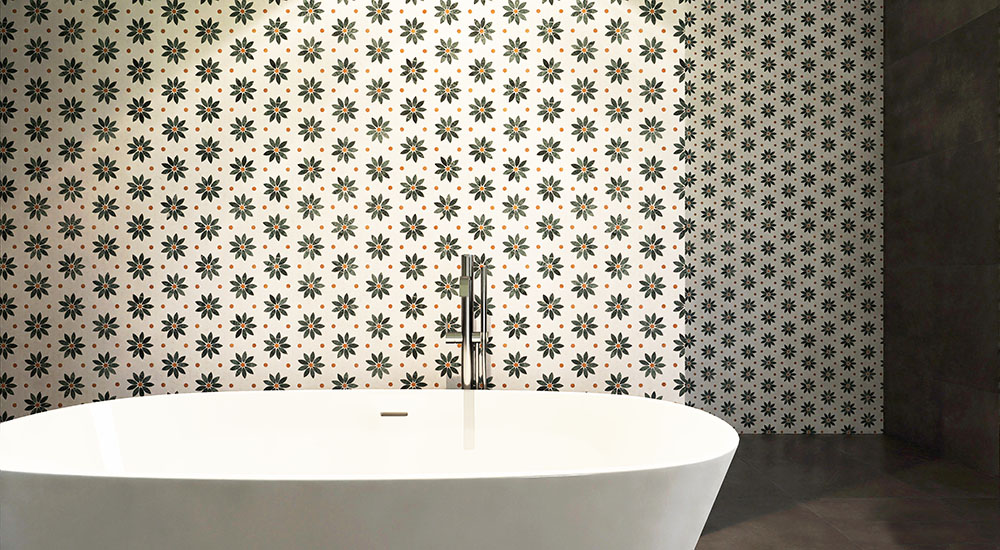
Green Daisy Wall Tiles for a Fresh Bathroom Feature Wall
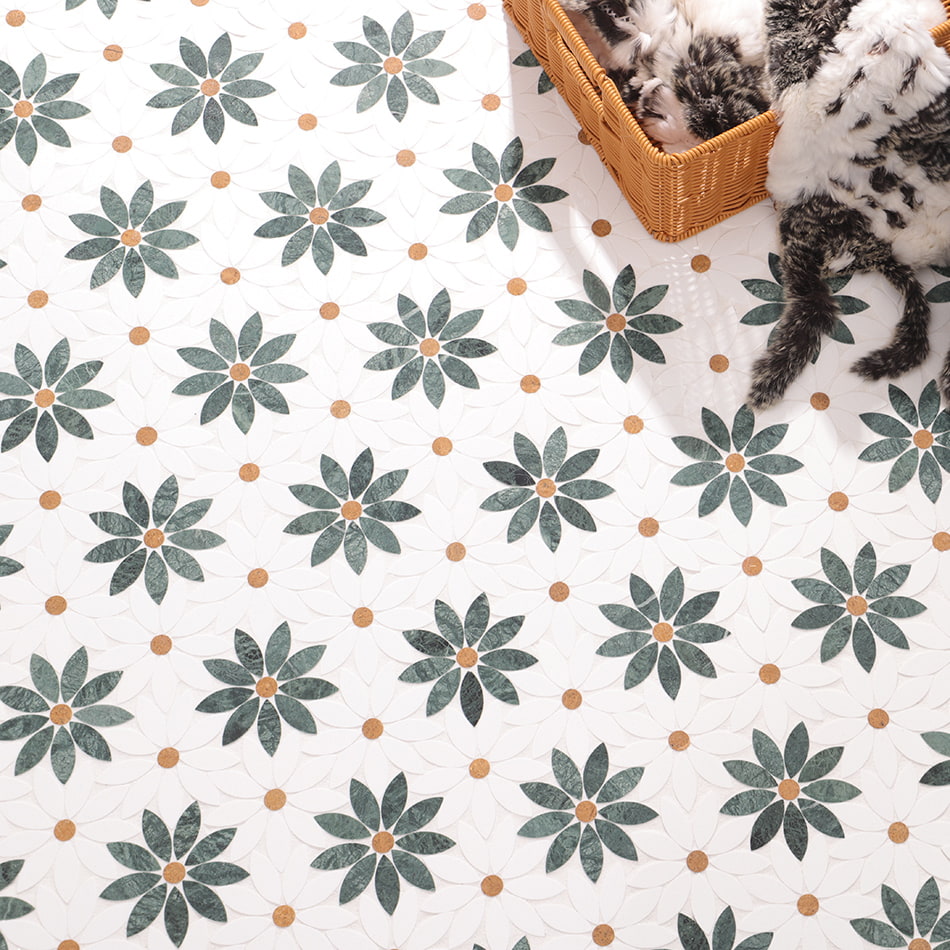
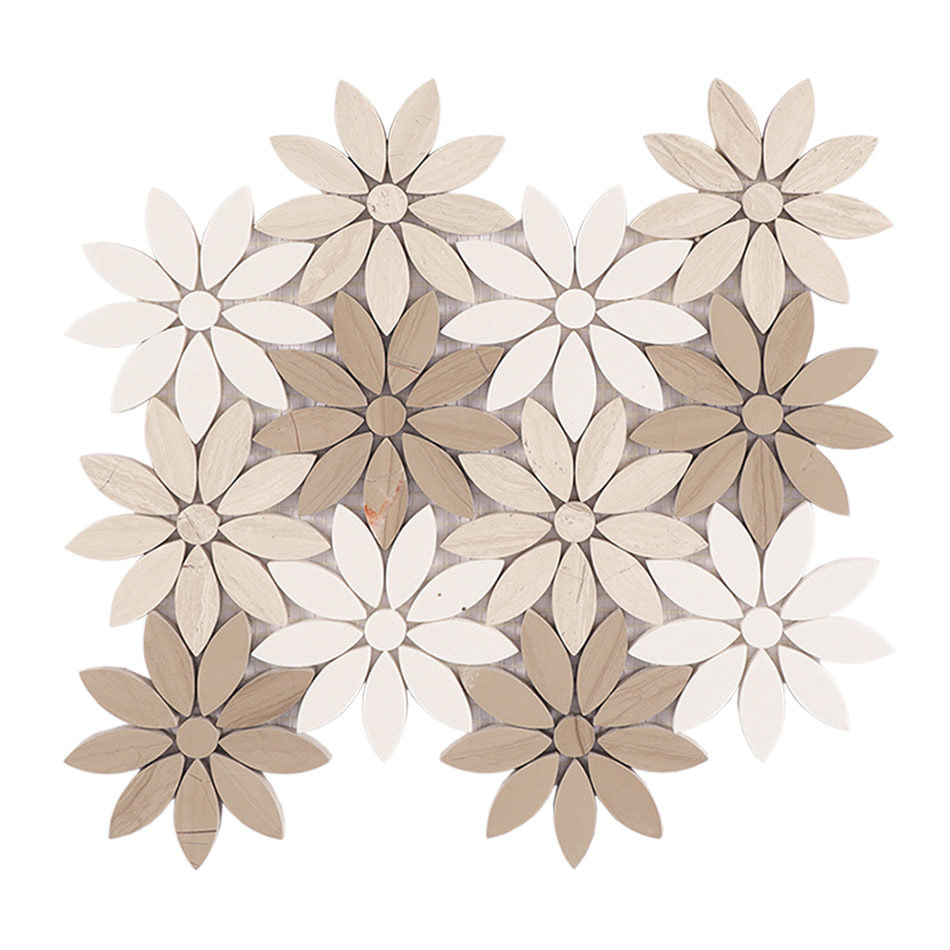




Daisy Wall Tiles
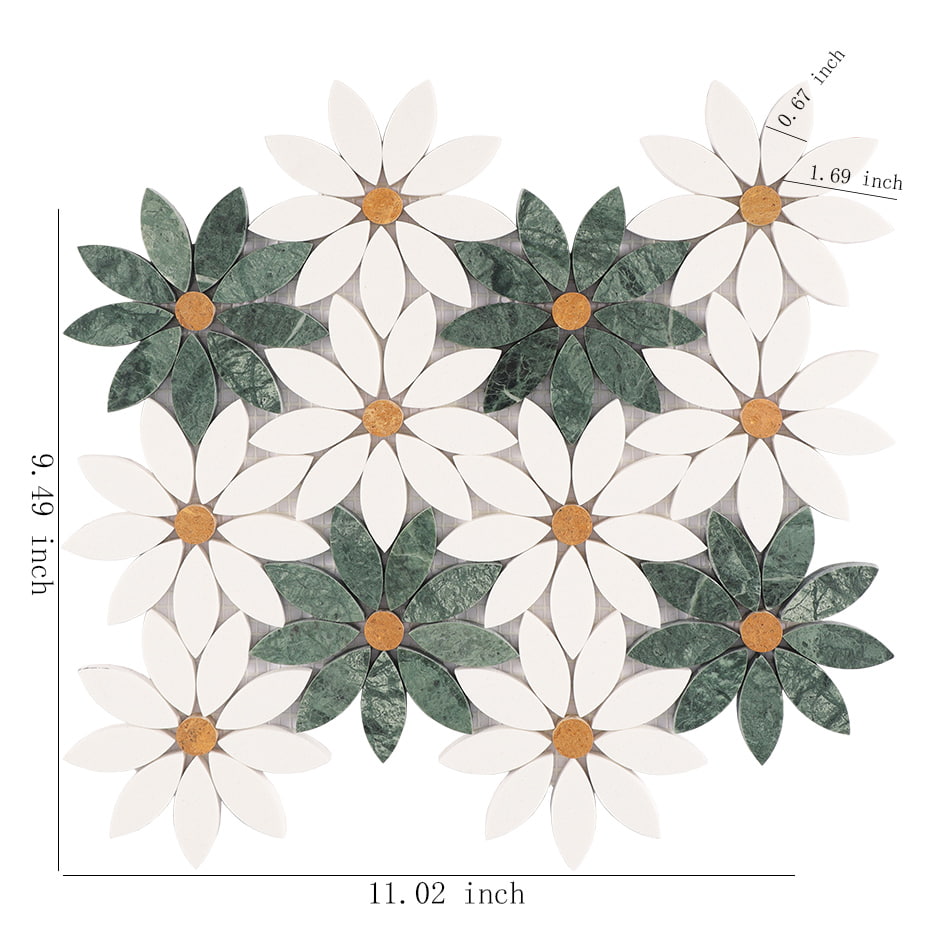
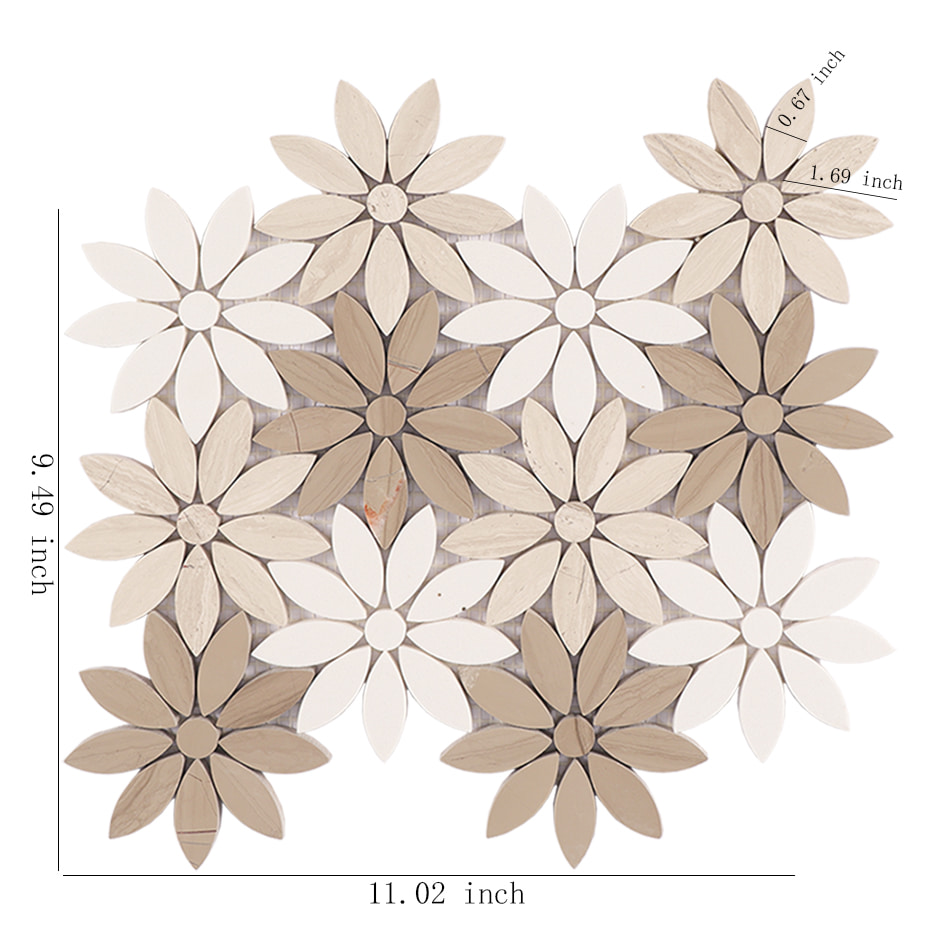
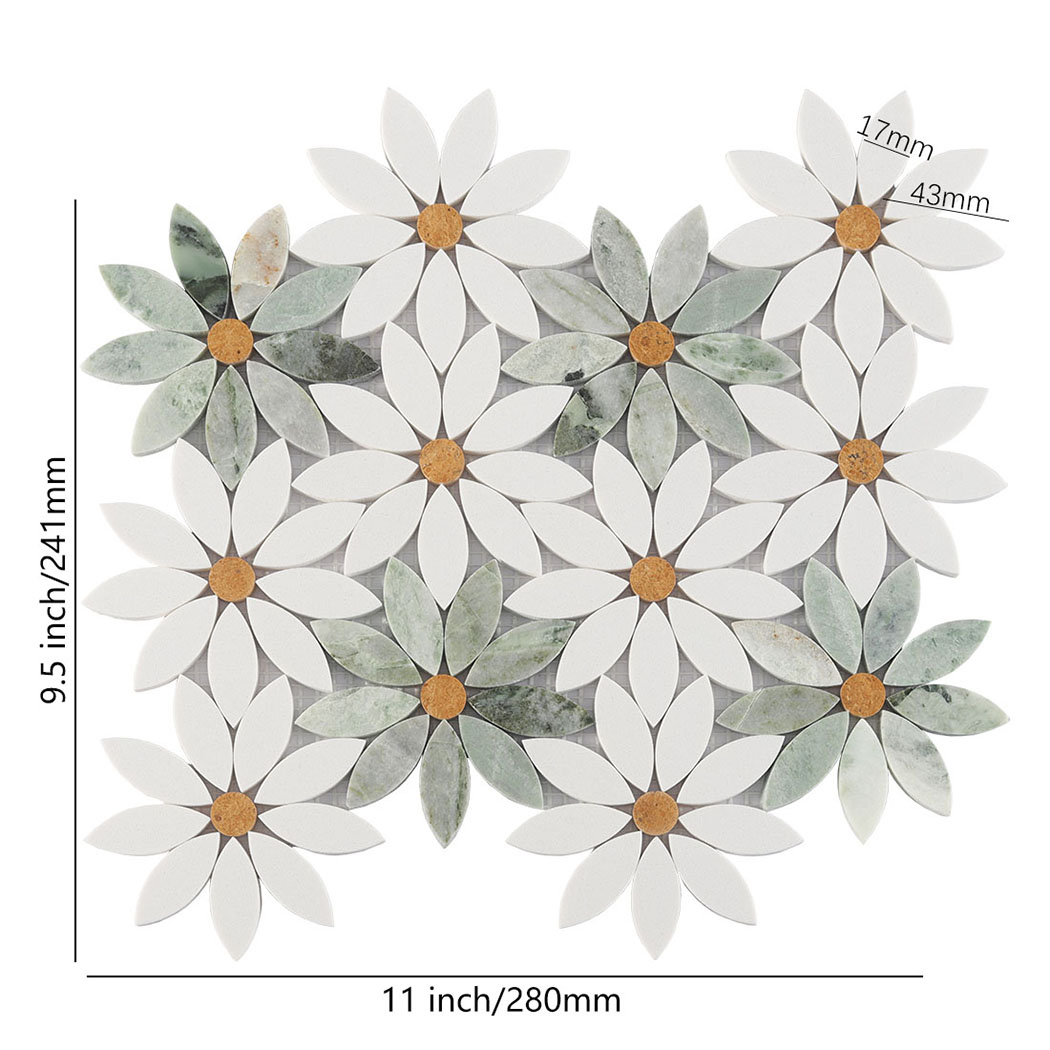
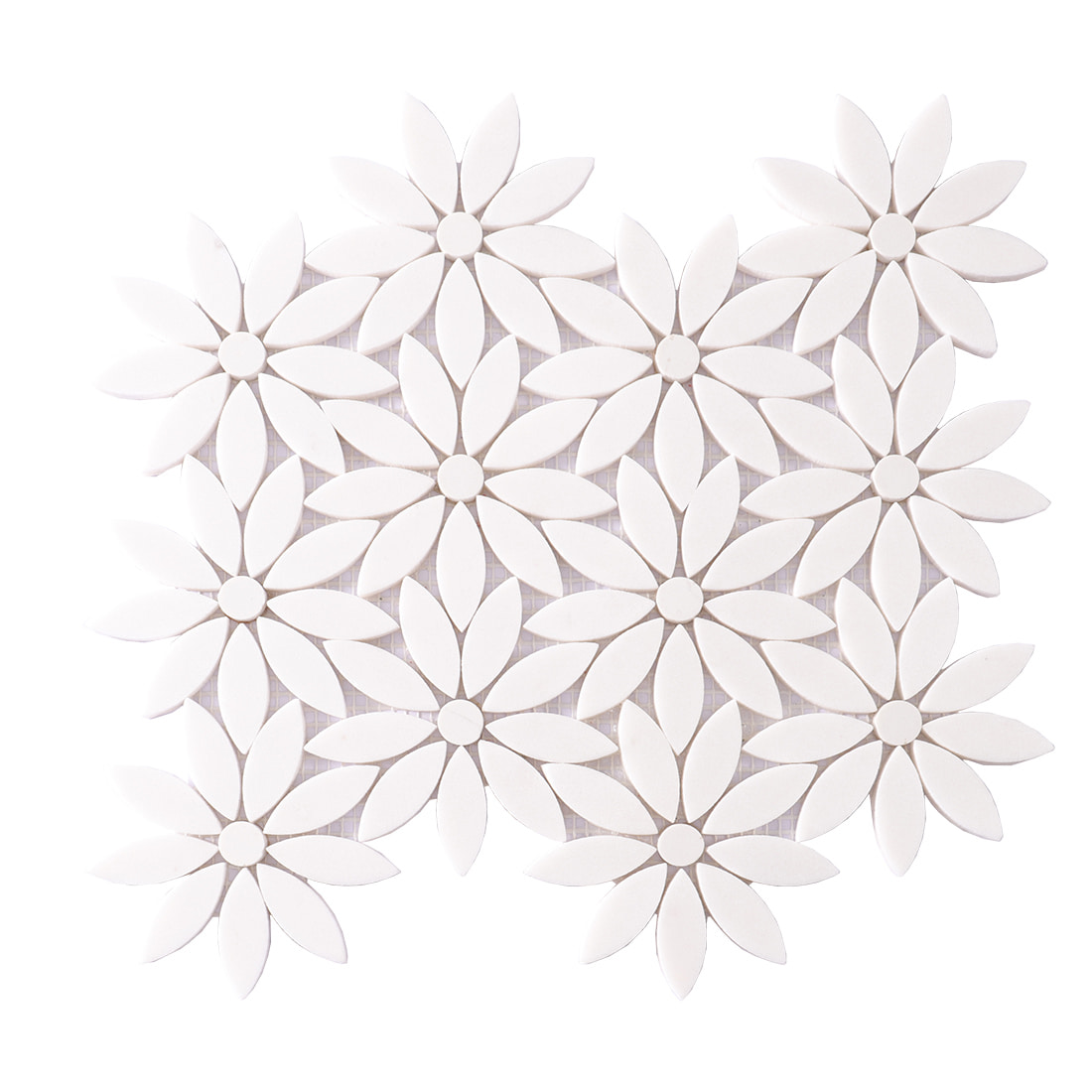
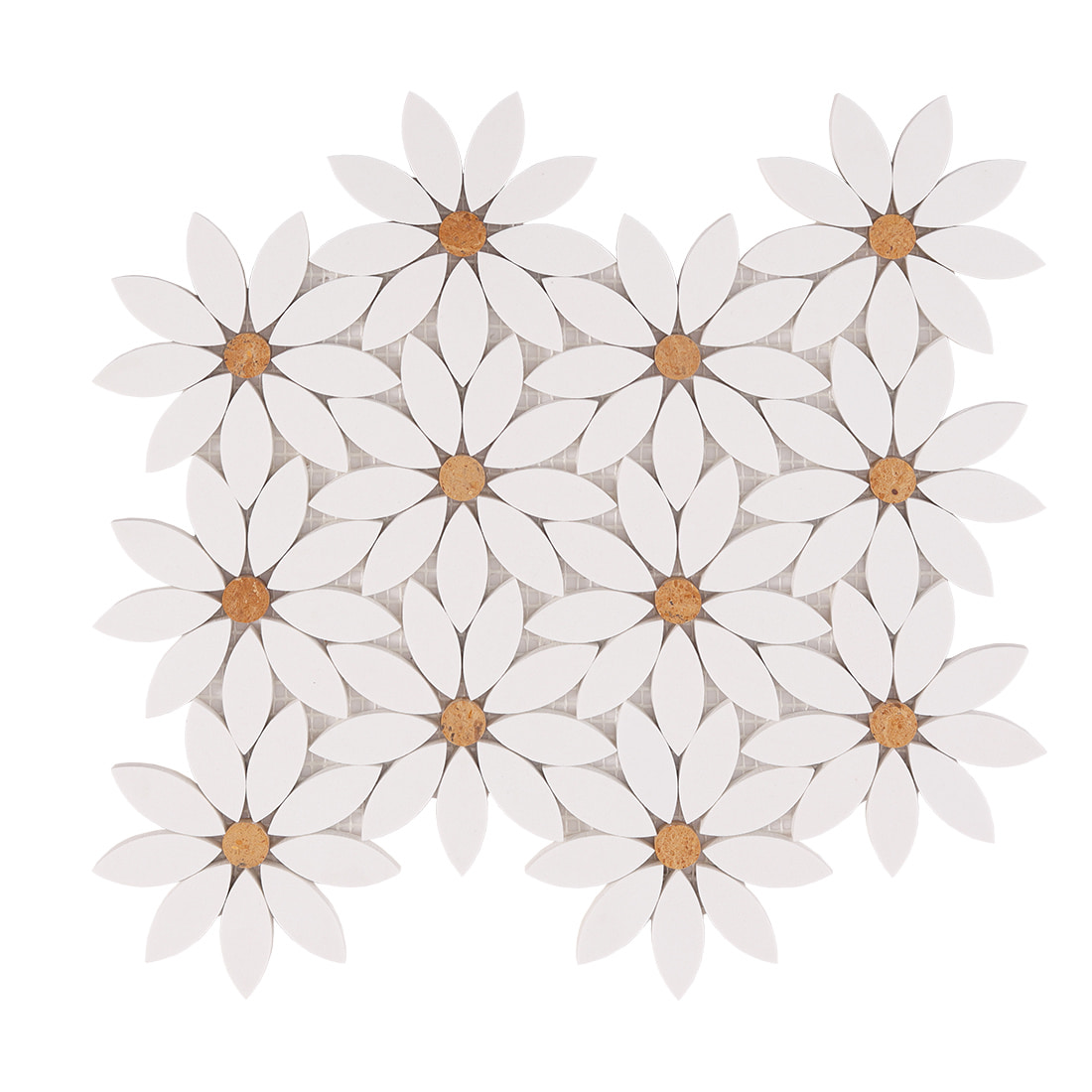
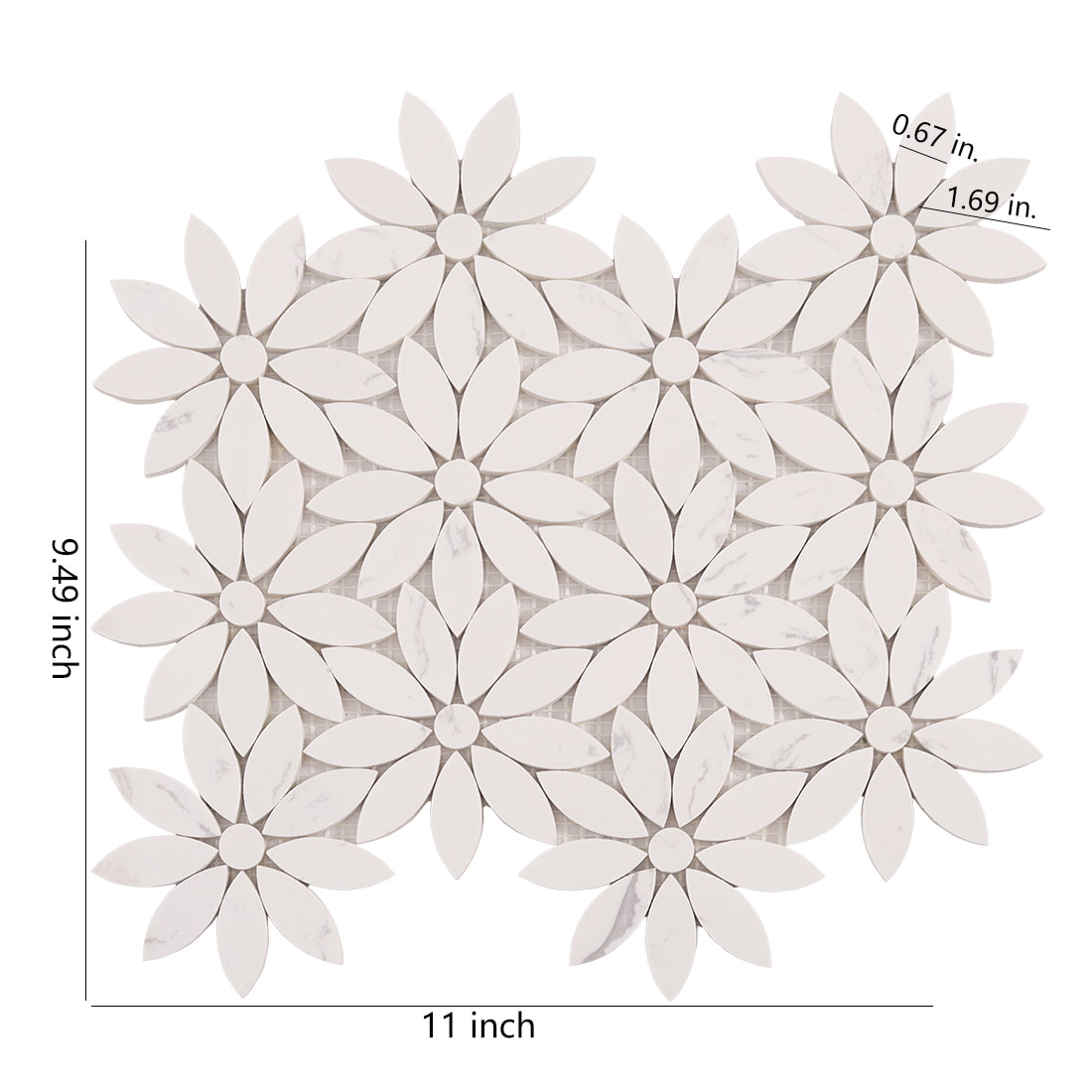
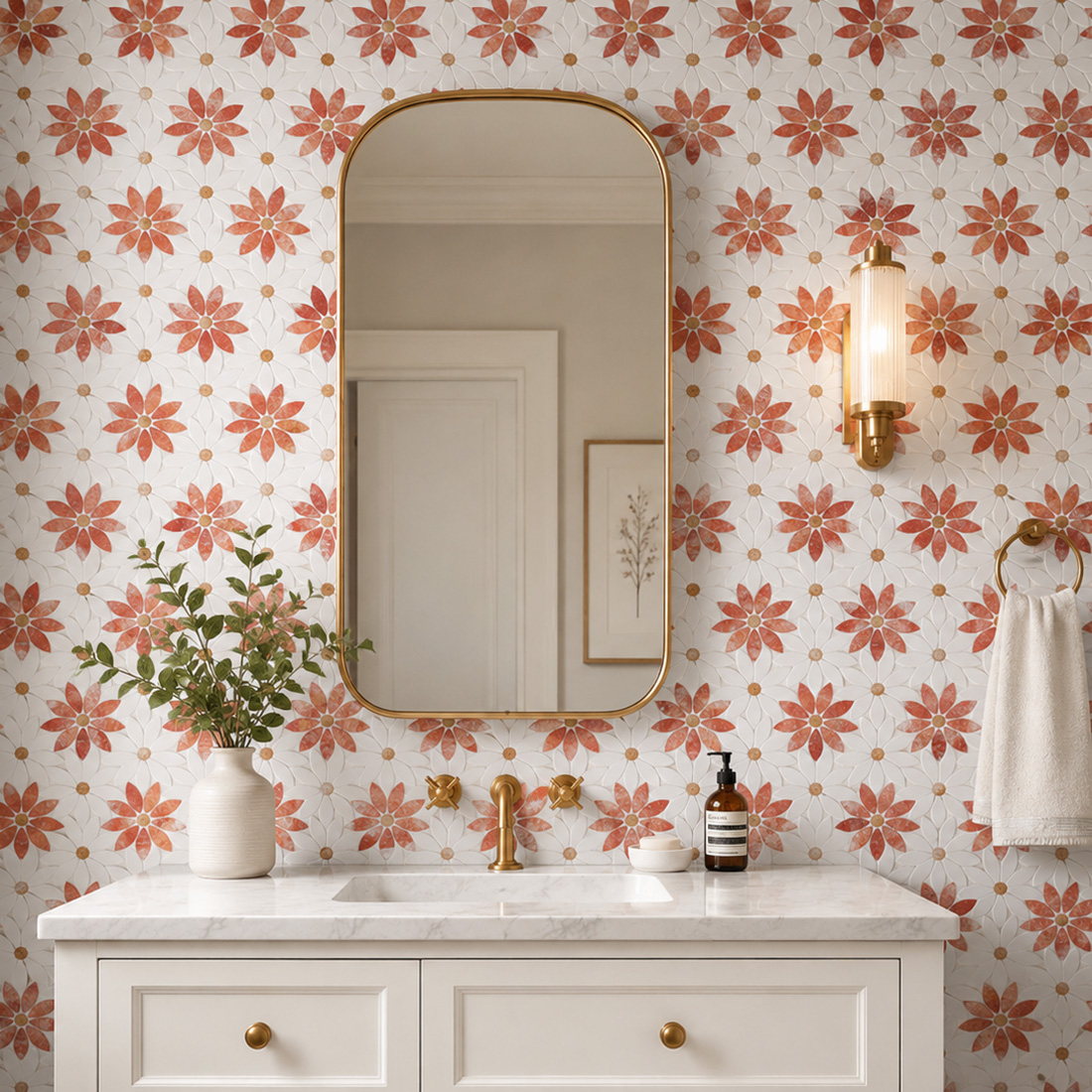
Daisy Wall Tiles bring a soft floral pattern to interior walls through small oval “petal” tiles arranged around a round center tile. This daisy mosaic layout creates a decorative, handcrafted look while still working as a practical wall surface for bathrooms, kitchens, showers, bars, feature walls, and backsplashes.
Many competitor pages focus on daisy mosaic tiles made from marble, glass, glass-and-stone mixes, and metal-accented materials, with common applications including kitchen backsplashes, bathroom walls, shower surrounds, shower niches, spa areas, and accent walls.
What Are Daisy Wall Tiles?
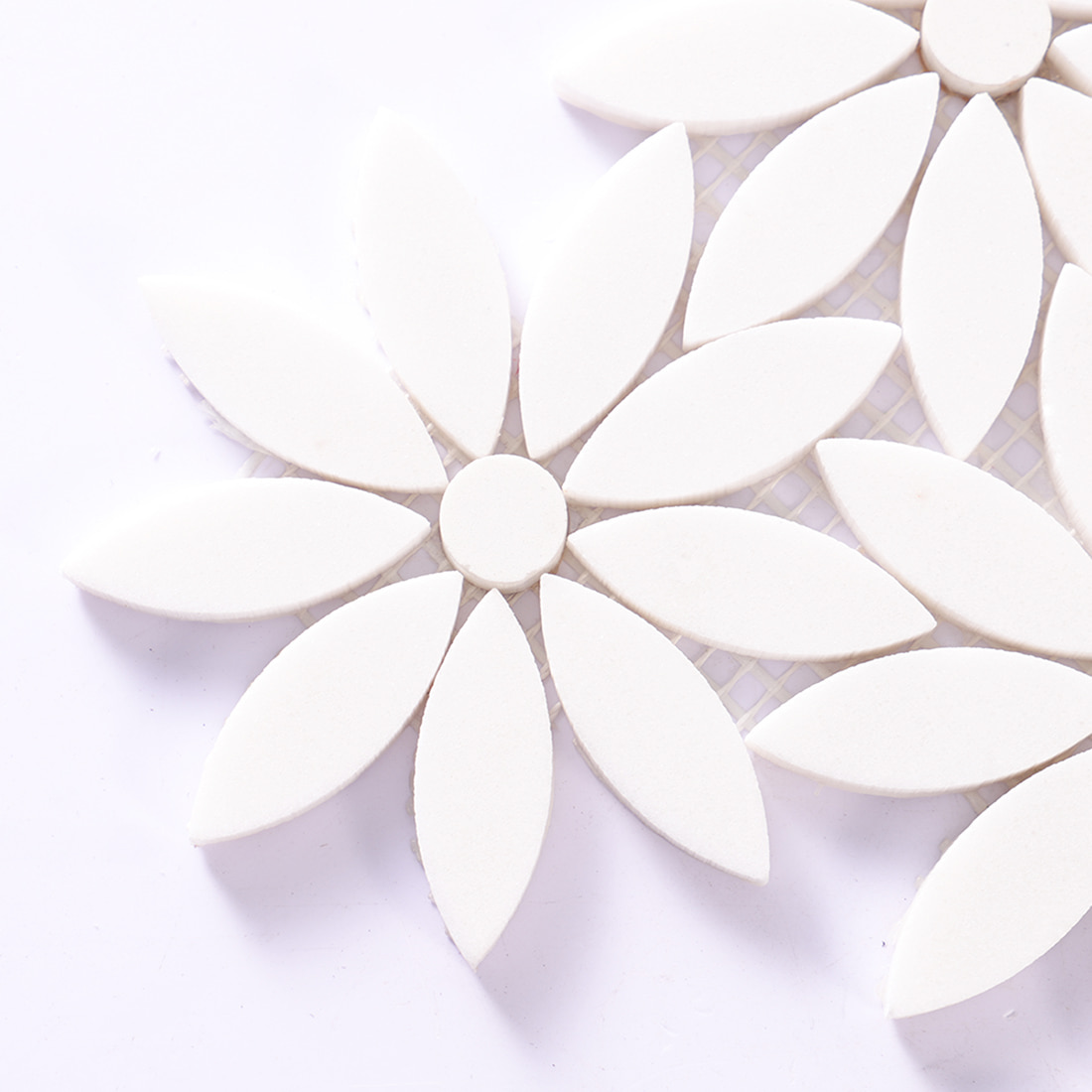
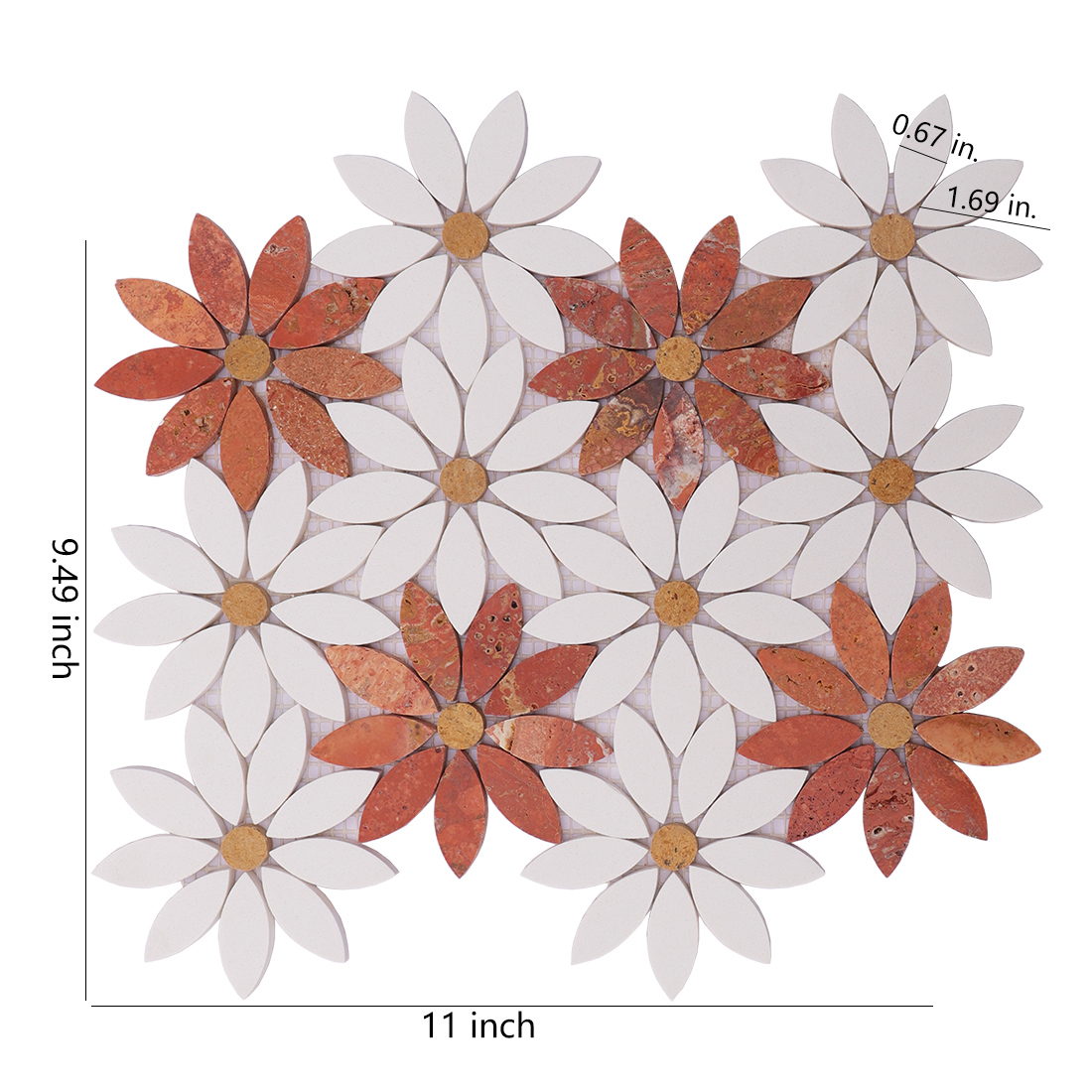
Daisy Wall Tiles usually refer to mosaic tiles designed in a flower-like pattern. Oval or petal-shaped pieces form the daisy petals, while a small round tile sits in the center. When installed across a wall, the repeated pattern creates a soft, elegant, and decorative floral surface.
This pattern is popular because it is more artistic than standard square or subway tiles, but still easy to use in modern, vintage, luxury, and boutique-style interiors.
Daisy Wall Tile Materials
Marble Daisy Wall Tiles
Marble daisy wall tiles are a classic choice for elegant interiors. Natural marble gives each petal unique veining, soft color movement, and a premium stone texture. Carrara, Calacatta, Thassos, Bardiglio, and other marble combinations are commonly used in daisy mosaic tile designs. Competitor pages often highlight Carrara or Calacatta daisy mosaics for backsplashes, bathrooms, shower walls, and feature walls.
Kitchen backsplash walls
Bathroom vanity walls
Shower walls
Powder room accent walls
Spa-style feature walls
Decorative niche areas
Because marble is a natural stone, sealing is recommended, especially in wet or high-use areas.
Glass Daisy Wall Tiles
Glass daisy wall tiles offer a brighter and more reflective look. They can be made with glossy glass, frosted glass, iridescent glass, or mixed glass finishes. Glass is non-porous, easy to clean, and well suited for moisture-prone spaces such as bathrooms and kitchen backsplashes.
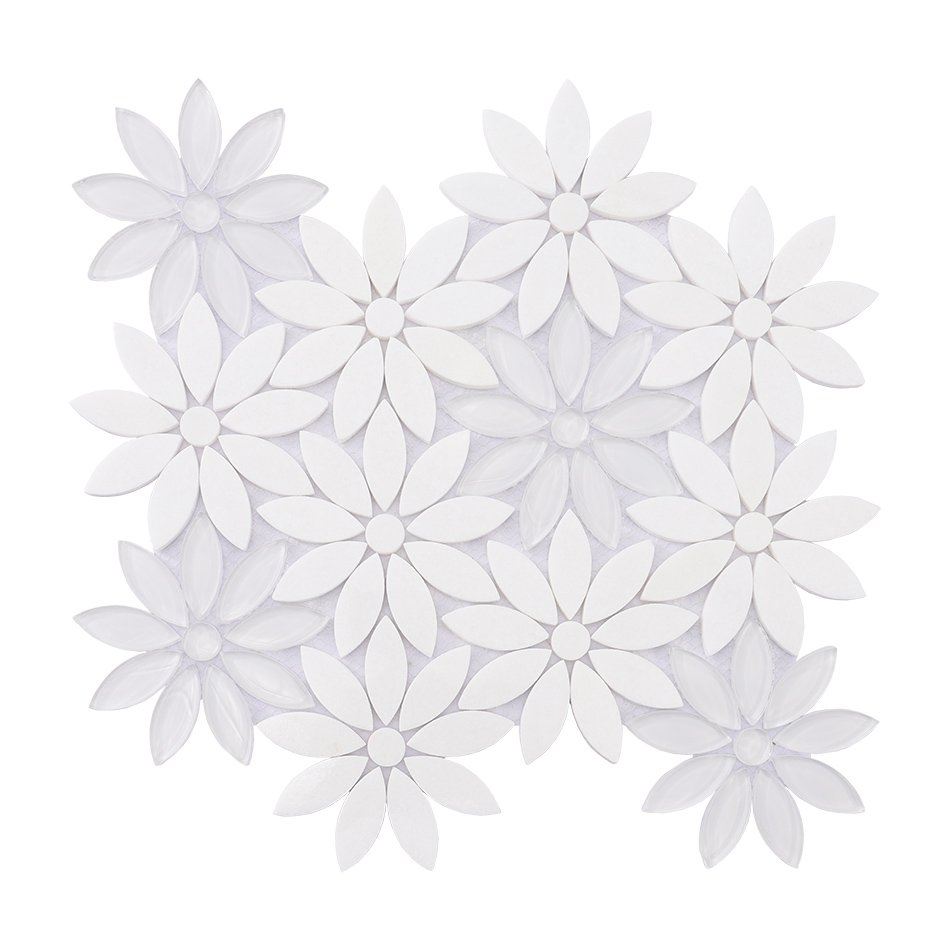
Glass daisy tiles are ideal for designs that need more light reflection, color variation, or a clean decorative surface. Some competitor daisy tile collections use glass combined with stone or brushed metal to create a more layered floral effect.
Metal Daisy Wall Tiles
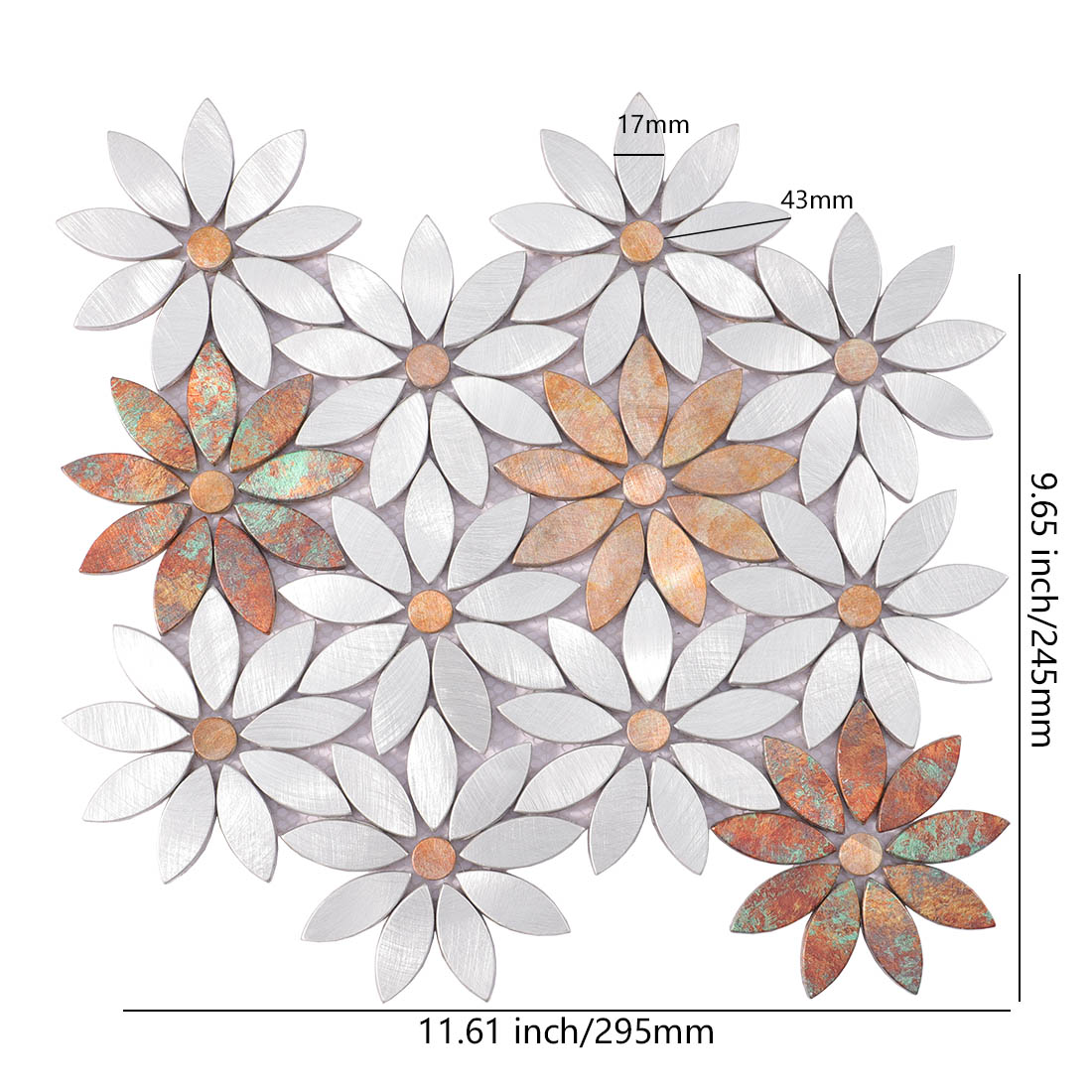
Metal daisy wall tiles add a more modern or luxury look to the floral pattern. Metal can be used as the center circle, the petal pieces, or as accent details mixed with glass or stone. Brushed metal, stainless steel, aluminum, brass, copper, and antique-style finishes can all create different visual effects.
Metal daisy tiles are suitable for:
Bar walls
Kitchen backsplashes
Hotel feature walls
Restaurant walls
Boutique interior designs
Modern bathroom accent walls
For shower areas, the metal material and surface treatment should be confirmed before installation.
Best Places to Use Daisy Wall Tiles
Bathroom Walls
Daisy wall tiles are excellent for bathroom walls because the floral pattern adds softness and visual detail. They can be used behind vanities, around mirrors, on shower walls, or as a decorative feature wall.
Shower Walls
Daisy mosaic tiles can be used on shower walls when the material is suitable for wet areas. Glass and properly sealed marble are common options. The many grout joints also help define the flower pattern, making the wall look more detailed and textured.
Kitchen Backsplashes
A daisy tile backsplash creates a decorative focal point behind the sink, stove, or countertop. Marble gives a classic and refined look, glass creates a bright and clean surface, and metal accents add a modern luxury effect.
Bar Walls
Daisy wall tiles are also suitable for bar walls because the flower pattern can make the space feel more custom and eye-catching. Glass and metal daisy tiles work especially well under lighting.
Feature Walls
For hotels, restaurants, boutiques, powder rooms, and luxury residential interiors, daisy wall tiles can be used as a full feature wall. The floral layout makes the surface more artistic than plain tile patterns.
Grout Color for Daisy Wall Tiles
Because daisy wall tiles usually have larger and more visible grout joints, grout color is very important. The grout does not only fill the gaps; it also affects how clearly the daisy pattern appears.
Light Gray Grout
Light gray grout is a safe and elegant choice. It blends well with white marble, glass, and mixed-color daisy tiles while still keeping the pattern visible. It is also easier to maintain than pure white grout.
Translucent Grout
Translucent grout is a good option for glass daisy tiles or designs where you want the tile joints to look softer and more integrated. It helps reduce strong contrast and creates a more seamless appearance.
Matching Grout
Matching grout can make the daisy pattern look more subtle. This is suitable for luxury bathrooms, spa walls, and minimalist spaces where the design should feel calm and refined.
Contrast Grout
Contrast grout can make the daisy pattern stand out more clearly. However, it should be used carefully because strong grout lines may make the wall look busier.
Design Styles for Daisy Wall Tiles
Classic White Daisy Tile
White marble or white glass daisy tiles create a clean and timeless look. This style is ideal for bathroom walls, shower walls, and kitchen backsplashes.
Blue and White Daisy Tile
Blue and white daisy tiles create a fresh, coastal, or vintage look. This color combination works well in bathrooms, laundry rooms, and kitchen backsplashes.
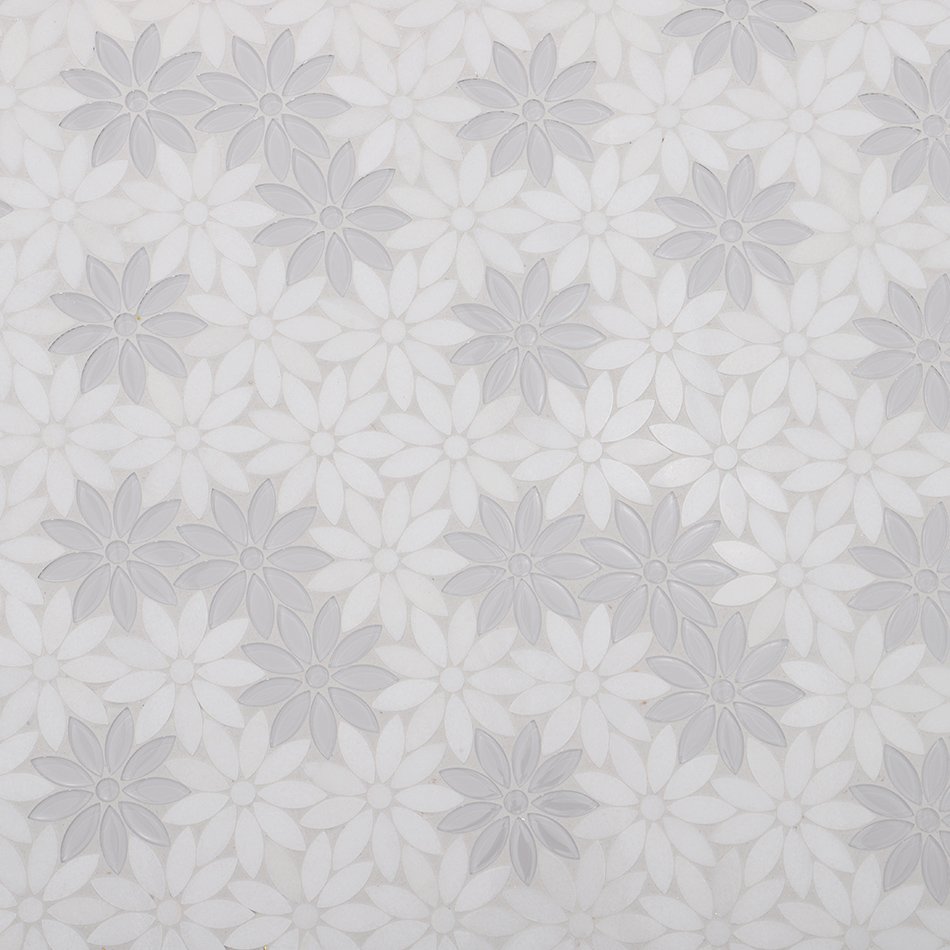
Gray and White Daisy Tile
Gray and white daisy wall tiles feel soft, neutral, and modern. They are easy to match with chrome, brushed nickel, stainless steel, or black fixtures.
Gold Accent Daisy Tile
Gold metal centers or gold accent details can make the daisy pattern look more luxurious. This style is suitable for powder rooms, bar walls, hotel bathrooms, and decorative feature walls.
Mixed Material Daisy Tile
Glass, marble, and metal can be combined to create a richer daisy mosaic design. Mixed-material daisy tiles are ideal for customers who want a decorative wall tile with more depth and texture.
Daisy Wall Tiles for Different Interior Styles
Modern Interiors
Choose glass, brushed metal, gray marble, or simple white daisy mosaics for a clean modern wall design.
Vintage Interiors
Use soft blue, white, antique mirror, or aged metal accents to create a vintage daisy tile wall.
Luxury Interiors
Marble daisy tiles with gold, brass, or polished stone details work well in high-end bathrooms, powder rooms, and boutique spaces.
Coastal Interiors
Blue, white, frosted glass, and light marble daisy tiles create a fresh coastal look for bathrooms and kitchen backsplashes.
Artistic Interiors
Use bold colors, mixed glass, or metal-accented daisy tiles to create a more decorative and custom wall design.
Installation Notes for Daisy Wall Tiles
Daisy wall tiles are usually supplied on mesh-mounted sheets, which helps keep the floral pattern aligned during installation. Competitor pages commonly mention mesh-mounted sheets and wall applications for daisy mosaic tiles.
Before installation:
Make sure the wall surface is clean, flat, dry, and stable.
Dry-lay several sheets first to check the flower pattern alignment.
Use a suitable adhesive based on the tile material.
For glass tiles, use white thin-set or suitable neutral adhesive.
For marble tiles, use stone-safe adhesive and avoid products that may stain natural stone.
Seal marble tiles before or after grouting, depending on the stone and sealer instructions.
Choose grout color carefully because daisy tile joints are visually important.
How to Choose the Right Daisy Wall Tile
Choose marble daisy wall tiles if you want a natural, elegant, and timeless look.
Choose glass daisy wall tiles if you want brightness, easy cleaning, and moisture resistance.
Choose metal daisy wall tiles if you want a modern, luxury, or decorative accent wall.
Choose light gray grout for a balanced and natural finish.
Choose translucent grout for a softer, more blended glass tile appearance.
Choose gold or metal accents for a more premium feature wall design.
Daisy Wall Tiles FAQ
Are Daisy Wall Tiles good for bathrooms?
Yes. Daisy wall tiles are very suitable for bathroom walls, vanity walls, and shower walls. Glass is especially easy to clean, while marble should be sealed for better protection in wet areas.
Can Daisy Wall Tiles be used in showers?
Yes, many daisy wall tiles can be used on shower walls if the material is suitable for wet areas. Glass and sealed marble are common options. Always confirm whether the specific tile is rated for shower use.
Are Daisy Wall Tiles suitable for kitchen backsplashes?
Yes. Daisy tiles are a beautiful choice for kitchen backsplashes because the floral mosaic pattern adds texture and decoration behind countertops, sinks, and cooking areas.
What grout color is best for Daisy Wall Tiles?
Light gray grout and translucent grout are usually good choices. Light gray grout creates a soft, balanced look, while translucent grout helps the joints blend more naturally, especially with glass tiles.
Are Daisy Wall Tiles only made from marble?
No. Daisy wall tiles can be made from marble, glass, metal, and mixed materials. Each material creates a different style and surface effect.
Do Daisy Wall Tiles need grout?
Yes. Most daisy wall tiles need grout because the pattern has many visible joints. Grout helps secure the installation, protect the gaps, and complete the visual effect.