

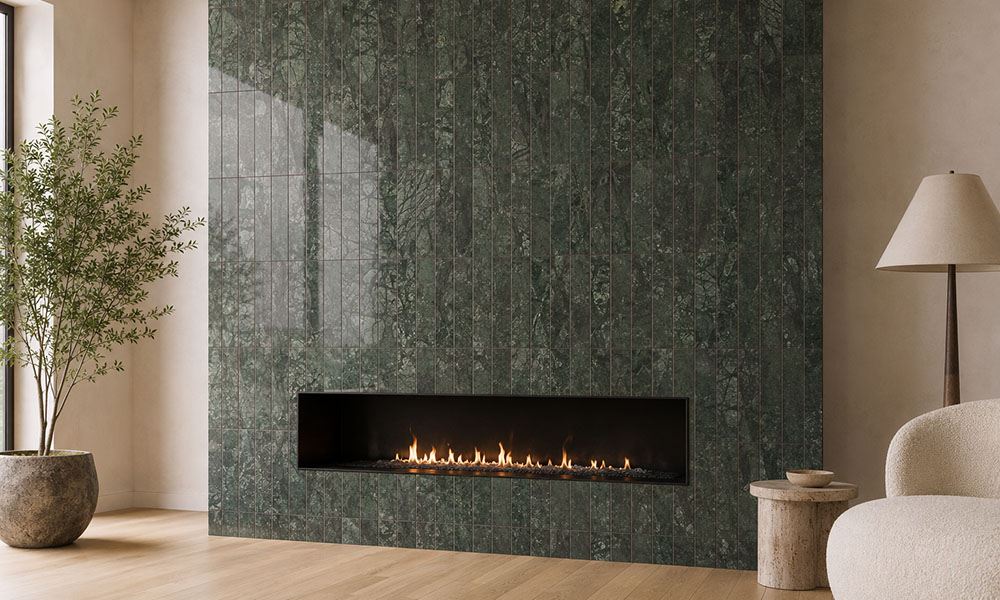
Green Marble Vertical Tile Fireplace for a Modern Living Room



Vertical Tile Fireplace | Modern Floor-to-Ceiling Fireplace Design
Vertical tile fireplace designs transform an ordinary fireplace surround into a tall architectural focal point. By extending tile upward—or arranging elongated tiles in a vertical direction—the design draws the eye toward the ceiling, strengthens the proportions of the room, and gives the entire fireplace wall a cleaner, more unified appearance.
Explore the Woos Tiles collection of fluted tiles, finger tiles, Kit Kat mosaics, natural marble, travertine, glass mosaics, textured stone, and large-format designs for modern fireplace walls. Whether you are creating a dramatic floor-to-ceiling fireplace in a two-story living room or updating a compact electric fireplace, the right tile can add height, texture, color, and lasting character.
Order samples to compare color, finish, scale, and texture in your own lighting, or contact Woos Tiles for help planning your fireplace feature wall.
What Is a Vertical Tile Fireplace?
A vertical tile fireplace can describe two closely related design approaches:
-
A fireplace wall tiled from the firebox toward the ceiling, often called a floor-to-ceiling tile fireplace.
-
A fireplace surround finished with rectangular, fluted, finger, or subway tiles installed in an upright vertical layout.
Many successful designs combine both ideas. Slim tiles, raised flutes, or vertically stacked mosaics continue across the full height of the fireplace wall, creating uninterrupted lines from floor to ceiling.
Unlike a traditional fireplace with tile limited to a narrow frame around the opening, a full-height installation treats the entire chimney breast or fireplace wall as one architectural element. The result can make a low ceiling feel taller, emphasize a vaulted ceiling, or visually organize an open-plan living room.
Why Choose a Vertical Tile Fireplace?
It Makes the Room Feel Taller
Vertical grout lines and elongated tile shapes direct the eye upward. This visual movement can improve the proportions of rooms with standard ceiling heights while emphasizing the scale of vaulted or two-story interiors.
The effect is especially strong with finger tiles, vertically stacked subway tiles, fluted mosaics, and narrow stone strips.
It Creates a Complete Architectural Focal Point
A full-height tiled wall feels more intentional than a small decorative surround. It connects the firebox, mantel, television, shelving, and ceiling into one composition and gives the room a clear visual anchor.
In open-plan homes, a tall fireplace can also define the living area without adding another wall.
It Adds Texture and Changing Light
Fluted, ribbed, handmade-look, iridescent, or naturally veined tiles interact with daylight and firelight differently throughout the day. Raised surfaces create shadow, glossy glazes reflect warm light, and honed stone introduces softer natural variation.
This makes the fireplace visually interesting even when it is not operating.
It Works in Both Large and Small Rooms
A floor-to-ceiling installation can create drama in a large great room, but vertical tile is not limited to high ceilings. In a smaller room, narrow tile, light grout, restrained color, and a slim linear firebox can create a lighter, less bulky appearance.
It Is Durable and Easier to Maintain Than Painted Surfaces
Properly selected and installed fireplace tile provides a hard, cleanable surface that is less vulnerable to everyday scuffs and staining than a painted feature wall. Ceramic, porcelain, glass, and natural stone all require different care, so the product must be suitable for its intended fireplace location.
Popular Vertical Tile Fireplace Designs
Floor-to-Ceiling Large-Format Tile
Large-format porcelain and stone-look slabs create broad, uninterrupted surfaces with fewer grout lines. They work particularly well in minimalist and luxury interiors where the fireplace, television, and cabinetry are designed as one clean wall.
Large tiles can reproduce marble, travertine, limestone, concrete, or metal effects without the visual activity of a small mosaic. Precise substrate preparation and professional handling are essential because tall walls and large panels make alignment and lippage more noticeable.
Best for:
-
Minimalist living rooms
-
Contemporary villas
-
Fireplace and TV walls
-
Open-plan interiors
-
High ceilings
Fluted or Ribbed Tile Fireplace
Fluted tile has a raised linear profile that creates strong vertical rhythm. Light moves across the rounded or recessed channels, producing a sculptural effect that flat tile cannot achieve.
Fluted marble, travertine, ceramic, and dimensional mosaics can be used to create anything from a soft organic wall to a dramatic black fireplace column. Deep textures are visually striking, although smoother surfaces may be easier to clean near wood-burning fireplaces where soot is a concern.
Best for:
-
Modern luxury interiors
-
Organic modern rooms
-
Contemporary fireplace columns
-
Neutral textured feature walls
-
Mantel-free fireplaces
Finger Tile or Kit Kat Tile Fireplace
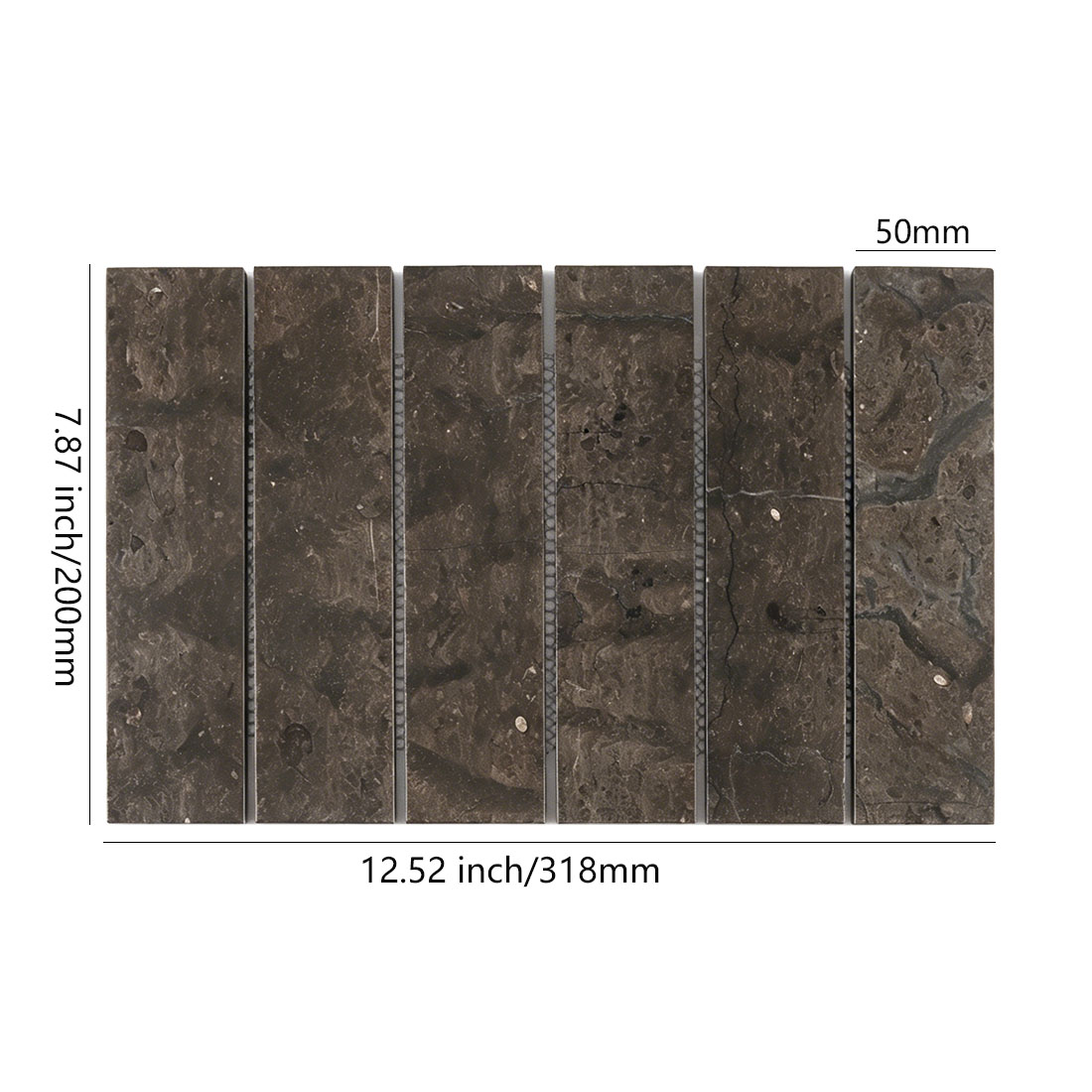
Finger tiles—also called Kit Kat tiles—are slim rectangular mosaics arranged in close, repeated rows. Installed vertically, their narrow proportions reinforce the height of the fireplace while maintaining a refined, lightweight appearance.
Finger tiles are available in ceramic, porcelain, marble, travertine, and glass. Matte surfaces feel quiet and contemporary, glossy glazes reflect light, and dimensional profiles add more pronounced shadow.
Because mosaics contain many grout joints, sheet alignment and consistent spacing are especially important on a tall wall.
Best for:
-
Small and medium living rooms
-
Japandi and Scandinavian spaces
-
Cream and neutral interiors
-
Mid-century-inspired rooms
-
Modern electric fireplaces
Vertical Stacked Subway Tile
Turning rectangular subway tile upright gives a familiar format a more modern architectural character. A straight vertical stack creates a clean grid, while a vertical running bond introduces more movement.
Long, narrow formats create the strongest upward effect. Square tiles can also be stacked in aligned columns to establish a structured full-height design.
Best for:
-
Modern farmhouse interiors
-
Transitional living rooms
-
Mid-century spaces
-
Color-focused fireplace walls
-
Simple renovation projects
Mosaic Tile Fireplace
Small-format mosaics give a tall fireplace wall color variation, detailed texture, and handcrafted character. Square, round, geometric, iridescent, and mixed-material mosaics can transform the fireplace into an artistic feature.
Mosaics are useful on curved surfaces, narrow columns, corners, and other shapes that are difficult to cover with large tiles. For the cleanest result, the individual sheets must be blended carefully so their boundaries do not remain visible after grouting.
Best for:
-
Artistic statement fireplaces
-
Curved fireplace walls
-
Retro and eclectic interiors
-
Jewel-tone feature walls
-
Detailed custom designs
Natural Stone Vertical Fireplace
Marble, travertine, limestone, and volcanic stone bring authentic variation that cannot be exactly repeated. Every piece has its own veins, pores, mineral markings, and tonal changes.
Stone strips can emphasize height, while large panels create a more monolithic appearance. Dry-laying and blending the material before installation helps distribute natural color variation across the wall.
Best for:
-
Luxury homes
-
Organic modern interiors
-
Wabi-sabi and rustic rooms
-
Industrial fireplaces
-
Large-scale custom projects
Tile Fireplace With Metal Trim
Metal edge profiles can frame a fireplace opening, protect exposed tile edges, and create a precise transition at outside corners. Black, brass, bronze, or stainless finishes can coordinate with the firebox, lighting, hardware, and surrounding cabinetry.
Trim should support the overall design rather than divide the wall into too many small sections. Compatibility with the tile thickness, installation system, fireplace temperature, and cleaning products must be confirmed before installation.
Choosing the Best Tile Material
| Material | Visual Character | Best Uses | Points to Check |
|---|---|---|---|
| Porcelain | Clean, consistent and available in many stone or concrete effects | Modern surrounds, large-format walls and hearths | Product rating, tile weight and floor suitability |
| Ceramic | Wide color range with matte, glossy or handmade-look surfaces | Vertical stacks, subway layouts and decorative walls | Intended location and distance from heat |
| Marble | Natural veining and a refined luxury appearance | Full-height feature walls and custom surrounds | Batch variation, sealing and stone-safe cleaning |
| Travertine | Warm tones, pores and an organic aged texture | Mediterranean, cream, rustic and wabi-sabi rooms | Filled or unfilled finish, sealing and soot cleaning |
| Limestone | Quiet movement and soft neutral coloring | Minimalist and natural interiors | Porosity, sealing and supplier recommendations |
| Volcanic Stone | Dark, textured and visually rugged | Industrial and natural statement fireplaces | Surface cleaning, tile weight and installation method |
| Glass Tile | Luminous depth, gloss or iridescent reflection | Decorative outer surrounds and feature panels | Manufacturer approval for the exact fireplace location |
| Mosaic Tile | Detailed pattern and flexible sheet format | Curves, columns and textured full-height walls | Sheet alignment, backing, adhesive and grout compatibility |
There is no single tile that is best for every fireplace. The correct choice depends on the fireplace type, heat output, distance from the opening, substrate, wall height, maintenance requirements, and desired design.
Fireplace Surround, Hearth and Firebox: Know the Difference
A professional fireplace design should treat these areas separately.
Fireplace Surround
The surround is the finished area around the fireplace opening. Ceramic, porcelain, natural stone, and some glass or mosaic products may be suitable here when approved for the specific application and installed according to the fireplace manufacturer’s requirements.
Hearth
The hearth is the horizontal area in front of or beneath the fireplace. Tile used here may need to support foot traffic, equipment weight, heat exposure, and possible embers. A decorative wall-only mosaic should not automatically be assumed suitable for a hearth.
Confirm that the chosen product is rated for floor use and that the hearth construction meets the fireplace manual and local requirements.
Firebox Interior
The firebox is exposed to direct flame and extreme temperatures. Standard decorative wall tile should not be installed inside it unless the product is specifically rated for that purpose.
Firebox interiors generally require refractory brick, refractory tile, or another approved firebox-lining system.
How to Select Tile Size and Finish
Small Tiles
Finger tiles, penny mosaics, and small squares provide detailed texture and can follow curves or narrow returns. They also create more grout joints, making installation precision and grout color especially important.
Medium Rectangular Tiles
Subway, brick, and elongated formats offer a balance between texture and simplicity. Turning them vertically reinforces the height of the wall without creating an overly busy surface.
Large-Format Tiles
Large porcelain or stone panels reduce grout lines and create a clean architectural finish. They require a flat, rigid substrate, careful cutting, suitable mortar coverage, and experienced installation.
Matte Finish
Matte surfaces absorb light and create a quieter, softer appearance. They are well suited to minimalist, organic, industrial, and neutral interiors.
Glossy Finish
Glossy tile reflects firelight and daylight, helping rich colors appear deeper and more dynamic. Smudges, soot, or cleaning marks may be more visible on some high-gloss surfaces.
Textured Finish
Fluted, split-face, chiseled, or dimensional tile produces dramatic shadow. Consider how easily the surface can be cleaned, particularly near a wood-burning opening.
Choosing Fireplace Tile Color and Grout
White, cream, beige, and pale gray tiles create a light fireplace wall that blends with neutral interiors. Dark charcoal, black, navy, and deep green make the firebox feel integrated and produce a stronger architectural statement.
Warm terracotta, brown, rust, and copper tones create a softer, more traditional atmosphere, while blue, emerald, or iridescent glass can turn the fireplace into an artistic centerpiece.
Grout also changes the final appearance:
-
Matching grout creates a continuous, quieter surface.
-
Contrasting grout emphasizes every tile and makes the layout more graphic.
-
Dark grout can visually connect with a black firebox.
-
Light grout highlights handmade edges but may require more frequent cleaning.
-
Grout samples should be tested with natural stone, textured tile, or sensitive finishes before full installation.
Matching Vertical Fireplace Tile to Interior Style
Modern Minimalist
Choose large-format porcelain, slim finger tiles, or a straight vertical stack in white, beige, gray, or black. Use matching grout and minimal trim to keep the wall visually calm.
Organic Modern
Combine travertine, limestone, warm marble, or softly textured ceramic with oak, plaster, linen, and neutral upholstery. Honed finishes and natural tonal variation work particularly well.
Contemporary Luxury
Use marble, iridescent glass, fluted stone, or large panels with carefully coordinated metal trim. Integrated lighting can reveal texture without adding unnecessary ornament.
Industrial
Consider charcoal porcelain, volcanic stone, concrete-look tile, black grout, and dark metal edges. A wide linear fireplace reinforces the clean horizontal contrast against vertical wall texture.
Mid-Century Modern
Slim glazed brick, vertical subway tile, saturated green, blue, brown, or warm neutral colors complement walnut furniture and simple geometric architecture.
Farmhouse and Transitional
Handmade-look ceramic, brick-style tile, soft white glaze, and natural wood mantels can connect traditional warmth with a cleaner vertical layout.
Floor-to-Ceiling Tile With a TV or Mantel
A vertical tile fireplace can include a television, floating mantel, shelves, or built-in cabinetry, but these elements should be planned before tiling begins.
Television Above the Fireplace
Do not rely on a universal TV clearance. Heat output, ventilation, firebox design, chase construction, wall recesses, and optional heat-management systems vary between fireplace models.
Before installation:
-
Follow the fireplace and television manufacturers’ instructions.
-
Plan electrical outlets, data cables, conduits, and soundbar wiring.
-
Secure the TV bracket to suitable framing rather than tile alone.
-
Check the final viewing height from the main seating position.
-
Do not cover required vents or convection openings.
-
Consider a recessed TV, mantel, heat shield, or alternative wall location if heat or viewing height is a concern.
Fireplace Mantel
A wood mantel can soften a tall tiled wall and visually separate the fireplace from art or a television. Its height, depth, and material must comply with the fireplace manufacturer’s combustible-clearance requirements.
For a more minimalist result, omit the mantel and allow the tile pattern to continue uninterrupted.
Built-In Shelving
Symmetrical shelving creates a balanced traditional composition, while offset shelving gives the wall a more contemporary appearance. Decide where the tile will stop, how edges will be finished, and whether the shelves require blocking before the installation begins.
Vertical Tile Fireplace Installation Guide
Floor-to-ceiling fireplace walls and dimensional tiles are best handled by an experienced tile installer, especially around gas or wood-burning equipment.
1. Review the Fireplace Specifications
Confirm the appliance model, fuel type, heat-management system, ventilation openings, required clearances, approved facing materials, and local code requirements.
The fireplace manual takes priority over general online recommendations.
2. Prepare a Stable Substrate
The tile surface must be flat, plumb, rigid, clean, dry, and compatible with the installation system. Noncombustible board or steel framing may be required in specific areas, but requirements vary by fireplace.
Adding cement board does not automatically correct an unsafe clearance or framing condition.
3. Plan the Layout
Establish the fireplace centerline and decide how the pattern will relate to the opening, ceiling, corners, mantel, television, and adjacent cabinetry.
Dry-lay several rows before installation to avoid:
-
Narrow cuts at visible edges
-
Misaligned mosaic sheets
-
Uneven grout joints
-
Awkward pattern breaks above the firebox
-
Unbalanced veining or color variation
4. Select the Correct Mortar
Use a setting material approved for the tile, substrate, tile size, wall height, and expected service conditions. Premixed mastic should not be used in a heated area unless its manufacturer specifically approves that application.
Large-format and heavy tiles may require specialized mortar and additional installation procedures.
5. Install From a Stable Reference Line
A level ledger or another approved support method helps keep the first visible course straight. Check vertical alignment, flatness, joint width, and mortar coverage continuously.
Natural stone should be blended from multiple boxes. Mosaic sheets should be adjusted so sheet boundaries disappear within the overall pattern.
6. Finish Edges and Movement Locations
Outside corners may be mitered or completed with an appropriate edge profile. Required movement joints and changes of plane should be finished with compatible flexible material rather than being rigidly filled without consideration of the installation system.
7. Grout, Seal and Inspect
Allow the mortar to cure for the specified period before grouting. Use grout compatible with the tile surface and joint width.
Seal natural stone or grout only when recommended by the relevant product manufacturer. After curing, inspect the wall for loose tiles, cracked joints, blocked vents, or unfinished edges before operating the fireplace.
How to Measure and Order Tile
Measure the total width and height of the tiled area, then subtract the firebox opening and any other spaces that will not receive tile.
Basic formula:
Wall width × wall height − uncovered openings = net tiled area
Add an allowance for cutting, breakage, pattern alignment, and future repairs:
-
Add approximately 10% for a simple straight layout.
-
Add 15% for mosaics, multiple corners, diagonal cuts, or detailed patterns.
-
Consider 15–20% for complex natural-stone layouts, vein matching, or projects with many visible cuts.
Order the full quantity at one time when possible. Tile color, glaze, stone veining, and dimensions may vary between production batches.
What Affects the Project Cost?
The tile price is only one part of the total cost. Important factors include:
-
Height and total wall area
-
Demolition of an existing surround
-
Substrate repair or new framing
-
Fireplace and ventilation modifications
-
Tile material and format
-
Natural-stone blending or bookmatching
-
Large-format handling
-
Curved surfaces and outside corners
-
Scaffolding for high ceilings
-
Metal trim or mitered edges
-
Mantel, television, electrical, or lighting work
-
Grout, sealer, mortar, delivery, and labor
A straightforward electric fireplace wall with a vertical mosaic will have different requirements from a two-story natural-stone wall surrounding a gas or wood-burning appliance. Request a project-specific estimate rather than relying on a universal price per square foot.
Cleaning and Maintenance
Ceramic and Porcelain
Remove dust with a soft cloth and clean with a pH-neutral tile cleaner. Avoid abrasive tools on glossy or specialty-glazed finishes.
Glass Tile
Use a soft microfiber cloth and a compatible nonabrasive cleaner. Do not use harsh chemicals or abrasive pads on iridescent, printed, coated, or metallic finishes.
Marble, Travertine and Limestone
Use a stone-safe pH-neutral cleaner. Avoid vinegar, lemon, acidic bathroom cleaners, and harsh alkaline products. Reseal only according to the stone and sealer manufacturers’ recommendations.
Textured Tile
Vacuum or dust grooves regularly with a soft brush. Prompt cleaning prevents soot from settling into fluted, split-face, or rough surfaces.
Grout and Joints
Inspect grout, perimeter joints, and changes of plane periodically. Cracks, loose tile, persistent staining, or heat-related changes should be evaluated before they become larger problems.
Why Choose Woos Tiles?
Woos Tiles offers vertical fireplace tile options for minimalist, natural, luxury, retro, and contemporary interiors. Explore slim finger mosaics, dimensional fluted surfaces, natural marble and travertine, luminous glass, geometric mosaics, and large-format looks for projects of different scales.
Before ordering, send us:
-
Fireplace type and model
-
Wall width and height
-
Firebox opening dimensions
-
Room or project photos
-
Preferred material and color
-
Desired tile size and finish
-
Whether the design includes a TV, mantel, corners, or built-ins
Our team can help you compare suitable tile options, calculate the approximate quantity, and select samples before the final order.
Frequently Asked Questions
What is the best tile for a vertical fireplace?
Porcelain is a practical option for many modern fireplace projects because it is available in numerous sizes and finishes. Ceramic, marble, travertine, limestone, and approved glass mosaics can also work well. The best choice depends on the fireplace, tile location, heat exposure, substrate, maintenance needs, and desired appearance.
Can tile extend all the way to the ceiling?
Yes. Floor-to-ceiling tile can create a continuous fireplace feature wall, provided the wall is properly prepared and the installation follows structural, fireplace, and tile-system requirements.
Do vertical tiles make a room look taller?
Vertical tile shapes and grout lines guide the eye upward, which can make standard-height rooms feel taller and can emphasize vaulted ceilings.
Can glass tile be installed around a fireplace?
Some glass tiles can be used on fireplace surrounds, but suitability varies by product, coating, backing, fireplace type, and distance from heat. Confirm the specific tile and installation materials before ordering.
Can ordinary wall tile be installed inside the firebox?
No. The firebox is a direct-flame area and generally requires refractory materials specifically approved for that location. Decorative wall tile should remain outside the firebox unless explicitly rated for firebox use.
Is a mantel necessary on a floor-to-ceiling fireplace?
No. A mantel is a design choice unless required for a specific heat-management solution. Mantel-free fireplaces create a cleaner vertical line, while wood or stone mantels can add warmth and help divide a tall wall.
Can a TV be mounted above a tiled fireplace?
It may be possible, but the fireplace manual, heat output, ventilation, TV specifications, viewing height, and wall construction must all be considered. Mounting hardware should be secured to suitable framing, not supported by tile alone.
What grout color works best?
Matching grout creates a quieter, more continuous surface. Contrasting grout emphasizes the tile shape and vertical pattern. Test the grout with the actual tile because color, texture, and surface porosity can affect the final result.
How much extra tile should I order?
Approximately 10% extra is common for a simple layout. Mosaics, natural stone, complex corners, pattern matching, or highly visible cuts may require 15–20%.
Should I hire a professional installer?
Professional installation is strongly recommended for full-height walls, dimensional tile, large-format panels, natural stone, and gas or wood-burning fireplaces. These projects require accurate layout, suitable materials, safe clearances, and careful control of tile weight and alignment.
Create Your Vertical Fireplace Feature Wall
A well-designed vertical tile fireplace does more than decorate the area around the fire. It improves the room’s proportions, adds architectural structure, and creates a focal point that remains visually engaging throughout the year.
Browse the Woos Tiles vertical fireplace collection, order samples, or contact us with your project dimensions to begin planning a floor-to-ceiling fireplace wall.